Showing posts with label veggies. Show all posts

Tuesday, 16 February 2016

Top 10 Fat Loss Foods

Many readers have been asking about foods that they can incorporate into their daily diet that can help promote fat loss and create a feeling of fullness. Well you asked for it, now I am delivering!
In my opinion, the best fat loss foods are not just “healthy”, but must pass the following checklist:
(1) Not calorie dense (I have one exception)
(2) Help fill you up
(3) Create only a small release of insulin
(4) Easy to procure/prepare
So let’s get started…

Fat Loss Food #1: Egg Whites

This is a favorite of many natural body builders and fitness models because it’s 100% pure protein, containing 4 grams of protein, 0 grams of carbs and fat, and only 16 total calories. Want 10 egg whites for breakfast? Sure why not, it’s only 160 calories and will fill you up. An egg white omelet with some veggies and low fat cheese makes for a great breakfast, while a few egg whites from a hardboiled egg can make for a great snack any time (add some high fiber fruit, like an apple, or blueberries for extra bonus points).

Fat Loss Food #2: Low Fat Yogurt
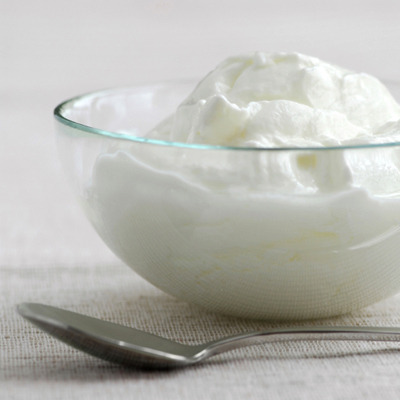
Low fat yogurt is a great way to get a compete protein source, a lot of calcium, and a nice tart flavor to help satisfy your cravings. There are a variety of yogurts, but I would go for those that are not too high in added sugars. For example, it’s better to get plain yogurt and add in the fruit yourself. You should also consider non-fat Greek yogurt, which contains a solid 22 grams of protein in only a 1 cup serving and a mere 120 calories.
Some studies have found that eating yogurt can help in fat loss. It may be due to the fact that calcium reduces a fat cells’ ability to store fat. Or, it may be due to the branched chain amino acids present in dairy products. Either way, low fat, or non fat yogurt deserves to be part of the Top 10 Fat Loss Foods.

Fat Loss Food #3: Low-Sodium Turkey

Turkey without the skin is among the lowest fat meats available on the market. To cap it off, it’s also pretty easy to eat on the go. Want to eat 8 ounces of turkey breast? Why not, it’s only about 240 calories and packs a protein punch. I recommend removing the skin, which is all fat, but if you have the skin, just eat in moderation.

Fat Loss Food #4: Apple

This is a favorite of mine, because it’s easy to carry around and eat on the go, but it’s also very nutritious and high in fiber, so it helps fill you up. An apple contains 24 grams of carbs, 3 of them being from fiber, and around 80 calories in a medium sized apple. I personally like the taste of green apples the most, but the various types of apples don’t make much of a difference in terms of calorie content.
I do, however, suggest you try to get organic apples when you can. I can’t handle tasting chemicals in the skins of apples that are not organic anymore. Blueberries came very close to making it on to the list because they are so high in fiber and antioxidants, but I think an apple is just easier to eat on the go.

Fat Loss Food #5: Lettuce

While lettuce is not that high in fiber, it requires more calories for your digestive system to digest than the lettuce contains. Pretty cool, huh? This is known as a negative calorie balance.
The main reason lettuce made this list is that you can put as much lettuce as you want in a big bowl, fill it up with veggies, lean meats, maybe some beans for some starch, and you’re good to go. The other great quality of lettuce is that it takes a long time to eat, which is a good thing. It takes up to 20 minutes for our brains to sense that we are full. Ideally, the darker green the lettuce, the more antioxidants and the more nutritious.

Fat Loss Food #6: Low-Sodium Chicken/Vegetable Soup


Similar to lettuce, drinking soup at a meal can slow you down, which helps your brain register that you are full. It also helps fill you up and is very low in calories because most broth based soups are low in fat, assuming they haven’t been doused in oil.
Like lettuce, you can throw in a lot of veggies and lean meats to make it more nutritious and filling. Healthy Valley has some pretty good low sodium soups, just be careful because some soups have outrageous amounts of sodium, like over 900mg of sodium per 1 cup serving, which is 40% of the suggested daily intake of 2300mg.
Just be careful if you order soups at a restaurant they don’t have any cream added.

Fat Loss Food #7: Almonds

While very calorically dense, almonds snuck onto the list because healthy fats are great in moderation, and almonds are among the best healthy fats. An almond is technically the seed of the fruit of the almond tree and is a great source of vitamin E and manganese. While almonds are not a “complete” protein source, a quarter cup of almonds offers solid 6 grams of protein.
Some weight loss studies have shown that the calories from nuts like almonds don’t seem to add weight as compared to other foods with the same amount of calories. The theory is that our bodies do not absorb calories from nuts very efficiently.
Either way, be careful not to munch on almonds all day long, because calories can add up fast. Only a quarter cup of almonds contains 140 calories and 15 grams of fat, which means one cup is a solid 560 calories and 60 grams of fat! A handful (about a quarter cup), on the other hand, makes for a great snack.

Fat Loss Food #8: Oatmeal
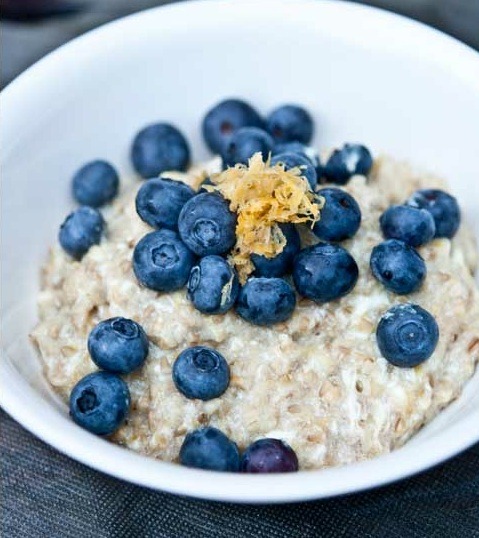
I love oatmeal because it’s filling, but doesn’t provide many calories. My favorite oatmeal is Kashi Go Lean vanilla, which only has 160 calories per serving, but you’ll be amazed at how much it fills you up because it has 6 grams of fiber. For you hardcore types, McCann’s Steel Oats and Traditional Quaker Oats have almost no sugar, but provide natural carbohydrates that will help fuel your workouts, without spiking your insulin levels. One more thing, if eating enough protein at breakfast is a problem area for you, then consider mixing in some whey protein, use skim milk instead of water, or a cup of egg whites.

Fat Loss Food #9: Low-Sodium Tuna

There’s a joke that many natural bodybuilders smell like tuna fish, because they are always eating cans of tuna all day long. The tuna you get at the Deli that’s filled with mayo does NOT count. In fact, mayo is a fat loss disaster, because it’s so calorically dense. I chose tuna because it’s easy to carry around for a high protein snack on the go. Of course, a tuna steak, and most fish for the matter are great sources of protein and healthy fats as well.

Fat Loss Food #10 Broccoli

I never used to eat broccoli as a kid, but fortunately I started eating broccoli after college and I developed a taste for it (as long as it’s steamed, I can’t stand raw broccoli!). Feel free to add it to your salads, or as a side with your lean meat, but you can’t go wrong with broccoli. Well, actually, let me clarify that.

If you smother it with sodium/sugar filled teriyaki sauce and stir fry it, broccoli can lose its appeal. Sautéed broccoli is still a heck of a lot healthier than French fries, but steamed is ideal. In general, vegetables are phenomenal fat loss foods and more veggies could have easily made it on this fat loss list.
As you probably started to notice, you can mix and match these 10 fat loss foods to create a number of different healthy, low calorie, nutritious snacks and meals to help you reach your fitness goals.

If you think I should have included something that didn’t make the list, or you have anything to add, leave a comment!


Source

Saturday, 21 November 2015

How to eat more protein without meat

Whether you are a vegetarian or you are just trying to cut down on the amount of meat you eat, it is still important to eat enough protein.  It is definitely possible to eat an adequate amount of protein without eating any meat as protein is found in many foods.  Although it is very possible to get plenty of protein without meat, it is still important to make sure you are getting enough, and that you are getting it from the right sources.


What does protein do?

Protein is vital for our health.  It has many functions and is found in our muscles, connective tissue, organs and hemoglobin.  It is also the basic component of enzymes and hormones; it helps maintain and repair protein-containing tissues; and it provides energy.
Eating too little protein, which is uncommon in developed countries, can cause your body to take the protein it needs from your organs and tissues.  It can also lead to decreased body function, and even, death.
So, as you can see, it is very important to consume adequate protein.  Most healthy adults need about .8g/kg of protein per day.  To figure out how much you need, take you weight in pounds and divide it by 2.2 to obtain your weight in kg.  Then multiply that figure by .8 to figure out how much protein you need.  For example, if you weigh 150 pounds, you would need 55g/day. (150lbs/2.2=68.1kgx.8=54.5g protein)

What is protein?

Protein is made up of amino acids, which are called the “building blocks” of protein.  When you consume something that contains protein, it is broken down in the digestive system into amino acids, which are then absorbed by the body.
There are 20 amino acids, including 9 which are essential and 11 which are nonessential.  The nonessential amino acids can be produced from different components of the diet.  The essential amino acids either can’t be produced by the body, or the body can’t produce adequate amounts of them.  That means that we need to eat foods that contain all of the essential amino acids.

Where are essential amino acids found?

Amino acids can be found in most foods.  Foods that contain all 9 essential amino acids are called complete proteins.  Meat, poultry and fish are complete protein sources.  But, if you are trying to eat less meat, you can obtain complete proteins from other animal products, such as, dairy and eggs.
Soybeans and quinoa are the only plant sources that are considered a complete protein.  If you want to eat foods which are not complete proteins, you can eat those foods in combination with other foods to form a complete protein.
Foods are considered incomplete proteins because they don’t contain all 9 essential amino acids, but are still great sources of protein.  These would include legumes, other grains, nuts and seeds.  Some examples of combining incomplete proteins include rice and beans, bulgur wheat and dried beans, barley and dried beans, corn and peas, soybeans and seeds, peanuts, rice and dried beans, seeds and green peas.  These foods don’t necessarily have to be eaten at the same meal, but should be eaten at some point during the same day.

Which non-meat foods contain the most protein?

The amount of protein found in some common foods is shown below:
FoodAmountGrams of protein
Yogurt1 cup13
Milk1 cup8
Cheese1 oz8
Tofu½ cup14
Cooked soybeans½ cup10
Cooked split peas½ cup5
Cooked dried beans½ cup8
Nuts¼ cup9
Peanut butter1 Tbsp4
Whole wheat bread1 slice2
Brown rice½ cup2
Quinoa, cooked1 cup8

What can you do to eat more protein without meat?

The foods listed above are just some of the foods that contain a lot of protein.  You can easily find other foods high in protein just by reading the nutrition facts on the label.  There are many breakfast cereals that contain a lot of protein.  Also, oatmeal is usually fairly high in protein.
Or, if you choose not to eat cereal, you can have yogurt or granola. Greek yogurt is thicker and contains a greater amount of protein than regular yogurt.  Or, you can even make a smoothie with juice or milk, fruit and protein powder.
For your lunch and dinner entrees, instead of eating meat, consider having some baked or sautéed tofu.  You can mix it with vegetables, or even bake it with breadcrumbs like you would with meat.  There are so many meat substitutes available, too.  There are all different kinds of burgers, veggie dogs, veggie bacon, and even chicken less chicken nuggets.
So, if you still enjoy meat, but are just trying to cut down on the amount of meat you eat, it is very likely that you will be able to find a meatless version of it.  Many of these products are made out of soy and are processed, so if you want to eat more whole foods and avoid processed foods, there are still many different options.
You can have beans as your entrée, and if you eat it with rice, it will form a complete protein.  Or, you can enjoy a dish that consists of a high protein grain.  Quinoa can be made into many different recipes; it can even be made into a burger.  Even whole wheat pasta is very high in protein.
Nuts or seeds make a great snack and will also add some protein to your diet.  You can even get protein from your beverages. Milk contains adequate protein. Kefir is like a yogurt smoothie and is very high in protein.

It is not difficult to get enough protein without meat

As you can see, protein comes in many forms and you do not have to eat a diet that is high in meat, or even contains any meat, to meet your daily protein requirement.  Just make sure that if you aren’t eating the higher quality proteins, which are the complete proteins, that you are making a complete protein by combining foods, which will make it a complete protein.

Comment below, let me know what you think.

Source
References used in this article

Tuesday, 3 November 2015

6 Best Veggies For Weight Loss

Newsflash: Vegetables can help you lose weight!
Okay, okay, we admit that’s not exactly breaking news, but did you know that when it comes to rapid weight loss some veggies reign supreme while others fall fairly flat in comparison? It’s true! Thanks to their specific nutritional profiles, certain produce-aisle picks can help you trim down by revving your metabolism, turning off belly fat genes and frying flab—and that’s on top of all their other health-boosting benefits.
These powerful veggies remind us a bit of those overachievers you loved to hate in high school—you know, the ones who not only got straight A’s, but also scored the hottest date to prom and got voted soccer captain, too. The primary difference between produce and Mr. Popular? Veggies don’t aim to make you jealous with their superhuman skills, they want you to use them to your advantage so you can reach your better body goals. Scroll down to learn which delicious picks fit the bill and discover delicious ways to incorporate them into your diet.

1
Peppers


You may have heard that spicy hot peppers can help you scorch calories, but did you know that mild peppers can have the same effect? Thanks to a metabolism-boosting compound, dihydrocapsiate, and their high vitamin-C content, sweet red and green peppers can help you lose weight. A cup of these bell-shaped veggies serves up to three times the day’s recommended vitamin C—a nutrient that counteracts stress hormones which trigger fat storage around the midsection. Dip slices of bell peppers into hummus for a light afternoon snack, add the veggie to omelets and salads, or throw some chicken in a corn tortilla with salsa and slices of avocado, red pepper and onion for a Tex-Mex-inspired fat-fighting dinner.

2
BROCCOLI


In addition to warding off prostate, breast, lung and skin cancers, this flowery vegetable can also help you whittle your middle. According to experts, broccoli contains a phytonutrient called sulforaphane that increase testosterone and fights off body fat storage. It’s also rich in vitamin C ( a mere cup of the stuff can help you hit your daily mark), a nutrient that can lower levels of cortisol during stressful situations, helping those abs take center stage. The only downside? It can make some people with sensitive stomachs a bit gassy—which isn’t a good look if you’re planning to hit the beach or rock a tight-fitting outfit. That’s no reason to steer clear of this veggie on a day-to-day basis, though. Whip up our Garlicky Beef and Broccoli with Broccoli Noodles recipe to reap the belly-flattening benefits —just not the day before you need to look your leanest.

3
SPINACH


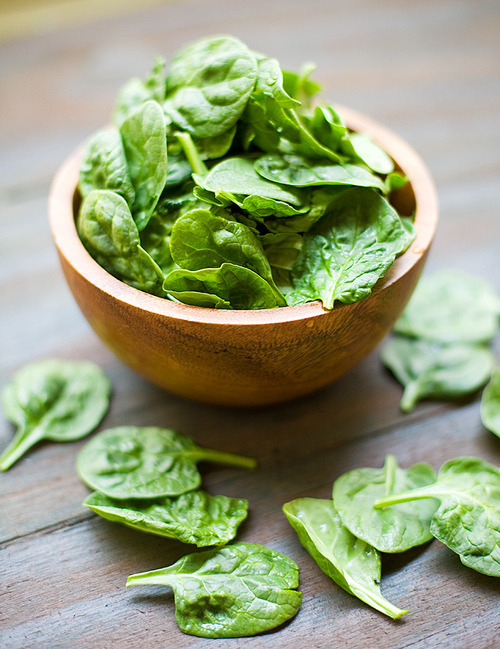
It may look pretty unassuming, but Popeye's favorite veggie can actually help take your calorie-burning potential to the next level. How? The green is overflowing with protein (just one cup of the steamed variety has as much protein as a medium hard-boiled egg), a nutrient that aids post-pump muscle recovery and growth. And remember: The more muscle mass you have, the more calories you burn at rest! What’s more, the leafy green is also rich in thylakoids, a compound that’s been shown to significantly reduce cravings and promote weight loss. Add the green to your dinner plate to reap the benefits. We like to steam it and flavor it with garlic, olive oil and lemon.

4
PICKLES


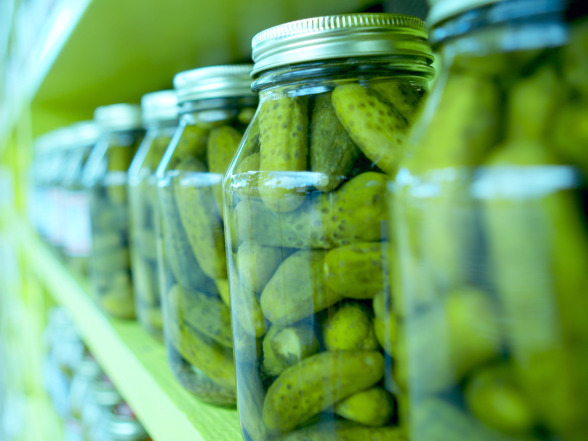
Pickles are low-cal, filled with fiber and covered in vinegar—which is all good news for your waistline. In fact, just one large pickle has 15 calories and 2 grams of belly-filling fiber, so eating three or four can actually leave you feeling pretty satiated for less than 100 calories! Every dieter knows that eating filling snacks are paramount to weight-loss success, but how does the vinegar help the fat-fighting cause? Studies show acidic foods help increase the rate at which the body burns off carbs by up to 40 percent—and the faster you burn off carbs, the sooner your body starts incinerating fat, which can help you get that lean look you crave. Add these tangy, pickled cucumbers to sandwiches and burgers or munch on them solo to start feeling more confident in your skivvies.

5
POTATOES


If you typically eat your potatoes warm out of the oven, you’re missing out on the spud’s fat-fighting superpowers. When you throw potatoes in the refrigerator and eat them cold, their digestible starches turn into resistant starches through a process called retrogradation. As the name implies, resistant starch, well, resists digestion, which promotes fat oxidation and reduces abdominal fat. Since eating cold baked potatoes doesn’t sound too appetizing, why not use the cooled spuds to make a potato salad instead? Here’s how: Bake red potatoes in the oven until they’re cooked through and allow them to fully cool. Then, cut them into small slices and dress them with Dijon mustard, fresh pepper, chopped green onions (more on this veggie next), dill and plain Greek yogurt. Mix everything together and put in the refrigerator to cool before consuming.

6


Onions are rich in quercetin, a flavonoid that increase blood flow and activates a protein in the body that helps regulate glucose levels, torches stored fat and keeps new fat cells from forming. Not to mention, onions are basically the unsung hero of cardiovascular health—an important area of wellness for everyone, but especially those who hit the gym hard to accelerate their weight-loss efforts. The culinary staple can help lower cholesterol, ward off hardening of the arteries and help maintain healthy blood-pressure levels. The best part? Onions are super low-cal and easy to throw into just about anything, from soups, homemade burgers, sandwiches and tacos to pastas, salads, veggie sides, rice and omelets.

Comment below what you think. Do you have a vegetable that has helped boost your weight loss results? Comment below what it is and share helpful tips you've learned along your journey to weight loss success! Love hearing from you guys x


Source

Sunday, 11 October 2015

Foods That Help Tame Stress

Is There a Stress Management Diet?

Stress: We all have it, and how we handle it can make all the difference. Stress management can be a powerful tool for wellness, since too much stress is bad for you. There are many strategies, and one of them includes what you eat. Read on to learn how a stress management diet can help.


Stress-Busting Foods: How They Work

Foods can help tame stress in several ways. Comfort foods, like a bowl of warm oatmeal, boost levels of serotonin, a calming brain chemical. Other foods can cut levels of cortisol and adrenaline, stress hormones that take a toll on the body over time. A healthy diet can help counter the impact of stress by shoring up the immune system and lowering blood pressure. Do you know which foods are stress busters?

Complex Carbs

All carbs prompt the brain to make more serotonin. For a steady supply of this feel-good chemical, it's best to eat complex carbs, which take longer to digest. Good choices include whole-grain breads, pastas, and breakfast cereals, including old-fashioned oatmeal. Complex carbs can also help you feel balanced by stabilizing blood sugar levels.


Simple Carbs

Dietitians usually recommend steering clear of simple carbs, which include sweets and soda. But in a pinch, these foods can hit the spot. They're digested quickly, leading to a spike in serotonin. Still, it doesn't last long, and there are better options. So don't make these a stress-relieving habit; you should limit them.


Oranges

Oranges make the list for their wealth of vitamin C. Studies suggest this vitamin can curb levels of stress hormones while strengthening the immune system. In one study of people with high blood pressure, blood pressure and levels of cortisol (a stress hormone) returned to normal more quickly when people took vitamin C before a stressful task.


Spinach

Too little magnesium may trigger headaches and fatigue, compounding the effects of stress. One cup of spinach helps you stock back up on magnesium. Don't like spinach? Other green, leafy vegetables are good magnesium sources. Or try some cooked soybeans or a fillet of salmon, also high in magnesium.


Fatty Fish

To keep stress in check, make friends with naturally fatty fish. Omega-3 fatty acids, found in fish such as salmon and tuna, can prevent surges in stress hormones and may help protect against heart disease, depression, and premenstrual syndrome (PMS). For a steady supply of feel-good omega-3s, aim to eat 3 ounces of fatty fish at least twice a week.


Black Tea

Drinking black tea may help you recover from stressful events more quickly. One study compared people who drank 4 cups of tea daily for 6 weeks with people who drank another beverage. The tea drinkers reported feeling calmer and had lower levels of the stress hormone cortisol after stressful situations.


Pistachios

Pistachios, as well as other nuts and seeds, are good sources of healthy fats. Eating a handful of pistachios, walnuts, or almonds every day may help lower your cholesterol, ease inflammation in your heart's arteries, make diabetes less likely, and protect you against the effects of stress. Don't overdo it, though: Nuts are rich in calories.


Avocados

One of the best ways to reduce high blood pressure is to get enough potassium, and half an avocado has more potassium than a medium-sized banana. A little bit of guacamole, made from avocado, might be a good choice when stress has you craving a high-fat treat. Avocados are high in fat and calories, though, so watch your portion size.


Almonds

Almonds are chock-full of helpful vitamins: vitamin E to bolster the immune system, plus B vitamins, which may make you more resilient during bouts of stress or depression. To get the benefits, snack on a quarter of a cup every day.


Raw Veggies

Crunchy raw vegetables can help ease stress in a purely mechanical way. Munching celery or carrot sticks helps release a clenched jaw, and that can ward off tension.


Bedtime Snack

Carbs at bedtime can speed the release of the brain chemical serotonin and help you sleep better. Since heavy meals before bed can trigger heartburn, stick to something light.


Milk

Another bedtime stress buster is the time-honored glass of warm milk. Research shows that calcium eases anxiety and mood swings linked to PMS. Dietitians typically recommend skim or low-fat milk.


Herbal Supplements

There are many herbal supplements that claim to fight stress. One of the best studied is St. John's wort, which has shown benefits for people with mild to moderate depression. Although more research is needed, the herb also appears to reduce symptoms of anxiety and PMS. There is less data on valerian root, another herb said to have a calming effect. Tell your doctor about any supplements you take, so they can check on any possible interactions.


De-Stress With Exercise

Besides changing your diet, one of the best stress-busting strategies is to start exercising. Aerobic exercise boosts oxygen circulation and spurs your body to make feel-good chemicals called endorphins. Aim for 30 minutes of aerobic exercise three to four times a week. If you're not active now, tell your health care provider you're going to start exercising -- they'll root for you and make sure you're ready to get moving.


Source
http://www.webmd.com/diet/ss/slideshow-diet-for-stress-management
Reviewed by Kathleen M. Zelman, MPH, RD, LD on 6/, 014