Showing posts with label yogurt. Show all posts

Tuesday, 16 February 2016

Top 10 Fat Loss Foods

Many readers have been asking about foods that they can incorporate into their daily diet that can help promote fat loss and create a feeling of fullness. Well you asked for it, now I am delivering!
In my opinion, the best fat loss foods are not just “healthy”, but must pass the following checklist:
(1) Not calorie dense (I have one exception)
(2) Help fill you up
(3) Create only a small release of insulin
(4) Easy to procure/prepare
So let’s get started…

Fat Loss Food #1: Egg Whites

This is a favorite of many natural body builders and fitness models because it’s 100% pure protein, containing 4 grams of protein, 0 grams of carbs and fat, and only 16 total calories. Want 10 egg whites for breakfast? Sure why not, it’s only 160 calories and will fill you up. An egg white omelet with some veggies and low fat cheese makes for a great breakfast, while a few egg whites from a hardboiled egg can make for a great snack any time (add some high fiber fruit, like an apple, or blueberries for extra bonus points).

Fat Loss Food #2: Low Fat Yogurt
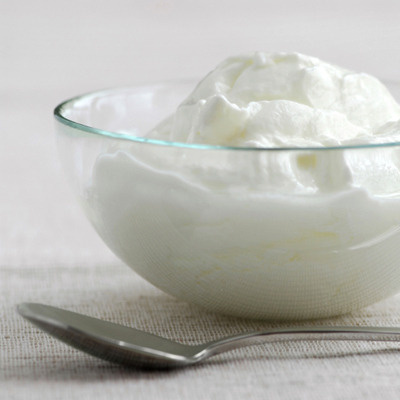
Low fat yogurt is a great way to get a compete protein source, a lot of calcium, and a nice tart flavor to help satisfy your cravings. There are a variety of yogurts, but I would go for those that are not too high in added sugars. For example, it’s better to get plain yogurt and add in the fruit yourself. You should also consider non-fat Greek yogurt, which contains a solid 22 grams of protein in only a 1 cup serving and a mere 120 calories.
Some studies have found that eating yogurt can help in fat loss. It may be due to the fact that calcium reduces a fat cells’ ability to store fat. Or, it may be due to the branched chain amino acids present in dairy products. Either way, low fat, or non fat yogurt deserves to be part of the Top 10 Fat Loss Foods.

Fat Loss Food #3: Low-Sodium Turkey

Turkey without the skin is among the lowest fat meats available on the market. To cap it off, it’s also pretty easy to eat on the go. Want to eat 8 ounces of turkey breast? Why not, it’s only about 240 calories and packs a protein punch. I recommend removing the skin, which is all fat, but if you have the skin, just eat in moderation.

Fat Loss Food #4: Apple

This is a favorite of mine, because it’s easy to carry around and eat on the go, but it’s also very nutritious and high in fiber, so it helps fill you up. An apple contains 24 grams of carbs, 3 of them being from fiber, and around 80 calories in a medium sized apple. I personally like the taste of green apples the most, but the various types of apples don’t make much of a difference in terms of calorie content.
I do, however, suggest you try to get organic apples when you can. I can’t handle tasting chemicals in the skins of apples that are not organic anymore. Blueberries came very close to making it on to the list because they are so high in fiber and antioxidants, but I think an apple is just easier to eat on the go.

Fat Loss Food #5: Lettuce

While lettuce is not that high in fiber, it requires more calories for your digestive system to digest than the lettuce contains. Pretty cool, huh? This is known as a negative calorie balance.
The main reason lettuce made this list is that you can put as much lettuce as you want in a big bowl, fill it up with veggies, lean meats, maybe some beans for some starch, and you’re good to go. The other great quality of lettuce is that it takes a long time to eat, which is a good thing. It takes up to 20 minutes for our brains to sense that we are full. Ideally, the darker green the lettuce, the more antioxidants and the more nutritious.

Fat Loss Food #6: Low-Sodium Chicken/Vegetable Soup


Similar to lettuce, drinking soup at a meal can slow you down, which helps your brain register that you are full. It also helps fill you up and is very low in calories because most broth based soups are low in fat, assuming they haven’t been doused in oil.
Like lettuce, you can throw in a lot of veggies and lean meats to make it more nutritious and filling. Healthy Valley has some pretty good low sodium soups, just be careful because some soups have outrageous amounts of sodium, like over 900mg of sodium per 1 cup serving, which is 40% of the suggested daily intake of 2300mg.
Just be careful if you order soups at a restaurant they don’t have any cream added.

Fat Loss Food #7: Almonds

While very calorically dense, almonds snuck onto the list because healthy fats are great in moderation, and almonds are among the best healthy fats. An almond is technically the seed of the fruit of the almond tree and is a great source of vitamin E and manganese. While almonds are not a “complete” protein source, a quarter cup of almonds offers solid 6 grams of protein.
Some weight loss studies have shown that the calories from nuts like almonds don’t seem to add weight as compared to other foods with the same amount of calories. The theory is that our bodies do not absorb calories from nuts very efficiently.
Either way, be careful not to munch on almonds all day long, because calories can add up fast. Only a quarter cup of almonds contains 140 calories and 15 grams of fat, which means one cup is a solid 560 calories and 60 grams of fat! A handful (about a quarter cup), on the other hand, makes for a great snack.

Fat Loss Food #8: Oatmeal
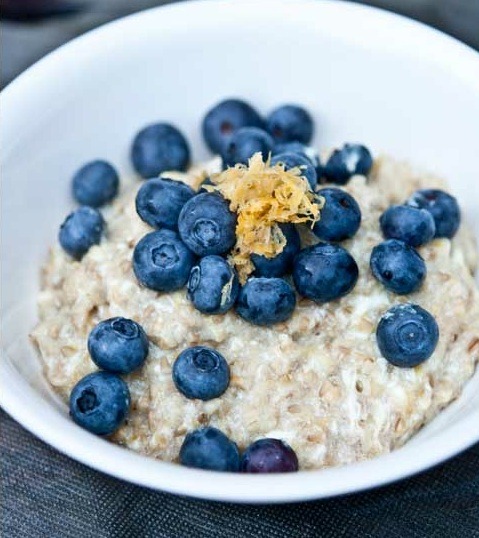
I love oatmeal because it’s filling, but doesn’t provide many calories. My favorite oatmeal is Kashi Go Lean vanilla, which only has 160 calories per serving, but you’ll be amazed at how much it fills you up because it has 6 grams of fiber. For you hardcore types, McCann’s Steel Oats and Traditional Quaker Oats have almost no sugar, but provide natural carbohydrates that will help fuel your workouts, without spiking your insulin levels. One more thing, if eating enough protein at breakfast is a problem area for you, then consider mixing in some whey protein, use skim milk instead of water, or a cup of egg whites.

Fat Loss Food #9: Low-Sodium Tuna

There’s a joke that many natural bodybuilders smell like tuna fish, because they are always eating cans of tuna all day long. The tuna you get at the Deli that’s filled with mayo does NOT count. In fact, mayo is a fat loss disaster, because it’s so calorically dense. I chose tuna because it’s easy to carry around for a high protein snack on the go. Of course, a tuna steak, and most fish for the matter are great sources of protein and healthy fats as well.

Fat Loss Food #10 Broccoli

I never used to eat broccoli as a kid, but fortunately I started eating broccoli after college and I developed a taste for it (as long as it’s steamed, I can’t stand raw broccoli!). Feel free to add it to your salads, or as a side with your lean meat, but you can’t go wrong with broccoli. Well, actually, let me clarify that.

If you smother it with sodium/sugar filled teriyaki sauce and stir fry it, broccoli can lose its appeal. Sautéed broccoli is still a heck of a lot healthier than French fries, but steamed is ideal. In general, vegetables are phenomenal fat loss foods and more veggies could have easily made it on this fat loss list.
As you probably started to notice, you can mix and match these 10 fat loss foods to create a number of different healthy, low calorie, nutritious snacks and meals to help you reach your fitness goals.

If you think I should have included something that didn’t make the list, or you have anything to add, leave a comment!


Source

Saturday, 7 November 2015

Greek Yogurt & Weight Loss

Greek yogurt is an excellent addition to your daily meal plan if you’re trying to lose weight. This nutritious dairy food is not only packed with essential nutrients, but eating it can help you control your overall calorie intake for effective weight loss. However, simply adding Greek yogurt to your diet isn’t a guarantee you’ll lose weight. Avoid high-calorie, fruit-flavored Greek yogurt varieties with lots of added sugar.

Calorie Content

When trying to lose weight, choosing plain Greek yogurt over fruit-flavored yogurt helps keep your overall calorie intake low. For example, a 6-ounce container of plain, Greek yogurt contains just 100 calories, while 6 ounces of pineapple-flavored Greek yogurt has about 158 calories. To effectively lose weight at a safe pace of 1 to 2 pounds weekly, you must burn about 500 to 1,000 calories more than you eat daily.

Protein Perks

Greek yogurt, especially plain Greek yogurt, is rich in dietary protein -- which is beneficial when you’re trying to lose weight. A 6-ounce container of plain Greek yogurt provides about 17 grams of dietary protein, compared with 9 grams of protein in 6 ounces of regular plain, low-fat yogurt. Protein increases satiety and helps your body burn extra calories, according to a 2009 study published in “The Journal of Nutrition.”

Fat Loss Considerations

Eating Greek yogurt during periods of calorie restriction not only enhances weight loss, but it can also help you burn unwanted body fat. According to a 2011 study published in “The Journal of Nutrition,” higher protein and dairy intakes lead to greater fat losses and muscle gains. A 2012 review published in the “International Journal of Obesity” found that high-dairy, energy-restricted diets reduce body weight, body fat and waist circumference more than general weight-loss diets.

Recommended Portions

The amount of Greek yogurt you should eat daily to lose weight depends on your weight-loss calorie needs. The National Heart, Lung and Blood Institute suggests many adults aim for 1,200 to 1,600 calories daily for effective weight loss -- men often require more calories than women. The Dietary Guidelines for Americans 2010 recommend getting 2.5 cups of dairy foods daily when eating 1,200 to 1,400 calories per day, and consuming 3 cups from the dairy group when eating 1,600 calories, or more, daily.

Source

References


Saturday, 10 October 2015

Surprising Sources of Hidden Sugar

Pasta Sauces

They taste savory, not sweet -- but many pasta sauces have between 6 and 12 grams of sugar per half-cup serving. That’s the same amount you’d get from a chocolate chip cookie. The American Heart Association recommends that women have no more than 100 calories of sugar per day (about 6 teaspoons' worth) and men have no more than 150 calories (about 9 teaspoons).  Too much sugar can lead to extra pounds, and that’s bad for your health. So, look on the ingredient label for the sugar content of your favorite marinara or Alfredo before planning your meal.  


Granola Bars

Check granola bar labels for ingredients like corn syrup, brown sugar, honey, brown sugar syrup, dextrose, and fructose. Some have a yogurt or chocolate coating, or chocolate chips, which can ramp up the sugars fast -- anywhere from 8 to 12 grams per serving. Instead of eating a 1-ounce granola bar, switch to 1 ounce of granola (about 1/3 cup) and the sugar lowers to about 5 grams.

Yogurt

Yogurt is full of healthy calcium and protein, but even low-fat flavored yogurt can have 17 to 33 grams pf sugar per 8-ounce serving -- that’s about as much as 2 scoops (1 cup) of chocolate ice cream. When shopping, look for ones that are lower in sugar. Or, buy it plain and toss in the fruit of your choice.


Instant Oatmeal

Oatmeal has a good rep for being full of healthy fiber, but many fruit-flavored instant ones have between 10 and 15 grams of sugar per packet. “Reduced sugar” varieties can have closer to 5 or 6 grams per packet. Better yet, add apple slices to plain instant oatmeal. It has less than 1 gram of sugar in a packet.


Salad Dressing

Sweet dressings, such as raspberry vinaigrette, French, and Catalina, have the most sugar-- about 5 to 7 grams of sugar in a 2-tablespoon serving. So watch how much you pour on. A lower-sugar option is a light homemade vinegar and oil dressing. It will have only about 1 gram of sugar in the same amount.


Breakfast Cereals

Yes, we all know fruity kids’ cereals are high in sugar, but even healthier-sounding ones sneak it in. Many popular oat, corn and bran cereals have 10-20 grams or more per cup. No matter what the front of the box promises, read the ingredients label to be sure of what you’re getting.


Energy Drinks

Most of those drinks that say they’ll give you a lift have tons of sugar along with caffeine. Some energy drinks have about 25 grams per 8-ounce serving. How about having some cool water instead? Sometimes being dehydrated can make you feel tired.


Packaged Fruits

Mandarin oranges in light syrup have about 39 grams of sugar per 1-cup serving. You can minimize the sugar somewhat by draining the cup -- that gets you to about 15.5 grams. Better yet, just have fresh fruit.


Coleslaw

That’s the “healthy” side dish at the fast-food restaurant, isn’t it? Think again. One regular-size side of coleslaw from many popular fast-food places will cost you about 15 grams in sugar. You can learn what goes into some of your favorite restaurant offerings by looking it up online on their website. If you're craving coleslaw, you can always make a low-sugar version at home.


Tea

You’re wary of the added calories and sugar in juices, so you’ve switched to tea. Uh-oh. Many popular teas have a surprising amount of sugar. The leading brands of lemon-flavored iced tea, for example, all have about 32 grams of sugar per bottle. A cup of apple juice has 24 grams. You can control sugar if you brew your own tea instead. Also, some flavored waters aren’t high in sugar -- check labels, though.


Dried Fruit

With all the water taken out, dried fruit has way more sugar by volume than fresh fruits. A small box of raisins -- 1.5 ounces -- has more than 25 grams of sugar. Instead, you could eat a cup of grapes for 15 grams of sugar.


Ketchup

At about 4 grams per tablespoon, ketchup on your burger can give you a minor sugar boost. That's not as much as some other foods on this list, but if you’re trying to cut back on sugar, switch to regular yellow mustard -- it gives you less than 1 gram of sugar per tablespoon.

Are you shocked at how many foods you thought were healthy are actually packed with hidden sugars!? What do you think! I'm sticking to raw, untouched, unprocessed foods. Anything packaged or processed in any way will contain hidden sugar.

Source
http://www.webmd.com/diet/ss/hidden-sugar-slideshow
Reviewed by Elaine Magee, MPH, RD on 3/, 014

Thursday, 10 September 2015

How to choose a healthy yoghurt

Are you eating a health food or a "dairy dessert"? How to 
pick the healthiest yoghurts from the nutrition traps.


Healthy yoghurt or nutrition trap?

Yoghurt (also spelled "yogurt") is often marketed as a healthy, calcium-rich product. Yet some of the products in the supermarket fridge are closer to a "dairy-based dessert" than a health food. CHOICE decided to look behind the hype and find out how to pick the nutritious yoghurts from the products that should ring alarm bells.
At its simplest, yoghurt contains milk and live cultures (bacteria) that cause the milk to ferment, creating the distinctive sour taste. But modern commercial yoghurts tend to have extra ingredients such as sugar, cream, thickeners, gums, starches and flavours.

Low- or no-fat natural yoghurt: your healthiest option

"The healthiest yoghurt choice is low- or no-fat plain yoghurt," says Kate Gudorf, an accredited practising dietitian and spokesperson for the Dietitians Association of Australia. "But if you need to sweeten it yourself, add a teaspoon of honey or chopped fresh fruit."
If you're buying flavoured yoghurt, Gudorf recommends trying to find one with less than 12g of sugars per 100g. Natural or plain yoghurt has around 6mg of sugars per 100g due to the naturally occurring carbohydrate lactose. Anything above 6mg will be added sugar, generally in the form of fruit pieces, fruit puree, honey and sugar.
And if you're in the mood for a treat, sweetened low-fat yoghurts will generally be a better choice than a chocolate bar as they have lower saturated fat (0.2g vs 18.8g/100g) and far less sugar (12.6g vs 56.4g/100g).

Beware breakfast yoghurts

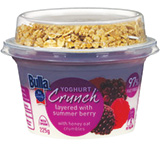
Bulla Yoghurt Crunch Summer Berry
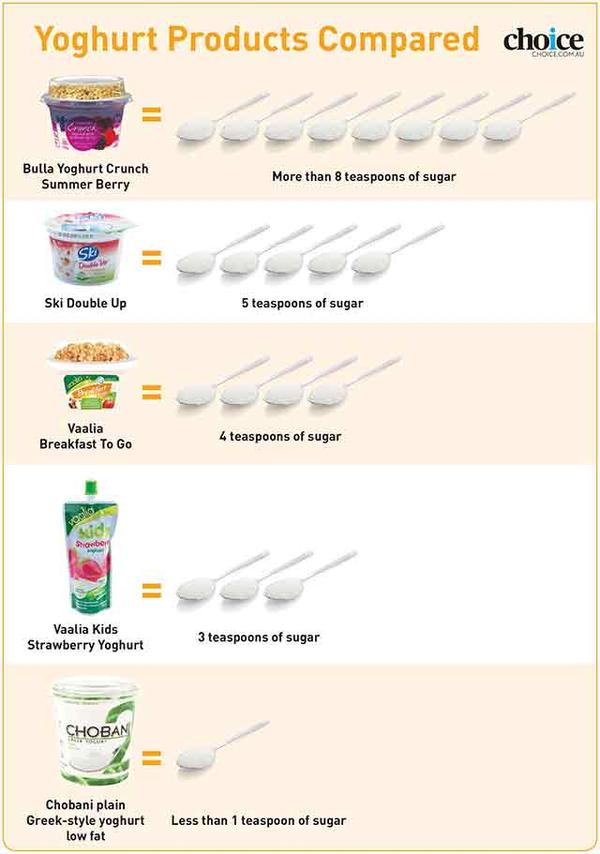
Packaged breakfast yoghurt pots with muesli are an easy option, but the convenience can come at the cost of huge sugar levels. Bulla Yoghurt Crunch Summer Berrycontains yoghurt and muesli, and comes with a little spoon so it can be eaten on the go. The pack only lists the nutritional information per 100g serve - a deceptively low 594kJ - but the small print shows there are actually 2.25 serves in the pot.
If you can be bothered doing the numbers in the supermarket, you'd find that the 225g pot actually has a hefty 1339kJ and 42g of sugars (more than eight teaspoons). And really, who's going to divide a pot smaller than a metric cup into 2.25 serves?
The whole Bulla pot has about the same number of kilojoules as an Almond Magnum ice-cream, but three more teaspoons of sugar. However, it does at least come with 455mg calcium. That said, two cups of skim milk will give you 605mg calcium for only 735kJ and 25g sugars.
Slightly less sugar-laden is the Ski Double Up Yoghurt, with 983kJ and 25.6g sugar per pot. Vaalia Breakfast To Go is a marginally better choice with 825kJ and 20g sugar per pot. Both sensibly treat one pot as one serve.

Going coconuts

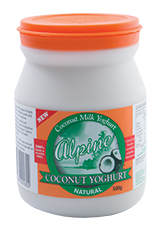
Alpine Coconut YoghurtThe passion for all things coconut (for example, coconut oil and coconut water) has spread to the yoghurt aisle with Alpine Coconut Yoghurt. Just like coconut oil, coconut milk yoghurt is a high-kilojoule, high-fat, low-calcium choice. Compared to full-fat milk-based yoghurts it has double the kilojoules, with 785kJ per 100g and a whopping 11.5g of saturated fat - three times more than the full-fat yoghurt we looked at.
Coconut milk has about 4mg calcium per 100g (compared with 193mg for regular yoghurt), and there's no calcium listed on the package so we assume no extra calcium has been added.

Serving size

Gippsland Dairy Blueberry Twist yoghurt
The Australian Guide to Healthy Eating says a serve of yoghurt is ¾ cup or 200g. If you want a yoghurt to eat on the go, look for a pot that's 200g or less. Buying an individual serve pot as big as the 300g Gippsland Dairy Blueberry Twist will mean you'll be scoffing down 50.7g sugars (10 teaspoons) and 1833kJ. A 'between meals' snack should have no more than 600kJ.

Calcium content

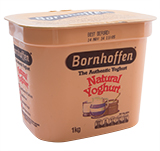
bornhoffen natural yoghurt
Calcium is a major health drawcard, but we found wide variations in calcium levels - from about 98mg per 100g (Chobani) to 206mg (Bornhoffen). "This comes down to the difference in processing methods," says Gudorf, "as some manufacturers add extra milk solids, which add calcium. Others, such as strained Greek yoghurt, remove liquid whey, which reduces calcium levels."
Although yoghurt can be a good source of calcium, it's unlikely to meet your total daily requirement. It's recommended that adults consume 1000-1300mg daily.
For children, the recommendations are:
• 1-3 years - 500mg calcium
• 4-8 years - 700mg calcium
• 9-11 years - 1000mg calcium.
Although the "squeezy" yoghurt pouches for babies and kids are all the rage and look very similar in size and design with similar sugar levels, there's a big difference in calcium levels.
Woolworths' Mini Macro Organic yoghurts don't even list calcium content on their pack. Other products range from 132mg per 100g (Gippsland Mini Organics), 168mg (Paul's Dora) and 220mg (Coles) to a healthy 350mg for the Yoplait Petit Miam pouch.

Pester-power desserts

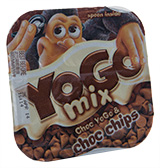
YoGo Mix Choc Chips
Be aware when choosing kids' yoghurt that sugary dessert products can appear on the shelves alongside healthier offerings. We found YoGo Mix Choc Chips, which doesn't contain any yoghurt but has 1090kJ and 29.9g sugar per 150g pot, in the same section as the 140g Vaalia Kids Strawberry Yoghurt (515kJ/15.5g sugars).
As most products aimed at kids have classic pester-power characteristics - bright packaging splashed with recognisable cartoon characters or cutesy images - it's very easy for any harried parent to grab a package your child likes the look of without checking the ingredients and sugar levels. A product that has the word "dessert" on the packaging should ring alarm bells.

Beginner's guide to yoghurt (or yogurt)

Greek yoghurt

Made by straining out the liquid whey, leaving the yoghurt thick and creamy, the association with the Mediterranean diet tends to give Greek yoghurt a healthy image. And although some brands can have higher protein, Greek yoghurt can also have higher saturated fat (up to 7g compared with around 4g for plain yoghurt), which helps make it thick and creamy.
The removal of the whey also means Greek yoghurt often has lower calcium levels. Some brands also add cream, but this is not a traditional ingredient. Yoghurts must conform to food standards pertaining to claims like "low fat", however there are no regulations in Australia specifying that a particular style of yoghurt, such as Greek, has to be made in a certain way or contain particular ingredients.

Greek-style

Not strained and often containing thickeners such as cream, milk solids, gelatine and gums, which are added to create a creamy texture.

Pot set

Milk and live cultures are added straight to the pot, which, makers claim, means thickeners such as gelatine need not be added.

Natural or plain yoghurt

Yoghurt without flavouring or added sugar.

Lactose-free yoghurt

Made by adding an enzyme during processing that breaks down the lactose into simple sugars, so it's safe for those who are intolerant to lactose.

Pouring yoghurt or yoghurt milk

Has the same ingredients as thick yoghurt but is thinner and designed to be poured over cereal or drunk by itself.

Kefir yoghurt

Traditionally made by adding fermented kefir grains to room-temperature milk. Commercial powdered kefir starters are often used these days.

Biodynamic

An ethical-ecological approach to agriculture that focuses on the relationship of soil, plants and animals. Like organic, it emphasises sustainability and does not involve chemicals in production.

Are "friendly bacteria" (aka probiotics) effective in yoghurt?

Probiotics are "friendly" bacteria that can help restore the balance of microflora in the gut if it's been upset by disease, stress, poor diet or antibiotics. In a healthy bowel, these bacteria fend off harmful microorganisms, aid digestion and nutrient absorption, and contribute to immune function.
Evidence of the benefits of probiotics in yoghurt has been difficult to validate scientifically. In the EU, use of the word "probiotics" has been banned on packaging as the word implies a health benefit, although individual strains of bacteria may be mentioned.
In 2008, a class-action lawsuit in the US claimed Danone overstated the health benefits of its Activia yoghurt by claiming it could strengthen the body's defences or regulate digestion because of bacteria it contained. Danone settled out of court for $US35 million and changed the wording on its packaging.
To avoid falling foul of health claim regulations and still be able to spruik the benefits of probiotics, food companies use vague, pseudo scientific-sounding language and fancy trademarked names such Danone's "Bifidus ActiRegularis" (its scientific name is actually B. lactis DN-173010).
The packaging claims its bacteria "can help to improve digestive discomfort such as a bloated feeling" and is accompanied by a funny little diagram. But this health benefit is conditional on eating 250g of the yoghurt each day over four weeks as "part of a varied diet and health lifestyle".
There is no guarantee that the bacteria survives in the yoghurt to colonise the gut. "The trouble with probiotics is there are many factors that affect whether the bacteria survives," says Gudorf. "For those products that do list the number of probiotic cultures on the packaging, that number reflects the amount of bacteria added at the time of production. But bacteria can be affected by storage, air, light and moisture, and there is no guarantee that the bacteria survives in the yoghurt to colonise the gut."
If conditions are right and the bacteria survives, you'd need to eat 100 million colony-forming units (CFU) regularly every day to increase the activity of good bacteria. And, says Gudorf, probiotics by themselves are not enough to increase the activity of good bacteria. You should also eat 10g per day of prebiotics, which are non-digestible carbohydrates that act as food for the good bacteria.
"Don't eat yoghurt just to get probiotics," advises Gudorf. "If you're concerned about IBS ( irritable bowel syndrome) or bloating see a dietitian who specialises in gut health who can set up a diet plan and direct you to the correct bacteria strain."
To maximise your probiotic benefits, look for yoghurts that have at least 100 million CFUs. Some yoghurts mention the names of the cultures but don't list how much it contains, so you have no idea how much - or how little - bacteria is in the product.
comarison of yoghurts with sugar content


Source
https://www.choice.com.au/food-and-drink/dairy/yoghurt-and-ice-cream/articles/how-to-choose-a-healthy-yoghurt

9 BEST YOGURTS FOR WEIGHT LOSS

Packed with protein, crammed with calcium, popping with probiotics, yogurt has all the makings of the best weight loss foods.
But tread ye carefully in the aisle of the fermented milk products; manufacturers have a knack for cramming as much sugar and artificial ingredients into yogurt pots as they do candy bars as we found out doing research for Eat This, Not That!. The next time you find yourself discombobulated in the dairy section, refer to this handy guide for stocking up and still slimming down.

If You Like Vanilla Varieties


EAT THIS

Siggi's Icelandic Style Strained Non-Fat Yogurt, Vanilla, 5.3 oz

Calories
100
Fat
0 G
Sugar
9 G
Protein
14 G


NOT THAT!

Yoplait Thick and Creamy Yogurt, Vanilla, 6 oz

Calories
180
Fat
2.5 G
Sugar
28 G
Protein
7 G
Not just great-tasting, Siggi’s is one of the lowest sugar vanilla yogurts on the market. The Icelandic yogurt is strained like Greek varieties, which also ups the protein content. However, Yoplait's vanilla yogurt has four times as much sugar as protein. At 28 grams per container, you’re looking at more sugar than you’ll find in seven Dunkin’ Donuts Sugar Raised donuts!

If You Prefer a Peachy Parfait


EAT THIS

Kalona Super Natural Organic 2% Yogurt, Peach, 6 oz

Calories
107
Fat
2.5 G
Sugar
8 G
Protein
6 G


NOT THAT!

Dannon Fruit on the Bottom Yogurt, Peach, 6 oz

Calories
150
Fat
1.5 G
Sugar
27 G
Protein
6 G
Made from all natural ingredients and organic, grass-fed, non-homogenized milk, Kalona is as much a treat for your tastebuds as it is for your health! However, “Fruit on the Bottom” often means “sugar on the top.” This variety has 27 grams of the sweet stuff—more sugar than you’ll find in two McDonald’s apple pies!

If You’re Looking for an Indulgent Mix-In


EAT THIS

Yo Crunch Low-Fat Yogurt, Vanilla with Chips Ahoy® Cookie Pieces, 4 oz

Calories
120
Fat
3 G
Sugar
16 G
Protein
4 G


NOT THAT!

Chobani Greek Yogurt Flip, Almond Coco Loco, 5.3 oz

Calories
240
Fat
10 G
Sugar
21 G
Protein
12 G
This yogurt is impressively low cal for a cookie-strewn treat. While it does have a bit more sugar than we’d ideally like to see it’s relatively low when you compare it to the competition. Save 120 calories and 5 grams of sugar by picking YoCrunch over Chobani. While the majority of the extra calories and fat in Chobani's breakfast treat come from the almonds, the chunks of chocolate and coconut flavored yogurt are loaded with sugar. Matter which option you ultimately choose, these chocolate and candy filled yogurts should only be once and awhile treats— not daily dishes.

If You Like Chocolate Varieties


EAT THIS

Chobani Greek Yogurt, Chocolate Dust, 2 oz

Calories
60
Fat
1.5 G
Sugar
6 G
Protein
5 G


NOT THAT!

Yoplait Whips!, Chocolate Mousse, 4 oz

Calories
160
Fat
4 G
Sugar
22 G
Protein
5 G
When it comes to indulgences, it’s all about portion control. Chobani hits the nail on the head with this kid-sized chocolaty bend. You could eat more than three of these 2 ounce containers of yogurt before you’d take in the sugar-equivalent of Yoplait’s similar variety. How Yoplait packs so many calories and sugar in such a small container, we may never know. A half cup of chocolate soft serve actually has less sugar than this yogurt, and wouldn’t you rather just have that? We know we would.

If You Want Something Savory


EAT THIS

Blue Hills All Natural Yogurt, Butternut Squash, 6 oz

Calories
100
Fat
2.5 G
Sugar
6 G
Protein
4 G


NOT THAT!

Chobani Greek Yogurt, Pumpkin Spice, 5.3 oz

Calories
130
Fat
3 G
Sugar
12 G
Protein
12 G
Most flavored yogurts turn to fruits and desserts for inspiration but savory yogurts are starting to shake up the food scene. Blue Hill gets in on the trend while keeping sugar and calories in check. While Chobani’s savory yogurt isn’t too awful, it does have twice the amount of the sugar of Blue Hill’s which is why we place it on the “Not That” side of our list.

If You Want a Touch of Honey


EAT THIS

Dannon Oikos Organic Greek Yogurt, Honey, 5.3 oz

Calories
120
Fat
0 G
Sugar
17 G
Protein
12 G


NOT THAT!

Fage Total 0% Greek Yogurt, Honey, 5.3 oz

Calories
170
Fat
0 G
Sugar
29 G
Protein
13 G
Kudos to Oikos for using honey to turn this into a lightly sweetened treat without making it a sugar-packed breakfast blunder. Plus, it’s bursting with 13 grams of hunger-busting protein, and we totally love that! However, bite for bite Fage’s, honey sweetened yogurt has more calories and sugar than Oikos'. Plus, it’s the sugar equivalent of 11 hershey Kisses, making it a definite “Not That!”

If You Need a Lactose-Free Yogurt


EAT THIS

Lifeaway Low-fat Kefir, Cherry, 8 oz

Calories
140
Fat
2 G
Sugar
20 G
Protein
11 G


NOT THAT!

Yoplait Lactose Free, Cherry, 6 oz

Calories
170
Fat
1.5 G
Sugar
26 G
Protein
5 G
Kefer is 99 percent lactose free, making it a great yogurt alternative for most intolerant individuals. Plus, this it’s easy to eat on the go, loaded with 11 grams of protein and has more probiotic bacteria than traditional yogurts. We overlook the slightly high sugar count because the drink is low in calories and serves up so many additional health benefits. On the other hand, while Yoplait Lactose Free lacks the lactate that upsets your stomach, it doesn’t bring any other nutritional benefits to the table. Packed with more sugar and less than half the protein in Lifeway’s smoothie, this container is better left on supermarket shelves.

If You Prefer Things Plain Jane


EAT THIS

Fage Total 2% Greek Yogurt, Plain, 7 oz

Calories
150
Fat
4 G
Sugar
8 G
Protein
20 G


NOT THAT!

Greek Gods Non-Fat Greek Yogurt, Plain, 6 oz

Calories
100
Fat
0 G
Sugar
14 G
Protein
9 G
Not just creamier and more delicious than the nonfat variety, the little bit of milkfat in 2% Fage allows your body to absorb the fat-soluble vitamins in the yogurt. Plus, you can’t get a much purer ingredient list than this: milk, cream, and cultures (oh my!). Greek Gods, on the other hand? A plain, unsweetened Greek yogurt with more sugar than protein? No thank you.

If You’re Cutting Back on Fat


EAT THIS

Chobani Simply 100 Greek Yogurt, Blueberry, 5.3 oz

Calories
100
Fat
0 G
Sugar
8 G
Protein
12 G


NOT THAT!

Cannon Light & Fit Yogurt, Strawberry Cheesecake, 6 oz

Calories
80
Fat
0 G
Sugar
9 G
Protein
5 G
It’s rare to find a fruit-flavored yogurt with more protein than sugar. This one’s also gluten-free, kosher, and free of artificial ingredients. Dannon Light & Fit, however, features fructose on the ingredient list twice, along with Sucralose, aspartame and artificial coloring. If you have to search for any mention of actual fruit on the label of a fruit yogurt, leave it on the shelf!
Comment below which yogurt you prefer. Did you find this helpful? Let me know :)


Source
http://www.eatthis.com/9-best-yogurt-brands-to-eat-for-weight-loss