Showing posts with label healthy weight loss. Show all posts

Friday, 23 September 2016

Interested in Losing Weight?

What You Need to Know Before Getting Started
Weight loss can be achieved either by eating fewer calories or by burning more calories with physical activity, preferably both.

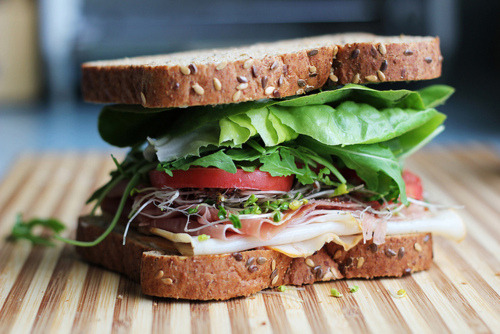
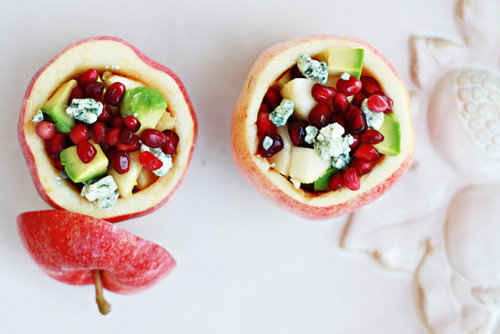
Image result for healthy eating tumblr

A healthy weight loss program consists of:
  • A reasonable, realistic weight loss goal
  • A reduced calorie, nutritionally-balanced eating plan
  • Regular physical activity
  • A behavior change plan to help you stay on track with your goals
We want to help you with each of these components.

Keep in Mind
  • Calories count
  • Portions count
  • Nutrition counts
  • Even a small amount of weight loss can lead to big health benefits
  • Strive to develop good habits to last a lifetime
  • Discuss weight loss with your doctor before getting started

Getting Started
  • Check your Body Mass Index(link is external) (BMI) - an indicator of body fat - and see where it fits within the BMI categories.
  • Discuss weight loss with your doctor and decide on a goal. If you have a lot of weight to lose, set a realistic intermediate goal, maybe to lose 10 pounds. Remember that even a small amount of weight loss can lead to big health benefits.
  • Estimate your calorie needs. Using USDA's online Adult Energy Needs and BMI Calculator(link is external), you can determine the number of calories needed each day to maintain your current weight. To lose about 1 pound per week, subtract 500 calories each day from the daily amount. To lose about 2 pounds per week, subtract 1000 calories daily.
  • Score your current food intake and physical activity level using MyPlate SuperTracker. Taking a good look at your current habits will help you determine what changes you might make as well as what you are doing right.

How Do I Know Which Weight Loss Plan is Right For Me?
  • Keep in mind that you want to develop lifestyle habits that will help you maintain your weight in a healthy range. A short-term "diet" that you "go on" and then "go off" is not the answer to long-term weight management.
  • In choosing how to go about losing weight, keep in mind key habits of people who have lost weight and kept in off. These people are called "Successful Losers" by the weight control experts who have studied them.

Key Behaviors of Successful Losers*
  • Getting regular physical activity
  • Reducing calorie and fat intake
  • Eating regular meals, including breakfast
  • Weighing themselves regularly
  • Not letting small "slips" turn into large weight regain


source

Saturday, 19 March 2016

Tips for losing weight healthily

The Australian Dietary Guidelines recommends that we all achieve and maintain a healthy weight. More than half of all Australian adults are above their healthiest weight.

How do you know if you are carrying extra weight?

Most adults can use the following graph as a guide to the healthiest weight for their height.  Draw a line across from your height without shoes in centimetres and a line straight up from your weight in kg with light clothes but no shoes. The point where these two lines cross will land in a BMI range. Your weight will be classified as ‘underweight’ (less than your healthiest weight), ‘normal’ (healthiest weight), ‘overweight’ (above your healthiest weight and at greater risk of some health problems) or ‘obese’ (significantly above your healthiest weight and at greatest risk of health problems).
You can also use the graph to work out what is the healthiest weight for your height. The graph cannot be used for children or people under eighteen years of age because they are still growing and developing.

A graph showing Body Mass Index (BMI) height and weight. Formula = weight over heaight.

If you are carrying extra weight losing even 5kg can make you feel better and lower your risk factors for health problems.
Everyday there are new ideas, diets, programs and books telling us how to lose weight. It can be very confusing and hard to know what to try.
It’s easier than ever before to gain weight and harder to take it off. Discretionary foods are cheaper and tastier, portion sizes are larger and we are less active at work and in our spare time.
So to lose weight that stays off we need to make small changes that turn back the clock. We need to limit discretionary foods, down size our portions, and find ways to be more active in our everyday lives.
To lose weight, we need to eat and drink fewer kilojoules that we use. Choosing foods from the Australian Dietary Guidelines will help us choose foods that provide the most nutrients, without the extra kilojoules. For example eating more coloured vegetables and salad will keep us feeling fuller for fewer kilojoules. In fact making half our meals coloured vegetables or salad and having smaller portions of the other foods, we can reduce the kilojoules by up to half.
There recommended number of serves can be used to plan meals and snacks for weight loss. Following the serves from the Five Food Groups and avoiding discretionary foods will help most people lose weight while staying healthy. Younger men, people who are taller than average or more active may find they need to include the ‘additional serves’.


Planning is the secret to successful weight loss. By thinking ahead about meals and snacks we can spread the number of serves from the five foods groups over interesting meals and snacks and avoid unplanned eating of extra serves or discretionary foods.
Making a plan for meals and snacks will also make food shopping easier and quicker and cheaper and avoid unplanned extra kilojoules, because then we can buy exactly what we need. Also, knowing a few tips for getting the most out of food labels when shopping can help avoid extra kilojoules.
Eating away from home can be a challenge when wanting to lose weight, but again, thinking ahead and knowing some useful strategies can make it work.
If we eat more ‘mindfully’, turning off the TV, slowing down and savouring food, we can enjoy food more, be more in touch with how hungry or satisfied we are and eat less.


Source

Thursday, 18 February 2016

How Do Monounsaturated Fats Help You to Lose Belly Fat?

Stubborn belly fat can make it hard to fit into your jeans and uncomfortable to carry around. Choosing to add monounsaturated fats into a balanced diet will help promote fat loss through your midsection. Include foods that are high in monounsaturated fats into your daily meal plan to help to burn unwanted fat.

Burn Belly Fat

Belly fat can be banished when you fill your diet with monounsaturated fats. The March 2007 issue of the "Journal For Diabetes Care" explained that eating a source of monounsaturated fatty acids with each meal of your day will help your body burn fat from the stomach area. Monounsaturated fats help to increase your basal metabolic rate allowing your body to burn fat quicker.

Satiety

The "American Journal of Clinical Nutrition" published a study in April 2009 that found eating monounsaturated fats increase satiety unlike saturated fats. Monounsaturated fats will help keep you full and satisfied longer. This will help prevent over-eating, which will help you restrict your calories for weight loss. Add olive oils to your pasta or avocados to your sandwich to help you include extra monounsaturated fats to your meals.

Foods

Almonds are a healthy source of monounsaturated fats. The Almond Board of California explains that including about 1 oz. of almonds daily will help to keep your metabolism elevated. Olive oil and avocado are also foods filled with monounsaturated fats. These fats will help you burn belly fat when eaten in moderation. Portion sizing is key because these foods can be high in calories. Limit the amounts you consume to 10 almonds or 1/2 an avocado for fat burning results.

Considerations

Stubborn belly fat can be decreased when you incorporate exercise to your healthy eating plan. Cardio training most days of the week for 30 minutes will help you melt off body fat. Weight training should be done three days a week to increase your lean muscle, which will help your body burn more calories during the day. Also target training your midsection will help to whittle away your waistline.
Do include monounsaturated fats into your weight loss diet? If you have any questions or information you'd like to share comment below.


Source

References

Friday, 18 December 2015

Diet for healthy post-baby weight loss

Eager to get back into shape now that you're no longer pregnant? For long-term success – and to keep yourself feeling good along the way – keep these tips in mind.


Don't start dieting too soon


Your body needs time to recover from labor and delivery. Give yourself until your six-week postpartum checkup before you start watching your calorie intake and actively trying to slim down. And if you're breastfeeding, experts recommend that you wait until your baby is at least 2 months old before you try to lose weight.

Starting a diet too soon after giving birth can delay your recovery and make you feel more tired – and you need all the energy you can muster to adjust to life with your newborn. In addition, if you're nursing, dieting can affect your milk supply. If you're patient and give your body a chance to do its work, you may be surprised at how much weight you lose naturally, especially if you're breastfeeding.


Be realistic about weight loss

Keep in mind that you may not be able to return to your exact pre-pregnancy weight or shape. For many women, pregnancy causes permanent changes such as a softer belly, slightly wider hips, and a larger waistline. With this in mind, you might want to adjust your goals a bit. For a reality check, see our photo gallery of real post-baby bellies.


Embrace exercise

There's no magic pill to help you lose weight: A healthy diet combined with regular exercise is the best way to shed the pounds – and to keep them off. And it's important to exercise while trying to lose weight to ensure you're losing fat instead of muscle.

Once you're ready to begin losing weight, start by eating a little less and being more active – even if you're just taking a quick walk around the block with your baby in the stroller.

Lose weight slowly

Don't go on a strict, restrictive diet. Women need a minimum of 1,200 calories a day to stay healthy, and most women need more than that – between 1,500 and 2,200 calories a day – to keep up their energy and prevent mood swings. And if you're nursing, you need a bare minimum of 1,800 calories a day (most nursing moms need more like 2,000 to 2,700 calories) to nourish both yourself and your baby.
If you're breastfeeding, you'll want to make sure to take it slow – losing weight too quickly can cause a decrease in your milk supply.
Too-rapid weight loss can also release toxins that are stored in your body fat into the bloodstream – and into your milk supply. (Toxins that can make it into your bloodstream include environmental contaminants like the heavy metals lead and mercury, persistent organic pollutants like PCBs and dioxins, and solvents.)
Weight loss of about a pound and a half a week is safe and won't affect your milk supply if you're nursing. To achieve this, cut out 500 calories a day from your current diet (without dipping below the safe minimum) by either decreasing your food intake or increasing your activity level.


Eat up – and take your time!

With a new baby and schedule, it can be hard to find the time to eat. But skipping meals can make energy levels lag – and it won't help you lose weight. Many moms find that eating five to six small meals a day with healthy snacks in between (rather than three larger meals) fits their appetite and schedule better. (A small meal might be half a sandwich, some carrot sticks, fruit, and a glass of milk.)
Don't skip meals in an attempt to lose weight – it won't help, because you'll be more likely to eat more at other meals. And you'll also probably feel tired and grouchy.
Even if you've never been much of a breakfast person, keep in mind that eating breakfast can help keep you from feeling famished – and tired – later in the morning, and it can give you the energy to be more active.

In addition, numerous studies show that skipping breakfast can sabotage your weight loss efforts. According to the National Weight Control Registry, which has tallied the successful strategies of dieters who have lost an average of 66 pounds and kept it off for 5.5 years, 78 percent of the dieters eat breakfast daily. Slow your eating down, too, if possible. When you take your time eating, you'll notice that it's easier to tell when you feel full – and you're less likely to overeat.

Be choosy about foods and drinks

Research shows that consuming low-fat milk and dairy products and choosing whole grain products like whole wheat bread and whole grain cereal can help you lose weight. Other good choices include low-fat, high-fiber foods such as fruits (like apples, oranges, and berries) and raw vegetables (like carrots, jicama, and red pepper strips) for healthy snacks.
Other ways to squeeze in more fruits and veggies: Make fruit (or veggie) smoothies, use fruit or vegetable salsas or vegetable reduction sauces (sauces made from puréed vegetables) over fish or chicken, add shredded carrots to your sandwich, try grilled vegetables, and try puréed vegetable soups. (Puréeing your soup makes it creamy without having to add cream, which is high in calories and saturated fat. It's also a great way to eat veggies you might not ordinarily eat on their own.)
Fat has twice as many calories as carbohydrates or proteins, so trimming the extra fat from your diet is probably the easiest way to cut calories. Look for low-fat or fat-free dairy products (you don't need to drink whole milk in order to make quality breast milk!), choose broiled or baked rather than fried foods, and limit your intake of sweets, which have extra calories from sugar and fat.
Keep in mind, though, that fat is an important nutrient, so your goal isn't to eliminate it from your diet. In fact, including some fat at each meal will help you stay full and keep you from overeating carbohydrates. (Too many calories from any source – fat, protein, or carbs – can lead to weight gain or keep you from accomplishing weight loss.)
The trick is to choose "good" fats rather than "bad" fats. The best fats are mono- and polyunsaturated fats, like those in canola oil, olive oil, avocado, olives, nuts and seeds, and fatty fish like salmon. The oils to avoid are saturated and trans fats, which can contribute to heart disease and perhaps diabetes, and can be transferred to breast milk, too.
Saturated fats are found in meats and dairy products, and trans fats are typically found in many fried foods, snack foods, and baked goods. (Food labels specify which kinds of fats the products contain.)
Finally, although you should be drinking about 8 or 9 cups of fluids each day, watch what you drink – a surprising number of calories can be hidden in juice, soda, and coffee drinks.


Daily food plan for healthy post-baby weight loss


The food plan below adds up to 2,200 calories a day for breastfeeding moms. For non-breastfeeding moms, it totals 1,800 calories a day. Use this as a rough guide – your individual calorie needs will vary depending on your weight, metabolism, and activity level, and also on how much you're breastfeeding.
View and print daily food plan.


Source

Sunday, 6 December 2015

Losing weight after pregnancy

You should plan to return to your pre-pregnancy weight by 6 to 12 months after delivery. Most women lose half of their baby weight by 6 weeks after childbirth (postpartum). The rest usually comes off over the next several months.


A healthy diet with daily exercise will help you shed the pounds. Breastfeeding can also help with postpartum weight loss.


Take Your Time


Your body needs time to recover from childbirth. If you lose weight too soon after childbirth, it can take longer for you to recover. Give yourself until your 6-week checkup before trying to slim down. If you are breastfeeding, wait until your baby is at least 2 months old before you try to lose weight.
Aim for a weight loss of about a pound and a half a week. You can do this by eating less food and getting more exercise.
  • To do this, cut out 500 calories a day from your current diet. Ask your doctor how many calories you need each day.
  • DO NOT drop below the minimum number of calories you need.

Breastfeeding


If you are breastfeeding, you will want to lose weight slowly. Weight loss that happens too fast can make you produce less milk. Losing about a pound and a half a week will not affect your milk supply or your health.
Breastfeeding makes your body burn calories. It helps you lose weight. If you are patient, you may be surprised at how much weight you lose naturally while breastfeeding.
These healthy eating tips will help you lose weight safely.
  • DO NOT skip meals. With a new baby, many new moms forget to eat. If you do not eat, you will have less energy, and it will not help you lose weight.
  • Eat 5 to 6 small meals a day with healthy snacks in between (rather than 3 larger meals).
  • Eat breakfast. Even if you do not normally eat in the mornings, get into the habit of having breakfast. It will give you energy to start your day and stop you from feeling tired later.
  • Slow down. When you take your time eating, you will notice that it is easier to tell that you are full. You will be less likely to overeat.
  • Choose non-fat milk and dairy products. Look for low-fat or fat-free dairy products. You do not need to drink whole milk in order to make good breast milk.
  • When you reach for a snack, choose fruits and vegetables. Foods like apples, oranges, berries, bananas, carrots, and pepper strips are great snack choices. They are low in fat, but high in vitamins and fiber.
  • Drink 8 or 9 cups of liquids a day. Drinking water helps your body flush out fat. Limit drinks like sodas, juices, and other fluids with sugar and calories. They can add up and keep you from losing weight.
  • Choose broiled or baked rather than fried foods.
  • Limit sweets, sugar, and fat.

Do Not Crash and Burn


DO NOT go on a crash diet (not eating enough) or a fad diet (popular diets that limit certain types of foods and nutrients). They will probably make you drop pounds at first. But those first few pounds you lose are fluid and will come back.
Other pounds you lose on a crash diet may be muscle instead of fat. You will gain back any fat you lose on a crash diet once you return to normal eating.

Be Realistic


You may not be able to return to your exact pre-pregnancy weight or shape. For many women, pregnancy causes lasting changes in the body. You may have a softer belly, wider hips, and a larger waistline. Make your goals about your new body realistic.

Exercise

A healthy diet combined with regular exercise is the best way to shed the pounds. Exercise will help you lose fat instead of muscle.
Once you are ready to start losing weight, eat a little less and move a little more each day. It may be tempting to push yourself into a hard routine for fast weight loss. But rapid weight loss is not healthy and is hard on your body.
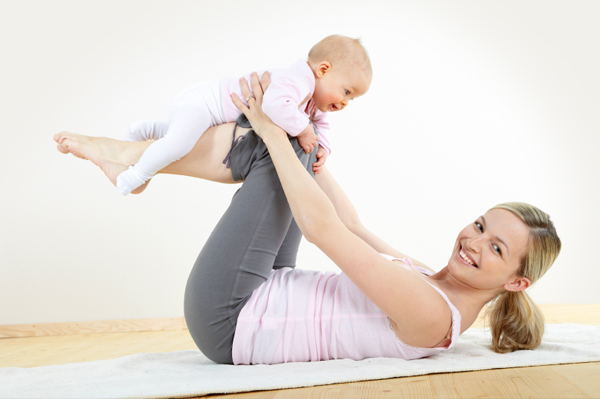
DO NOT overdo it. Just a quick walk around the block with your baby in the stroller is a great way to add exercise to your daily routine.


Comment below if you found this helpful. Let me know what you think x


Source

References

Berger AA, Peragallo-Urrutia A, Nicholson WK. Systematic review of the effect of individual and combined nutrition and exercise interventions on weight, adiposity and metabolic outcomes after delivery: evidence for developing behavioral guidelines for post-partum weight control. BMC Pregnancy and Childbirth. 2014;14. Accessed Nov. 24, 2014.
Mottola MF. Exercise prescription for overweight and obese women: pregnancy and postpartum.Obstet Gynecol Clin North Am. 01 Jun 2009; 36:301-16, viii.
Newton ER. Lactation and breastfeeding. In: Gabbe SG, Niebyl JR, Simpson JL, et al, eds.Obstetrics: Normal and Problem Pregnancies. 6th ed. Philadelphia, PA: Elsevier Saunders; 2012:chap 23.