Imagine this scenario:
Your DOCTOR diagnoses you with a life-threatening illness.
 The only treatment, he says, is “brain surgery.”
Panic stricken, you visit a different doctor for a second opinion.
It turns out the first doctor was right about the illness but wrong about the treatment.
“Antibiotics will suffice.”
Do you see where this is going?
Relieved but still worried you visit a third doctor. Again he agrees with the diagnosis but not the treatment. It turns out, “you need to have your leg amputated.”
You feel confused and helpless, so you visit 20 more doctors and get 20 different suggested treatments. What option do you choose?
This is a ridiculous situation, right? No way would 23 experts all disagree on the best treatment for a life-threatening illness… would they…?
Well, I’ll rephrase the question:
You are morbidly obese, and a doctor tells you a heart attack is imminent unless you improve your diet. Scared into action, you start visiting nutritionists for help with choosing the right diet. You visit 23 in total.

They all agree that you have a high risk of heart attack but disagree about which diet is best for you. You feel confused and helpless, so you write down the list of diets in order to make a better decision. It looks something like this:
“Vegetarian, vegan, weight watchers, south beach, raw food, Mediterranean, pescatarian, paleo, zone, Atkins, slow carb, blood type, glycemic index, alkaline, green smoothie, gluten free, ketogenic, fasting, low fat, low sodium, macrobiotic, organic, slimming world.”
Welcome to the world of nutrition.
The most contradictory and confusing science on earth…
That’s how it seems anyway. But nutrition from a practical standpoint, isn’t actually that complicated at all. It only appears that way because people study it the wrong way round.
They choose a diet that looks interesting and reverse study nutrition through the framework of that diet. This causes all kinds of information gaps. It’s like an illiterate trying to learn English through a Shakespeare play.
I think that learning the alphabet first would be a slightly better strategy.
This article is not a diet or an eating plan and does not push any dietary agenda your way. Its only concerns are the elements of nutrition that are irrefutable and omnipotent in every single diet on that list: calories and nutrients.
All I invite you to do, before you decide which nutritional road to travel down, is to first get acquainted with the roadmap.
The Nutritional Roadmap

Scientific definitions are often really detailed and precise but lack practical value. We struggle to relate the intricacies of biochemistry to our own personal health goals. I’ve simplified everything here as much as possible, but without overlooking what I consider the most important elements.
What Are Calories? (kcal)
Scientific definition: the energy needed to raise the temperature of 1 kilogram of water through 1 °C, equal to one thousand small calories and often used to measure the energy value of foods.

As I said, not exactly practical huh?
Calories are energy or fuel. We’ll be thinking of them as building blocks or bricks since energy is vague and does not summon a concrete image in our minds. Whether you gain weight, lose weight or maintain weight is entirely down to the calories you consume versus the calories you burn (the energy balance equation).
For this reason, calories are the most important factor in body recomposition. It’s impossible to gain weight in a calorie deficit (eating less that you burn), and it’s impossible to lose weight in a calorie surplus (vice versa).
To give calories some practical significance just keep in mind that 3,500 calories = 1lb of fat.
There are some people who argue that calories don’t matter and that the hormones that our bodies produce are the main cause of weight gain or loss. One of the biggest proponents of this view is the best-selling author of Good Calories, Bad Calories, Gary Taubes.
He argues that carbohydrates are the cause of nearly every metabolic disorder because they spike a hormone called insulin, which causes us to gain weight. It’s a lovely idea, but it’s wrong. By the end of this section, you’ll understand more about calories than 99% of the population, including Taubes.
A common argument against the energy balance equation goes as follows:
“So you’re saying a person will gain the same amount of weight eating 1000 calories of ice cream versus 1000 calories of lean tuna?”
Let’s look at the ‘calories in’ part of the energy balance equation. We don’t breathe calories, we don’t usually absorb them through our skin, we eat them and drink them. That’s pretty much it.
The person asking the above question obviously understands this. But so does everyone else. It’s the ‘energy out’ part of the equation that confuses people. You see, there’s more to burning calories than cardio…
The 4 Ways To Calculate Calories Burned
1. Thermic Effect of Activity aka Exercise (TEA)
Okay, so cardio does burn calories. But not many compared to what we eat. A 35min run at 6.7mph will help you burn roughly 400 calories, equivalent to a muffin.
So if we do the math, and a pound of fat is 3,500 calories, all you need to do is run for 45 minutes at 6.7mph, seven days per week, while maintaining the exact same daily intake of food and you’ll lose one pound! Yeah, what I thought… muffins aren’t that nice.
2. Basal Metabolic Rate (BMR)
Your BMR is the total daily amount of calories you burn by quite literally being alive. Your BMR is what you would burn if you were in a coma. One of the main differences between dead people and people in a coma is that people in a coma still need to eat!

In the same way a car with the engine turned off doesn’t require fuel, a car with the ignition on does – even if it remains stationary. In a human body, everything needs calories. Your heart, your lungs, your skin, your eyes, your brain and every cell in between. Your BMR is where most of your calories go on a daily basis.
3. Non-Exercise Activity Thermogenesis (NEAT)
NEAT accounts for all of the activity you do throughout the day that you wouldn’t really class as an exercise, i.e. fidgeting, being expressive, pottering around the house. You’d be surprised how many calories you’re capable of burning from this type of activity. For an energetic fidgeter, possibly hundreds each day.
4. Thermic Effect of Food (TEF)
Ah, now this is the one most people don’t understand. Remember our question about whether you’d gain the same amount of weight if you ate 1000 calories of ice-cream versus 1000 calories of tuna?
Well, I have to concede to the ‘carbs are the devil’ people here. Because you would indeed gain more weight if you ate the ice cream than if you ate the tuna, even though they contain the same amount of calories. But don’t rule out calories yet. They still count. Here’s how:
Food is made up of calories, but calories are made up of something themselves: macronutrients such as carbohydrates, fats and proteins (we’ll get into more depth in a moment).
Different macronutrients are processed and utilised differently by the body and require different amounts of energy (calories) to do so. This process is called the Thermic Effect of Food (TEF).
Protein, for instance, has a TEF of about 20-30%. This means that 20-30% of the calories you consume from protein get used up just in the digestion process.
So out of 1000 calories of tuna, 200-300 calories would be ‘burnt’ just by the mere processing of it. 1000 calories of tuna, when all is said and done is actually closer to 700 calories of tuna.
Carbohydrates, on the other hand, have a low TEF of 6%. So of course tuna, when you subtract its thermic effect is not going to make you as fat as ice-cream! Calories in, calories out. There’s no way around it.
What are Macronutrients?
Scientific definition: a type of food (e.g. fat, protein, carbohydrate) required in large amounts in the diet.
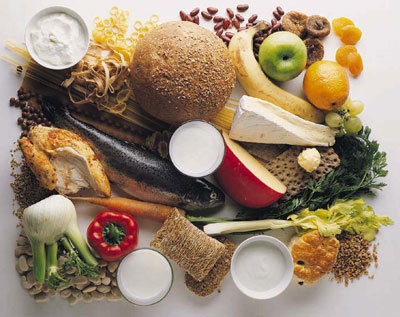
Our body has no emotional attachment or concept of what ‘food’ is. Whether we eat a bowl of sugar or a plate of greens, the only thing our bodies recognise are the nutrients within. So that’s what we’ll be studying here.
There are only 5 types of Macronutrients (carbs, fat, protein, fiber, alcohol). While calories determine weight gain and weight loss, macronutrients determine where that weight gain or weight loss comes from. For instance, weight loss can come from fat loss, or just as easily from muscle loss depending on the macronutrient composition of your diet.
An easy way to think about it is this:
Calories determine how heavy you are, macros determine how heavy you look.
The best analogy to help think of and understand the interplay of calories and macros, and one we’ll be referring to throughout, is that of a house. As previously stated, the calories represent the total number of bricks, the macros represent the architecture of the house. With the same amount of bricks, it’s possible to create two very different looking houses.
Broken Down Food Pyramid
It’s worth remembering, food itself very rarely consists of a single macronutrient. Bread, potatoes, and rice, for instance, are commonly thought of as carbohydrates. While these foods may consist predominantly of carbs, they also contain fat, protein and fiber.
The same applies to other singularly dense macronutrient foods, i.e., chicken, protein powder with the rare exception of things like lard, which by definition is pure fat.
1. What Is Protein?
Scientific definition: any of a class of nitrogenous organic compounds which have large molecules composed of one or more long chains of amino acids and are an essential part of all living organisms, especially as structural components of body tissues such as muscle, hair, etc., and as enzymes and antibodies.

Straight off the bat, most people don’t eat enough protein.
Most of our cells are made out of protein, and it’s essential to keep them healthy and in a constant state of regeneration. Protein is also the most satiating (filling) of all the macronutrients, has the highest TEF, helps stabilise blood sugar and helps preserve muscle mass. (Muscle mass is the first thing to go in old age – my advice, eat more protein).
The way to think of protein in our house analogy is the cement and foundations that holds everything together. Not eating enough protein will make your house weak, unstable and less resistant to the harsh effects of the environment.
Protein Stats:
- 4 kcal per gram.
- TEF 20-35%
2. What Are Carbohydrates?
Scientific definition: any of a large group of organic compounds occurring in foods and living tissues and including sugars, starch, and cellulose. They contain hydrogen and oxygen in the same ratio as water (2:1) and typically can be broken down to release energy in the animal body.
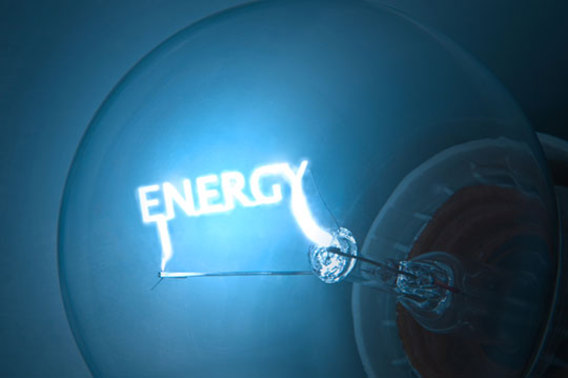
If you were to simplify carbohydrate’s practical uses into one word, that word would be ENERGY. Your body doesn’t need carbohydrates to survive because at very low levels your body makes it’s own called ketones. But for most modern active people, this isn’t worth getting caught up with.
In our house analogy, carbohydrates would be the electricity keeping everything powered optimally. Powering your body on ketones, is like a house running on candle light. It still functions but creates unnecessary limitations.
Carb Stats:
- 4 kcal per gram (100 grams of pure carbohydrate = 400 Calories)
- TEF = 5% (Remember TEF? It means that 5% of the total calories consumed from carbohydrates are used up by your bodies processing of them)
3. Dietary Fats
Scientific definition: Fats consist of a wide group of compounds that are generally soluble in organic solvents and generally insoluble in water. Chemically, fats are triglycerides: triesters of glycerol and any of several fatty acids

We cannot survive without fat in our diet, neither can we survive without fat on our body (even people with six packs have some fat).
Fat to put simply is the HORMONAL REGULATOR of the body.
If you go too low on fat – libido, menstrual cycles, skin health, eye health and a host of other very important biochemical processes get thrown off.
In our nutritional house, fat would be the maintenance guy. Without fat your home would become rusty, faulty and broken. Fat keeps everything well-oiled and functioning as it should.
There are four different subtypes of fat called polyunsaturated fat, monounsaturated fat, saturated fat and trans fat. This article is not about dietary recommendations, but if I were to make one quick suggestion, the only fat you should stay away from is trans fat (man-made).
As you can see in the fat stats below, fat contains more than twice as many calories per gram as protein and carbohydrate, which is why low-fat diets are so effective. They allow you to slash the least amount of food volume from your diet while creating the biggest caloric deficit.
The only problem is, very low-fat diets taste like cardboard and are difficult to adhere to.
Fat Stats:
- TEF 3%
- 9 kcals per gram
4. What Is Fiber?
Scientific Definition: dietary material containing substances such as cellulose, lignin, and pectin, that are resistant to the action of digestive enzymes.

There are two types of fiber: soluble (mixes with water) and insoluble (doesn’t mix with water).
Fiber helps massively with digestion, stabilizing blood sugar, and keeping us satiated.
Most people consume a shockingly low daily amount of fiber. And not surprisingly, bowel cancer is the third most common type of cancer in men and woman.
Lyle McDonald refers to fiber as, ‘natures broom’. So in our house analogy, fiber is the cleaner. I won’t get too graphic, you get the picture.
Fiber Stats:
- Fiber does contain calories 1.5-2 cal/gram depending on the type. But since it’s absolutely vital, and is a massive benefit in fat loss due to it’s slowing down of digestion and blood sugar regulation. Don’t dare worry about gaining weight from fiber. Every grown adult should have at least 20g per day at a minimum.
5. Are There Calories in Alcohol?
Scientific Definition: a colourless volatile flammable liquid which is the intoxicating constituent of wine, beer, spirits, and other drinks, and is also used as an industrial solvent and as fuel.

Alcohol, the pure chemical, unfortunately, does also contain calories. Many people don’t realise this. Diet coke and vodka may contain minimal amounts of fat, protein and carbohydrates, but because alcohol is never listed on the ‘nutritional information’ people don’t realise that it’s a macronutrient in its own right.
In our house analogy, alcohol would be a temporary power cut. The calories in alcohol don’t store as fat. But the catch is when you consume alcohol, your body, in order to get it out of the system, places it high on its metabolic priority list.
In other words, consuming alcohol shuts down the fat burning process for the other foods you’ve eaten that day. So be extra careful about what you eat on the way home from a night out.
For a comprehensive guide to alcohol, there’s no better article than Martin Berkhan’s ‘The Truth About Alcohol.‘
Alcohol Stats:
- TEF = 20% (close second to protein)
- 7 Kcals per gram
What Are Micronutrients?
Scientific definition: a chemical element or substance required in trace amounts for the normal growth and development of living organisms.
 Micronutrients are vitamins and minerals.I won’t be able to go into too much depth here because there’s so many of them.
Vitamins are not very important for overall body composition since they don’t contain calories, but they are very important for general health and wellbeing. Eating 10 multivitamins per day doesn’t necessarily make you super healthy, but being deficient in certain micronutrients certainly makes you superunhealthy.
A classic example is scurvy caused by vitamin C deficiency or anaemia caused by iron deficiency.
Examples of micronutrient dense food are salad, fruit and vegetables. Think of these as the furniture of our nutritional house. What good is it looking good on the outside if inside you’re barren and lifeless? Too much on the other hand is not necessarily better. But too little, and your home becomes uninhabitable.
Nutritional Roadmap Summary
So there we have it. A nutritional roadmap for you to follow whenever you get inundated with extraneous nutri-babble. As they say ‘simplicity is the ultimate sophistication’, so the next time you feel lost in the contradictory world of nutrition, just think of this house and the following 9 points, and you’ll be sure to find your way back home.
 1. Calories affect how heavy you are; macros affect how heavy you look.
2. There are 3,500 calories per pound of fat.
3. We burn calories, through being alive, exercising and the thermal effect of food.
4. Carbohydrates are energy.
5. Protein repairs, heals and keeps you strong.
6. Fat regulates your hormones.
7. Fiber is nature’s broom.
8. Alcohol contains calories and shuts down fat burning.
9. Micronutrient deficiencies causes illness.
Source