Showing posts with label fats. Show all posts

Monday, 4 April 2016

Fat Loss Through Nutrition

Cleaning up your diet will increase the effects of fat loss and give you more vitality. Learn how to eat smart with fiber, carbs and protein in your diet.
source
I think that most people who want to lose weight claim that eating healthier is the largest barrier standing in the way of their goal. I do not believe that this is due to pure laziness. The lack of knowledge concerning nutrition prevents the majority of people from starting or sticking with a diet. Companies have made, and continue to make millions off of this fact. Take your average fitness magazine; every month there is at least one new diet for readers to try out. Dr. Atkins (who just recently had a heart attack) has made a fortune off of his famous high protein and fat, low-carbohydrate diet. So, what should you eat, how much, and how many times per day? That depends on you!

Being Too Strict
The biggest mistake I have seen with dieters is that they go into a diet with the intention of being overly strict on what they allow themselves to eat. The problem is that when they slip up and cheat, they see it as absolute failure and quit the entire idea. The result is a retiring back to old, bad habits. This is called the Abstinence-Violation Effect and needs to be avoided at all cost. You need to approach dieting with a flexible mindset, allowing yourself to have food, here and there, that doesn't go along with the program. Otherwise, you will drive yourself nuts and end up worse off than when you started.
Dieting can be simple, if you allow it to be. Fat gaining is achieved when you consume more energy, in the form of calories, than you expend throughout the day. Fat cells are simply cells that store excess energy. The only way to get rid of that excess energy is through burning off more calories than you take in, plain and simple. In addition to exercising more, cleaning up your diet will increase the effects of fat loss and give you more vitality.

Dieting can be very simple, if you allow it to be.
"DIETING CAN BE 
SIMPLE, IF YOU
ALLOW IT TO BE." 

Are Carbs Really The Enemy?
For some reason, Americans have this idea that eating carbohydrates is actually what makes you fat. This is true if you eat large amounts of high glycemic index (GI) carbohydrates. The GI is a ranking of carbohydrates that refers to the amount of blood glucose that appears after ingesting a form of carbohydrates. High GI carbohydrates result in higher amounts of blood glucose, leading to higher levels of insulin following ingestion. Low GI carbohydrates result in lower amounts of blood glucose and insulin. The increase in insulin has been related to increased fatness in individuals tested. This is because insulin is the body's main anabolic hormone, increasing glycogen stores, protein stores, and fat stores. This occurs through activation of enzymes that cause cells to store these nutrients and inactivation of enzymes that cause a release of these nutrients from cells. Studies conducted have demonstrated that animals fed low GI diets were leaner and had lower blood glucose than animals fed high GI diets.


High GI Carbs
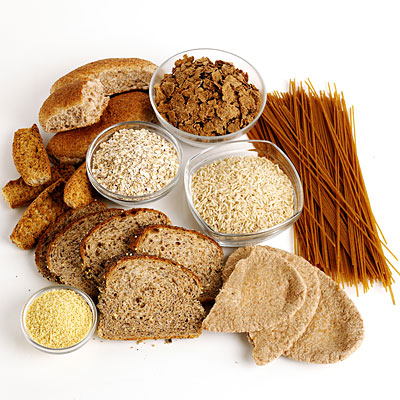
Sources of high GI carbohydrates are those that are high in refined sugar and refined starch, "starchy carbs." Examples of high GI carbohydrates are most cereals (cereals high in bran have a lower GI), white bread, potatoes, rice, popcorn, and carrots. Now, be reasonable, although carrots are high on the GI, a person would have to consume a large amount of carrots, daily, in order to get the full effect as you would from a normal serving of something like white bread. Sources of low GI carbohydrates are those that are high in fiber. Examples include virtually all vegetables (excluding carrots) and fruit. While fruit is high in sugar, fructose is low in glucose, which is why it is a low-GI carbohydrate. Another reason why vegetables and fruits are low on the GI is because they both contain relatively larger amounts of fiber. Fiber cannot be digested and absorbed for energy by the small intestine. However, fiber can be broken down in the large intestine by bacterial flora. This process results in fermentation in the colon to produce carbon dioxide, alcohol, and/or an organic acid.
XXX

Fibre
There are two types of fiber, water soluble and water insoluble. Soluble fiber is rapidly broken down and fermented while insoluble fiber is not. Soluble fiber slows the appearance of glucose in the blood due to its viscous property. The viscosity of soluble fiber slows down the transit time of foodstuffs in the upper digestive tract, and lowering nutrient absorption rates. This, in turn, lowers the blood concentrations of ingested macronutrients, leading to lower amounts of absorbed energy. Other great sources of fiber come from melons, oat bran, psyllium, wheat, and whole-grain breads.

Eat Fat!
XXX
Fat should not be avoided. While fats are the most energy dense of all the macronutrients, they are a vital part of a diet. Diets high in saturated fats, such as lard, should be avoided. Saturated fats keep lipolytic enzymes (enzymes that break down fat for energy) dormant, thus promoting increased fat stores, not to mention the health risks that are involved in diets with high amounts of saturated fatty acids. Trans-fats are made through hydrogenation that solidifies oils (unsaturated fats). Sources include margarine, cookies, crackers, and most snack foods. Unsaturated fats, both mono and polyunsaturated fats are oils and are both healthy sources of fat, if taken in moderation/low amounts. This is because many unsaturated fats are essential; our body does not make them. Without these fats, our bodies would not function properly, and you need proper functioning if you want to lose fat. Great sources of these types of fats are olive oil, flaxseed oil, corn oil, soybean oil, salmon, tuna, cod, walnuts, peanuts, sunflower oil, and safflower oil.

AHHHH Yes, Protein
Protein is the only macronutrient that has an RDA, Recommended Daily Allowance, and it is .8 g of protein/kg of body weight. A lot of the new literature is stating that athletes may benefit from increasing protein intake to 1.2-1.6 g of protein/kg of body weight. However, the typical American diet usually exceeds these amounts in a given day. Excessive protein is stored as fat just as excessive fat and carbohydrate intakes. If you do decide to increase protein intake, you might want to consider increasing water intake also in order to keep your kidneys healthy. Quality protein is important. There are nine essential amino acids that we must get from food. Eating a variety of protein sources will ensure that you are getting all nine of these amino acids. Quality sources are usually in the form of animal tissue such as beef, fish, chicken, and eggs. However, you can get all nine amino acids from mixing beans and corn. Also, tofu and enriched soy can also yield quality protein.

Looking for ways to boost your protein without all the added carbs, fats and artificial ingredients? Click here to check out this amazing low-carb/high-protein shake made by Primal Blueprint and contains only natural, high quality ingredients. 

Primal Fuel


Tips To Chew On

I've listed many food choices that you can choose from when you get ready to start your diet. Don't forget to allow yourself room to cheat. Personally, I have a cheat meal once every 3-5 days. Here are some things to keep in mind!
  1. Stay away from fried foods.
  2. High fat foods make a person fatter if overconsumed.
  3. Foods high in refined sugar and refined starches make a person fatter.
  4. High GI foods make people fatter even when low GI foods have identical calorie content.
  5. Eat in variety and moderation.
  6. Avoid the Abstinance-Violation Effect.
  7. Eat more fresh vegetables and fruits.
  8. Eat between 3-5 meals per day.
  9. Don't starve yourself.
  10. Be positive.
Also, here are a couple of figures to keep in mind when designing your diet
  • 40% of calories should come from carbohydrate.
  • 20% of calories should come from fat.
  • 40% of calories should come from proteins.


Source

Thursday, 17 March 2016

Fat Loss Through Nutrition!

Cleaning up your diet will increase the effects of fat loss and give you more vitality. Learn how to eat smart with fiber, carbs and protein in your diet.
source
I think that most people who want to lose weight claim that eating healthier is the largest barrier standing in the way of their goal. I do not believe that this is due to pure laziness. The lack of knowledge concerning nutrition prevents the majority of people from starting or sticking with a diet. Companies have made, and continue to make millions off of this fact. Take your average fitness magazine; every month there is at least one new diet for readers to try out. Dr. Atkins (who just recently had a heart attack) has made a fortune off of his famous high protein and fat, low-carbohydrate diet. So, what should you eat, how much, and how many times per day? That depends on you!


Being Too Strict

The biggest mistake I have seen with dieters is that they go into a diet with the intention of being overly strict on what they allow themselves to eat. The problem is that when they slip up and cheat, they see it as absolute failure and quit the entire idea. The result is a retiring back to old, bad habits. This is called the Abstinence-Violation Effect and needs to be avoided at all cost. You need to approach dieting with a flexible mindset, allowing yourself to have food, here and there, that doesn't go along with the program. Otherwise, you will drive yourself nuts and end up worse off than when you started.
Dieting can be simple, if you allow it to be. Fat gaining is achieved when you consume more energy, in the form of calories, than you expend throughout the day. Fat cells are simply cells that store excess energy. The only way to get rid of that excess energy is through burning off more calories than you take in, plain and simple. In addition to exercising more, cleaning up your diet will increase the effects of fat loss and give you more vitality.


Are Carbs Really The Enemy?

For some reason, Americans have this idea that eating carbohydrates is actually what makes you fat. This is true if you eat large amounts of high glycemic index (GI) carbohydrates. The GI is a ranking of carbohydrates that refers to the amount of blood glucose that appears after ingesting a form of carbohydrates. High GI carbohydrates result in higher amounts of blood glucose, leading to higher levels of insulin following ingestion. Low GI carbohydrates result in lower amounts of blood glucose and insulin. The increase in insulin has been related to increased fatness in individuals tested. This is because insulin is the body's main anabolic hormone, increasing glycogen stores, protein stores, and fat stores. This occurs through activation of enzymes that cause cells to store these nutrients and inactivation of enzymes that cause a release of these nutrients from cells. Studies conducted have demonstrated that animals fed low GI diets were leaner and had lower blood glucose than animals fed high GI diets.

High GI Carbs

Sources of high GI carbohydrates are those that are high in refined sugar and refined starch, "starchy carbs." Examples of high GI carbohydrates are most cereals (cereals high in bran have a lower GI), white bread, potatoes, rice, popcorn, and carrots. Now, be reasonable, although carrots are high on the GI, a person would have to consume a large amount of carrots, daily, in order to get the full effect as you would from a normal serving of something like white bread. Sources of low GI carbohydrates are those that are high in fiber. Examples include virtually all vegetables (excluding carrots) and fruit. While fruit is high in sugar, fructose is low in glucose, which is why it is a low-GI carbohydrate. Another reason why vegetables and fruits are low on the GI is because they both contain relatively larger amounts of fiber. Fiber cannot be digested and absorbed for energy by the small intestine. However, fiber can be broken down in the large intestine by bacterial flora. This process results in fermentation in the colon to produce carbon dioxide, alcohol, and/or an organic acid.

Fiber

There are two types of fiber, water soluble and water insoluble. Soluble fiber is rapidly broken down and fermented while insoluble fiber is not. Soluble fiber slows the appearance of glucose in the blood due to its viscous property. The viscosity of soluble fiber slows down the transit time of foodstuffs in the upper digestive tract, and lowering nutrient absorption rates. This, in turn, lowers the blood concentrations of ingested macronutrients, leading to lower amounts of absorbed energy. Other great sources of fiber come from melons, oat bran, psyllium, wheat, and whole-grain breads.


Eat Fat!


Fat should not be avoided. While fats are the most energy dense of all the macronutrients, they are a vital part of a diet. Diets high in saturated fats, such as lard, should be avoided. Saturated fats keep lipolytic enzymes (enzymes that break down fat for energy) dormant, thus promoting increased fat stores, not to mention the health risks that are involved in diets with high amounts of saturated fatty acids. Trans-fats are made through hydrogenation that solidifies oils (unsaturated fats). Sources include margarine, cookies, crackers, and most snack foods. Unsaturated fats, both mono and polyunsaturated fats are oils and are both healthy sources of fat, if taken in moderation/low amounts. This is because many unsaturated fats are essential; our body does not make them. Without these fats, our bodies would not function properly, and you need proper functioning if you want to lose fat. Great sources of these types of fats are olive oil, flaxseed oil, corn oil, soybean oil, salmon, tuna, cod, walnuts, peanuts, sunflower oil, and safflower oil.


Ahhh Yes, Protein

Protein is the only macronutrient that has an RDA, Recommended Daily Allowance, and it is .8 g of protein/kg of body weight. A lot of the new literature is stating that athletes may benefit from increasing protein intake to 1.2-1.6 g of protein/kg of body weight. However, the typical American diet usually exceeds these amounts in a given day. Excessive protein is stored as fat just as excessive fat and carbohydrate intakes. If you do decide to increase protein intake, you might want to consider increasing water intake also in order to keep your kidneys healthy. Quality protein is important. There are nine essential amino acids that we must get from food. Eating a variety of protein sources will ensure that you are getting all nine of these amino acids. Quality sources are usually in the form of animal tissue such as beef, fish, chicken, and eggs. However, you can get all nine amino acids from mixing beans and corn. Also, tofu and enriched soy can also yield quality protein.


Tips To Chew On

I've listed many food choices that you can choose from when you get ready to start your diet. Don't forget to allow yourself room to cheat. Personally, I have a cheat meal once every 3-5 days. Here are some things to keep in mind!
  1. Stay away from fried foods.
  2. High fat foods make a person fatter if overconsumed.
  3. Foods high in refined sugar and refined starches make a person fatter.
  4. High GI foods make people fatter even when low GI foods have identical calorie content.
  5. Eat in variety and moderation.
  6. Avoid the Abstinance-Violation Effect.
  7. Eat more fresh vegetables and fruits.
  8. Eat between 3-5 meals per day.
  9. Don't starve yourself.
  10. Be positive.


Also, here are a couple of figures to keep in mind when designing your diet
  • 40% of calories should come from carbohydrate.
  • 20% of calories should come from fat.
  • 40% of calories should come from proteins.


Source

Saturday, 5 March 2016

How Much Do Macronutrients Really Matter?

Macro-focused diets say that by getting the right balance of proteins, carbs and fat, you can lose weight and be healthier.


OK, you might not have heard of the term “macronutrients” before, but you still eat them every day.
They are carbohydrates, protein and fat, and your body needs a lot of them – which is why they’re called “macronutrients,” not “micronutrients,” such as iron and zinc. Macros also provide your body energy: Each gram of carbohydrate contains 4 calories; protein contains 4 and fat, 9. (The only other substance that feeds our bodies calories is alcohol, which has 7 calories per gram. But, since we don’t need booze to survive, it doesn’t get to be a member of the macronutrient club.)
For years, diets have ganged up on this-or-that macronutrient, telling us to banish them as much as possible to lose weight. In the 90s, it was the fat-free craze. But then research found that healthy fats such as avocados, walnuts and olive oil can help you shed fat. For instance, one study in the British Journal of Nutrition shows that adults who eat the most unsaturated fat have lower body mass indexes and less belly fat than those who eat the least.
Then, in the early 2000s, the Atkins Diet stormed onto the scene, and urged people to cut carbs – even from fruits and veggies – and fill up on protein and fat. But some research disputes that approach. In one 2014 PLOS ONE study, when adults tried two different diets, one rich in whole grains and low in red meat and one low in whole grains and rich in red meat (both diets packed the same number of calories), they enhanced the diversity of their gut bacteria, lost more weight and body fat and improved their BMI more than when they swapped whole grains for red meat.
That brings us to today’s macro-focused diets, including The One One One Diet and the IIFYM (If It Fits Your Macros) diet, along with apps such as My Macros+ and Fitocracy Macros. These diets don’t cut macronutrients, but instead tell you to get them all.
“Carbohydrates provide us with energy as well as fiber, which improves heart and digestive health; protein is the building block for strong muscles and healthy tissues and also helps make hormones and enzymes; and fats help maintain healthy tissues and cells, ensure proper nerve and brain function and increase the absorption of fat-soluble vitamins,” says nutritionist Rania Batayneh, author of "The One One One Diet: The Simple 1:1:1 Formula for Fast and Sustained Weight Loss." She adds: “Put simply, each macronutrient plays a very different role in keeping your body healthy, and skipping out on any one of them can compromise health.”
Counting Macros
The One One One Diet focuses on getting one serving of carbohydrates, one serving of protein and one serving of fat at every meal and snack. “Because every meal or snack contains a protein, a carb and a fat, you’re supporting each structure and function of your body with nutrients every few hours, which leads to overall health and wellness," she says. Plus, by combining them at each meal, you can stay full longer, keep your blood sugar from spiking, prevent fat gain, and give your muscles a constant supply of protein for muscle growth.
“Portion control is inherent in the diet and based on the formula when you stick with one of each of the macronutrients,” she says. For example, in The One One One Diet, a serving size of nut or seed butter (which would count as a fat), is 1 tablespoon, not 2 as indicated on the nutrition label. Some foods, count as two different macronutrients, for example, beans count as both a carb and protein, and cheese counts as a fat and protein. In her book, Batayneh provides a cheat sheet of common foods, their macronutrient classifications and serving sizes. Those serving sizes are critical to keeping your macro intake balanced as well as not overdoing it on calories.
Meanwhile, the If It Fits Your Macros diet requires a lot of math. You have to know how many calories your body burns in an average day, and eat 10 to 20 percent fewer calories every day than that number. Then you’ve got to split those calories so you get 40 percent of them from carbohydrates, 40 percent from protein and 20 percent from fat during the course of each day.  It doesn’t matter when you get each of them. Meanwhile, drink plenty of water and make sure you’re getting a good bit of fiber from the foods you’re eating. It’s worth mentioning that while some nutritionists say this is a pretty healthy split, the diet was designed by competitive bodybuilders, not licensed health professionals.
Does It Guarantee Healthy Eating?
“Eating a variety and balance of each macronutrient ensures that you meet your micronutrient goals, which is also key in promoting good health. Proteins tend to be high in iron and zinc; carbs boast fiber and B vitamins; and fats offer omega-3 fatty acids and help absorb fat-soluble vitamins found in many fruits and vegetables,” Batayneh says.
Is that an excuse to get your carbs from donuts and your protein and fat from bacon? There, The One One One diet and IIFYM diet don’t agree. According to Batayneh, you can moderate hits to your health by making sure splurges pack all three macros in roughly similar amounts, but a salmon fillet with brown rice and a green salad with lemon and olive oil is still going to pack more vitamins, minerals and healthy fats (not to mention fewer chemicals) than a fast-food cheeseburger made of processed ground beef, American cheese and a white-bread bun. However, according to IIFYM.com,bodybuilders designed IIFYM so that dieters could eat so-called “dirty” foods without gaining weight. According to the diet, it doesn’t matter if you get your carbs from whole grains or cupcakes, as long as you get the right number of calories from carbs that day
Other health experts such as Wesley Delbridge, a registered dietitian and spokesperson for the Academy of Nutrition and Dietetics, gravitate toward the The One One One approach. “All carbohydrates contain 4 calories per gram, but we are seeing that refined ones are adsorbed and stored differently in the body,” he says. Focus on getting your macros from whole, unprocessed foods and weight loss will likely follow, says Holly Herrington, a registered dietitian in the Center for Lifestyle medicine at Northwestern Medicine in Chicago. But remember that to lose weight, you still have to take in fewer calories than you’re burning, she says. Getting your macros at every meal will make that easier by reducing insulin spikes, crashes and cravings.
While counting macros may be the nutritional ideal, it’s not super practical, Delbridge says. For those who aren’t up to measuring serving sizes or tabulating percentages, simply taking a quick scan of your plate and making sure it contains some of each macronutrient is an easy way to lose weight and be healthier. “If you are really mindful of getting whole, fiber-filled carbs, lean proteins and healthy fats at each meal, you will get yourself into a habit where you won’t really have to think about calories,” he says.
“What I think is missing from the common American diet is that we aren’t focused on getting all of our macronutrients for every meal and snack. People wake up and have a granola bar and an apple for breakfast and think they are doing well. Not to knock apples, but without fat and protein in that breakfast, too, they are just going to be starving and tired in an hour,” he says. Protein and fat delay gastric emptying (how long it takes for food to leave your stomach), prevent blood sugar spikes and help keep your hormone levels stable for longer-lasting fullness and energy.
The American Heart Association recommends that no more than 30 percent of your daily calories come from fat (only 10 percent should be saturated fat). That leaves 70 percent or more of your calories to divvy up between protein and fat. There’s debate over what that split should be, but Herrington recommends that 40 to 60 percent of your total calories come from whole carbs and 20 to 30 percent from lean protein.
The point is, you have wiggle room – as long as, at every meal, you get all three macronutrients.


source

Thursday, 18 February 2016

How Do Monounsaturated Fats Help You to Lose Belly Fat?

Stubborn belly fat can make it hard to fit into your jeans and uncomfortable to carry around. Choosing to add monounsaturated fats into a balanced diet will help promote fat loss through your midsection. Include foods that are high in monounsaturated fats into your daily meal plan to help to burn unwanted fat.

Burn Belly Fat

Belly fat can be banished when you fill your diet with monounsaturated fats. The March 2007 issue of the "Journal For Diabetes Care" explained that eating a source of monounsaturated fatty acids with each meal of your day will help your body burn fat from the stomach area. Monounsaturated fats help to increase your basal metabolic rate allowing your body to burn fat quicker.

Satiety

The "American Journal of Clinical Nutrition" published a study in April 2009 that found eating monounsaturated fats increase satiety unlike saturated fats. Monounsaturated fats will help keep you full and satisfied longer. This will help prevent over-eating, which will help you restrict your calories for weight loss. Add olive oils to your pasta or avocados to your sandwich to help you include extra monounsaturated fats to your meals.

Foods

Almonds are a healthy source of monounsaturated fats. The Almond Board of California explains that including about 1 oz. of almonds daily will help to keep your metabolism elevated. Olive oil and avocado are also foods filled with monounsaturated fats. These fats will help you burn belly fat when eaten in moderation. Portion sizing is key because these foods can be high in calories. Limit the amounts you consume to 10 almonds or 1/2 an avocado for fat burning results.

Considerations

Stubborn belly fat can be decreased when you incorporate exercise to your healthy eating plan. Cardio training most days of the week for 30 minutes will help you melt off body fat. Weight training should be done three days a week to increase your lean muscle, which will help your body burn more calories during the day. Also target training your midsection will help to whittle away your waistline.
Do include monounsaturated fats into your weight loss diet? If you have any questions or information you'd like to share comment below.


Source

References

Friday, 13 November 2015

Top 8 Reasons Not to Fear Saturated Fats

Humans have been eating saturated fats for hundreds of thousands of years.
They were demonized a few decades ago and claimed to cause heart disease, but new data shows that to be completely false.
Here are the top 8 reasons not to fear saturated fats.

1. Saturated Fats Increase The Size of LDL Cholesterol

Cholesterol is a molecule that is absolutely vital to life.
Every cell membrane in our bodies is loaded with it. It is used to make hormones like cortisol, testosterone and estradiol.
Without cholesterol, we would die… and our bodies have developed elaborate mechanisms to manufacture it, to make sure we always have enough.
But a protein that carries cholesterol in the blood, Low Density Lipoprotein (LDL), has been associated with an elevated risk of heart disease.
However, new data shows that there are subtypes of LDL:
  • Small, Dense LDL: Particles that are small, dense and can easily penetrate the arterial wall (1, 2, 3).
  • Large LDL: Particles that are large and fluffy like cotton balls. These particles are NOT associated with an elevated risk of heart disease (4, 5).
Saturated fats raise the large subtype of LDL… which means that the cholesterol-raising effects of saturated fats (which are mild) are irrelevant (6, 7).
Bottom Line: Saturated Fats only mildly elevate Large LDL, a benign subtype of LDL that is not associated with heart disease.

2. Saturated Fats Raise HDL Cholesterol

A fact that is often ignored in the fear mongering against saturated fats, is that they also affect another type of cholesterol… HDL.
HDL (High Density Lipoprotein) is also known as the “good” cholesterol.
It transports cholesterol away from the arteries and towards the liver, where it may be either excreted or reused.
The higher your HDL levels, the lower your risk of heart disease… and saturated fats raise blood levels of HDL (8, 9, 10).
Bottom Line: Eating saturated fats raises blood levels of HDL (the “good”) cholesterol, which should lower your risk of heart disease.

3. Saturated Fats Do Not Cause Heart Disease

A massive review article published in 2010 examined data from 21 studies and a total of 347.747 individuals.
They found absolutely no association between saturated fat and the risk of heart disease (11).
Other systematic reviews that look at the evidence as a whole found literally no evidence of an association (12,13).
No, the idea that saturated fat caused heart disease was a myth all along, based on flawed studies by biased scientists that were in love with their theories.
Somehow this became common knowledge and both the media and health professionals accepted it as a fact that “artery-clogging saturated fat” was harmful.
Bottom Line: There is absolutely no evidence that eating saturated fat is associated with heart disease. It is a myth that was never proven.

4. Saturated Fats May Lower The Risk of Stroke

A stroke is caused by a disturbance in blood flow to the brain.
Strokes can damage brain tissue and are among the most common causes of disability and death in western countries.
In fact, strokes are the second leading cause of death in middle- and high-income countries, right after heart disease.
There are multiple studies showing that saturated fat consumption is associated with a reduced risk of stroke, although it isn’t always statistically significant (14, 15).
Bottom Line: Stroke is one of the leading causes of death. Several studies show that saturated fat consumption is associated with a reduced risk of stroke.

5. Saturated Fats Don’t Damage Easily in High Heat

Saturated fats are much less likely to react with oxygen than unsaturated fats.
Unsaturated fats, especially polyunsaturates, contain many double bonds and are therefore especially prone to oxidation (16).
When unsaturated fats react with oxygen during high heat cooking, they form toxic byproducts and go rancid.
Therefore, saturated fats like butter and coconut oil are better options when you need to cook something at a high heat.
Bottom Line: For high-heat cooking, saturated fats are the best choice because they are more stable and don’t react with oxygen as easily.

6. Foods With Saturated Fats Are Nutritious

There are many healthy foods that are naturally rich in saturated fat. These foods tend to be highly nutritious and contain an abundance of fat soluble vitamins.
Prime examples are meats, eggs, organs and high-fat dairy products. The key here is to eat animals that ate foods that were natural to them, such as grass-fed cows.
Grass-fed beef, pastured eggs and dairy from grass-fed cows are much more nutritious than their “conventionally” raised counterparts. They are especially rich in fat soluble vitamins like Vitamin A, E and K2 (17, 18, 19, 20, 21).
Bottom Line: Natural foods that contain saturated fats are usually very nutritious and especially rich in fat soluble vitamins.

7. Diets High in Saturated Fat Are Good For Weight Loss

We often hear that “high fat diets” make you fat.
It’s only half-true, though.
These diets are fattening… but it’s because they usually contain sugar and refined carbs as well, NOT just a lot fat.
Diets that are high in fat but also low in carbs actually have the opposite effect.
Low-carbohydrate diets, which are usually high in saturated fat, actually make you lose MORE weight than diets that are low in fat. They also improve ALL biomarkers of health much more than low-fat diets (22, 23, 24).

8. Saturated Fat Tastes Amazing

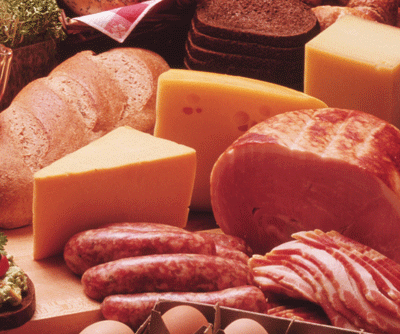
Bacon, cheese, meat, eggs, butter… a life rich in saturated fat sure as hell beats a life without it.


Source