Showing posts with label healthy. Show all posts

Saturday, 17 September 2016

What Does Organic Really Mean?

In Australia, the Australian Certified Organic ‘BUD’ logo is a great way to check whether the product you’re buying is, in fact, organic. If you see this logo on a product you’re buying, it means it’s met the requirements of the Australian Certified Organic standard.

Image result for organic tumblr

Choosing organic produce where and when you can means that you’re making a decision that helps support the soil, animal, plants, people and the environment we live in on a day-to-day basis. The more chemicals we spray on our soil, the more chemicals that can end up in our food and water supply, and potentially in our bodies.

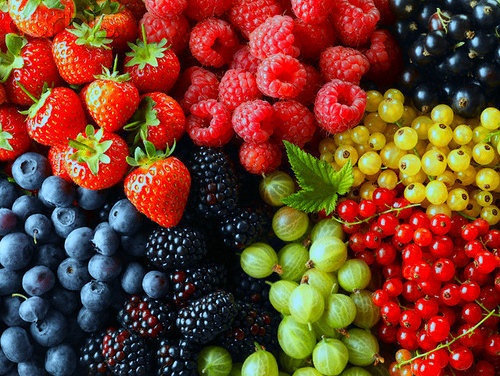
The ‘Dirty Dozen’ is a list of fruit and vegetables that are the best investments when it comes to choosing organic. In other words, if you’re shopping on a budget and want to know the best foods to prioritise when choosing between organic and non-organic, I think these are the ones to pick. I also choose to buy organic dairy, chicken and red meat.

Image result for organic tumblr
  • Apples
  • Celery
  • Grapes
  • Peaches
  • Blueberries
  • Potatoes
  • Spinach
  • Nectarines
  • Capsicum
  • Strawberries
  • Lettuce
  • Cucumber

Eating organic is an investment in your health – you’re helping to avoid eating unnecessary chemicals.


Comment below any other articles you'd love to see or read about! xo


Source

Friday, 13 November 2015

Top 8 Reasons Not to Fear Saturated Fats

Humans have been eating saturated fats for hundreds of thousands of years.
They were demonized a few decades ago and claimed to cause heart disease, but new data shows that to be completely false.
Here are the top 8 reasons not to fear saturated fats.

1. Saturated Fats Increase The Size of LDL Cholesterol

Cholesterol is a molecule that is absolutely vital to life.
Every cell membrane in our bodies is loaded with it. It is used to make hormones like cortisol, testosterone and estradiol.
Without cholesterol, we would die… and our bodies have developed elaborate mechanisms to manufacture it, to make sure we always have enough.
But a protein that carries cholesterol in the blood, Low Density Lipoprotein (LDL), has been associated with an elevated risk of heart disease.
However, new data shows that there are subtypes of LDL:
  • Small, Dense LDL: Particles that are small, dense and can easily penetrate the arterial wall (123).
  • Large LDL: Particles that are large and fluffy like cotton balls. These particles are NOT associated with an elevated risk of heart disease (45).
Saturated fats raise the large subtype of LDL… which means that the cholesterol-raising effects of saturated fats (which are mild) are irrelevant (67).
Bottom Line: Saturated Fats only mildly elevate Large LDL, a benign subtype of LDL that is not associated with heart disease.

2. Saturated Fats Raise HDL Cholesterol

A fact that is often ignored in the fear mongering against saturated fats, is that they also affect another type of cholesterol… HDL.
HDL (High Density Lipoprotein) is also known as the “good” cholesterol.
It transports cholesterol away from the arteries and towards the liver, where it may be either excreted or reused.
The higher your HDL levels, the lower your risk of heart disease… and saturated fats raise blood levels of HDL (8910).
Bottom Line: Eating saturated fats raises blood levels of HDL (the “good”) cholesterol, which should lower your risk of heart disease.

3. Saturated Fats Do Not Cause Heart Disease

A massive review article published in 2010 examined data from 21 studies and a total of 347.747 individuals.
They found absolutely no association between saturated fat and the risk of heart disease (11).
Other systematic reviews that look at the evidence as a whole found literally no evidence of an association (12,13).
No, the idea that saturated fat caused heart disease was a myth all along, based on flawed studies by biased scientists that were in love with their theories.
Somehow this became common knowledge and both the media and health professionals accepted it as a fact that “artery-clogging saturated fat” was harmful.
Bottom Line: There is absolutely no evidence that eating saturated fat is associated with heart disease. It is a myth that was never proven.

4. Saturated Fats May Lower The Risk of Stroke

A stroke is caused by a disturbance in blood flow to the brain.
Strokes can damage brain tissue and are among the most common causes of disability and death in western countries.
In fact, strokes are the second leading cause of death in middle- and high-income countries, right after heart disease.
There are multiple studies showing that saturated fat consumption is associated with a reduced risk of stroke, although it isn’t always statistically significant (1415).
Bottom Line: Stroke is one of the leading causes of death. Several studies show that saturated fat consumption is associated with a reduced risk of stroke.

5. Saturated Fats Don’t Damage Easily in High Heat

Saturated fats are much less likely to react with oxygen than unsaturated fats.
Unsaturated fats, especially polyunsaturates, contain many double bonds and are therefore especially prone to oxidation (16).
When unsaturated fats react with oxygen during high heat cooking, they form toxic byproducts and go rancid.
Therefore, saturated fats like butter and coconut oil are better options when you need to cook something at a high heat.
Bottom Line: For high-heat cooking, saturated fats are the best choice because they are more stable and don’t react with oxygen as easily.

6. Foods With Saturated Fats Are Nutritious

There are many healthy foods that are naturally rich in saturated fat. These foods tend to be highly nutritious and contain an abundance of fat soluble vitamins.
Prime examples are meats, eggs, organs and high-fat dairy products. The key here is to eat animals that ate foods that were natural to them, such as grass-fed cows.
Grass-fed beef, pastured eggs and dairy from grass-fed cows are much more nutritious than their “conventionally” raised counterparts. They are especially rich in fat soluble vitamins like Vitamin A, E and K2 (1718192021).
Bottom Line: Natural foods that contain saturated fats are usually very nutritious and especially rich in fat soluble vitamins.

7. Diets High in Saturated Fat Are Good For Weight Loss

We often hear that “high fat diets” make you fat.
It’s only half-true, though.
These diets are fattening… but it’s because they usually contain sugar and refined carbs as well, NOT just a lot fat.
Diets that are high in fat but also low in carbs actually have the opposite effect.
Low-carbohydrate diets, which are usually high in saturated fat, actually make you lose MORE weight than diets that are low in fat. They also improve ALL biomarkers of health much more than low-fat diets (222324).

8. Saturated Fat Tastes Amazing

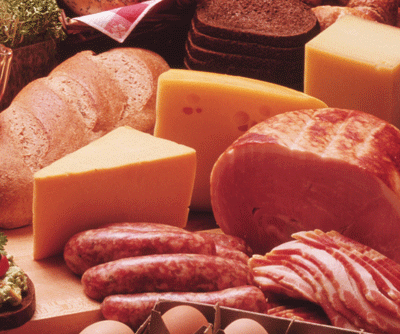
Bacon, cheese, meat, eggs, butter… a life rich in saturated fat sure as hell beats a life without it.


Source

Thursday, 10 September 2015

Why Getting Fit Isn’t the Best Exercise Motivation (and 10 Better Reasons to Move Today)

We’re told time and again that in order to get healthy we need to let go of our “lower” instincts (e.g. conserving energy on the couch or preferring to go out and have fun) and embrace future goals. We need to take things seriously – have concrete objectives and clear steps to execute them. It’s about getting down to business and whipping ourselves into shape through the grit of sweat and discipline. Or?
Sure, a proclivity to plan for the future and to favor self-control over momentary whim, research shows, will get us far on the health front (PDF).
It’s hands down the best mindset when we have emotional access to that “higher” self. The stubborn truth is, I’ve never met someone who could maintain this every day. Most days I get bored of it myself in all honesty.
Like it or not, research has shown that health isn’t an effective incentive for most people to consistently exercise. In fact, people whose primary aim for exercise is health or weight loss end up investing the least time actually following through.
So, if the typical rationales aren’t the most effective or reliable motivators, then what is? According to the research, we tend to be better off finding our initiative in the “affective outcome expectations” – the attitudinal and perceived benefits to our lives. To put it simply, if it makes us feel better on some level, we’re more likely to follow through.
In keeping with this pattern, the more immediate the perceived benefit, the more powerful and influential it is on our behavior. The same short-term gratification that gets blasted as our health’s worst enemy can actually be harnessed for good. Go figure…maybe our primary instincts don’t always have to drive us into the ditch.
In that spirit, let me throw out 10 short-term incentives for getting one’s duff off of the couch – or office chair. Forget all about your blood pressure or cancer risk or cardiovascular conditioning. Forget the term body fat or the principles of metabolic functioningWhat matters in this list is the here and now – same-day benefits if you will.
  1. You’ll come away from a single workout with better attentional processing, working memory (PDF) and motor memory.
  2. You’ll enjoy a brighter mood and less anxiety for the next few hours – even if you keep it simple with a slow jog or a brief walk outdoors.
  3. Can anyone say post-workout glow – with all the compliments that come with it?
  4. You’ll be able to “walk off” or get some distance from whatever emotional stress is zapping your mental energy.
  5. If you’re like subjects of one study, you’ll experience a significant boost to your body image after just one resistance training session. (Note: a single bout of cardio training didn’t offer the same enhancement.)
  6. You’ll have more self-control – and higher brain function – after a workout thanks to the enhanced blood and oxygen flow to the pre-frontal cortex.
  7. A single workout can offer hypoalgesic effects (temporary pain relief) for those who experience chronic pain.
  8. A bout of exercise primes you for sexual arousal post-workout. Just sayin’.
  9. Finally, according to one study on sedentary women (who had not been diagnosed with insomnia like sample groups in a previously publicized study), you may sleep better even after a single bout of moderate exercise.
  10. Bonus: how about just having fun? Can we dare to drop the interest in physical benefits period and just go out and have a good time with an active pick-up game of whatever sport we enjoy or a competitive run or a some MovNat inspired antics that make the neighbors stare?

Seriously, sometimes the best motivation is the seemingly most rudimentary or even irrelevant. Move around the ways that offer you the most fun and excitement – and forget the rest. Happy primate equals healthy primate. How much more Primal can it get?


Source
http://www.marksdailyapple.com/why-getting-fit-isnt-the-best-exercise-motivation-and-10-better-reasons-to-move-today/#axzz3kctexbQm

Tuesday, 4 August 2015

Lose Weight With This Exact Equation For Snacks

It's not just for preschoolers! Snack time is important for adults, too, because it can satiate hunger between meals to prevent overeating and help you lose weight. Snacks can also be a way to get valuable nutrients you're missing from meals alone. But not all snacks are good ones. We've enlisted the expertise of two nutritionists — Stephanie Clarke, RD, and Willow Jarosh, RD, of C&J Nutrition — to share the perfect equation for how to choose a delicious and filling snack that will help you reach your weight-loss goals. Follow their advice below to start seeing results.


Calories

Aim for two 150-calorie snacks each day. Think of them as ways to fill nutrition holes in your diet, such as getting your fill of fibre or a boost of calcium.

Carbs

Anywhere from 40 to 50 percent of your calories at snack time should come from carbs, which works out to 14 to 20 grams. Choose high-fibre carbs such as fruit, whole grains, and starchy veggies like peas, corn, sweet potato, pumpkin, and squash. Carbohydrates that are naturally high in fibre tend to be less refined and processed and also typically yield a larger portion size for fewer calories, making them more satisfying.

Protein

Go for six to 10 grams of protein, which is 15 to 20 percent of your total snack calories. Protein is essential in order to make what you nosh on feel more satisfying. Protein also helps to even out the rate that carbohydrates enter your bloodstream, so if you eat a snack that's low in protein, a spike in your blood sugar levels could result in stronger cravings and the need to munch on more.

Fats

Far should constitute 30 to 40 percent of your snack's calories, which works out to between six and 10 grams. Including healthy fats also adds to the "I feel satisfied" feeling. The one thing to watch out for is portion size, since fats like nuts, seeds, and avocado tend to be high in calories.

Fibre

Getting enough fibre in your snack — at least three grams — is a must to not only help you feel satiated for longer, but to also help you reach your daily goal of 25 grams. Getting your fill of fibre will ensure you stay regular, which can help you avoid that bloated feeling, making you feel more energetic. It can also help maintain stable blood sugar levels, which keeps cravings at bay.

Sugars

Aim for no more than 10 grams of total sugar and no more than four grams of added sugar (one teaspoon of honey, sugar, or maple syrup).

Timing

Most people like to include their two 150-calorie snacks between their three main meals, so one in the late morning and one in the late afternoon. A good rule of thumb is to eat every couple of hours, so find the schedule that works for you. Maybe you eat a later lunch and an earlier dinner so an afternoon snack isn't necessary but a bedtime snack is. Remember that experiencing a little hunger is OK, but snacking can prevent that famished feeling that makes people overeat. And eating late at night won't cause weight gain, but overdoing it on your daily calorie intake will. If you know you like to eat a little something before bed, make sure you save 150 calories in order to stick to your daily limit.

Eating and Working Out

If you're grabbing a pre-workout snack, aim for a 3:1 ratio of carbs to protein. After a workout, go for a 2:1 ratio of carbs to protein. A banana with some nut butter or a small smoothie is a great option. For workouts that are an hour or shorter, don't stress too much about getting the exact amount. As long as your snack includes a combo of carbs, protein, and healthy fats, and is under 150 calories, you're good! Generally it's good to enjoy a pre-workout snack 30 to 90 minutes before a workout, but eating beforehand isn't a necessity. Some people prefer working out on an empty stomach, so do what's right for you. Then refuel with a post-workout snack within 30 to 60 minutes.

A Few Examples of Snacks

The above info would make an ideal snack, but if you can't meet all the requirements, it's OK to fall short of one of these — fats, carbs, fibre, or protein — just make sure your snack meets the other three.

  • Avocado Toast: Take half a slice of whole wheat bread, smear with one tablespoon avocado, and top with sliced or mashed hard-boiled egg, two slices of tomato, and an eighth-teaspoon sprinkling of chia seeds.
    Calories: 156
    Total fat: 8.2 g
    Saturated fat: 2.2 g
    Carbs: 13.6 g
    Fibre: 4.3 g
    Sugars: 2.7 g
    Protein: 9.3 g
Photo: Jenny Sugar
  • Greek Yoghurt With Apple and Walnuts: Enjoy a quarter-cup plain non-fat Greek yoghurt with half an apple, four teaspoons chopped walnuts, half a teaspoon raisins, and a dash of cinnamon.
    Calories: 149
    Total fat: 6.2 g
    Saturated fat: 0.4 g
    Carbs: 17.3 g
    Fibre: 3.1 g
    Sugars: 12.7 g
    Protein: 8.3 g
Photo: Jenny Sugar
  • High-Protein Banana and Peanut Butter: Mix half a tablespoon of peanut butter with 14g of protein powder and 15mL of water. Cut half a banana in half lengthwise. Smear the peanut butter mixture on half and then top with the other half of the banana.
    Calories: 158
    Total fat: 4 g
    Saturated fat: 0.8 g
    Carbs: 17.4 g
    Fibre: 4.1 g
    Sugars: 7.8 g
    Protein: 13.6
Photo: Lizzie Fuhr
  • Roasted Edamame: Toss two cups frozen edamame with two teaspoons olive oil, one teaspoon sea salt, and one tablespoon black sesame seeds. Bake for 12 to 15 minutes at 230° C. Enjoy a quarter of the batch, and save the rest for later.
    Calories: 153
    Total fat: 8.3 g
    Saturated fat: 1.1 g
    Carbs: 10.5 g
    Fiber: 4 g
    Sugars: 8.3 g
    Protein: 4 g

Snack Mistakes to Avoid

  • Not enough variety: While a cheese stick seems like a healthy snack, it's only offering you protein, so you'll soon feel hungry afterward. To feel satiated, make sure your snack has at least two of these — carbohydrate, protein, and fat — or, better yet, aim for all three.
  • Skipping: If you head into lunch and dinner completely starving, you know all too well how easy it is to eat way more calories than normal. Snacking between meals controls hunger, which controls cravings and can help you consume fewer daily calories.
  • Not counting calories: A snack is just that — a snack. It's not a mini-meal, so stick to that 150-calorie amount. Be mindful that prepackaged snacks like granola bars, protein bars, smoothies, or bags of crackers can offer almost 200 calories or more. On the same token, mindlessly reaching into a bag can result in devouring more than one portion without you even realizing it. So measure out your portion and put the bag away!

Source
http://www.popsugar.com.au/fitness/Snacks-Help-Weight-Loss-35929844

Thursday, 30 July 2015

4 Secret Fears That Sabotage Your Ability to Lose Weight

Time to figure out what's REALLY eating at you.
"I'll start my diet on Monday." — It's the universal dieter's excuse.
Putting off "taking it off" is a common challenge many of us face, even for those wanting to lose weight motivated by a strong desire to look and feel healthier. I call this waiting game a "weighting game." And, as I explain in my book EFT For Procrastination, what lies at the heart of all procrastination ... is fear.
But, why on earth would anyone fear achieving a healthy weight or their fitness goals?
Seems illogical but it turns out, in most cases, that's what the "weighting game" is all about. Every excuse dieters make hides an unconscious fear that something awful will happen if they successfully reach their fitness goals. The good news is though — when the root of those fears are confronted and addressed, people can finally leave the "weight" of those worries behind (physically and emotionally).
Having worked with hundreds of compulsive overeaters over the years, I've noticed four main hidden fears that sabotage weight loss success. See if you identify with any of them.
1. Fear of death
I know, it sounds dramatic, but it's a real fear. The columnist, Art Buchwald once said, "the word 'diet' comes from the verb 'to die' because that is how you feel when you are on a diet." Although he was joking, the fear of death IS sometimes the culprit that undermines weight loss.
My client, Alice, was six feet tall and weighed 270 pounds. During the first week of a stringent diet she raced to the emergency room thinking she was having a heart attack. Fortunately, it was only a panic attack, but she stopped dieting completely and couldn't seem to get back on track.
During our therapy session she realized that her hidden fear was that if she lost weight someone could overwhelm, hurt, or kill her. That was the way she felt when her father molested her in childhood. As a result, her inner "little girl" decided to put on some extra weight so that no one could overpower her again, not even her burly husband!
The same thing was true for, another client, Olivia. Many members of her family were tragically murdered in the holocaust. She feared that if another holocaust occurred and she was too thin, she would starve to death in a concentration camp.
2. Fear of illness
My client, Vivian, was afraid that if she lost weight it would mean she had cancer, since many people with cancer lose a lot of weight and look skeletal. When she looked at herself in the mirror and saw how her face was changing, she feared that she was "wasting away" and wouldn't be able to survive.
Another client of mine worried that if she became too thin she would be susceptible to the flu, or some other outbreak of illness and die from it. She remembered that when she was in her twenties she dated someone whose fiancée had died during a flu epidemic, making it all the more of a realistic possibility for her.
3. Fear of immoral behavior
Two of my clients surprisingly discovered that the unconscious fear keeping them from reaching their weight goal had to do with sex. Because Carol was happily married, it delivered quite the shock that her hidden belief was that if she lost weight she wouldn't be able to control her sexual appetite and would, as a result, be unfaithful.
Rose loved her husband of 25 years, but she harbored a secret fear-based fantasy that she would be attracted to other women and want to have lesbian relationships if she was thin and felt sexy.
4. Fear of success
When someone has been overweight for years their self-esteem is usually eroded. My client Bonnie was like this and on yet another diet. She dreaded visiting her parents in a nearby city because, the moment she arrived, her mom would march her into the bathroom and put her on the scale. Her mother had brain washed Bonnie into believing that she must never weigh less than her petite mother! Therefore, Bonnie had to sabotage her efforts anytime she neared that magic number or lose her mother's love.
Once you identify your hidden fears and underlying issues, it is easy to get rid of their hold on you.
Because Alice was sexually abused as a child and had not healed from that trauma, it was imperative that she finally release that trauma once and for all. "EFT tapping" is an excellent technique for healing the wounds of abuse without re-traumatizing a person. You may find that working with a licensed practitioner is best for this.
However, if you want to use EFT for yourself, start by tapping on the edge of your hand under the little finger and say to yourself:
"Even though losing weight terrifies me because it may mean 'I have cancer,' I am tapping on that now," or "Even though I'm afraid that being thin may make me more vulnerable to rape or attack, I want to let go of that fear now." (Important tip: Be sure to describe your fear after the words "even though ... ")
Next, using your index and middle fingers, gently tap each of these energy points for about 3 seconds each, as you think about your fear.
  • The eyebrow near the nose
  • The outside edge of the eye socket
  • Underneath the lower eyelid
  • Under the nose
  • Under the lower lip
  • Under the collarbone
  • On the side of your body 4 inches under the armpit
Keep tapping for at least three rounds. Then stop, take a deep breath, exhale it out, and take stock. Do you feel less upset? Did another memory pop up? What thoughts or emotions surfaced for you? Focus on that and keep tapping until you realize that the past is over, you survived that scary event, and you are OK.

Source
http://www.popsugar.com/fitness/Fears-Sabotage-Ability-Lose-Weight-37964105?utm_source=feedburner&utm_medium=feed&utm_campaign=Feed%3A+fitsugar+%28FitSugar+-+Healthy%2C+happy+you.%29