Showing posts with label saturated fats. Show all posts

Sunday, 22 November 2015

What are healthy fats to eat?

It is true that most people consider fat as something bad for their diet. Over the year’s food and weight loss product companies managed to convince consumers that fat is the main reason why weight loss diets fail. In reality this is not true. Fat and especially healthy fat is essential for a healthy balanced diet and diets that are very low in healthy fat may not be the best choice when trying to lose weight.


There are different types of fat and depending on their type, may have positive or negative effects to your health and diet.

The different types of fat

Polyunsaturated and monounsaturated Fatty Acids – The healthy fats

This is the type of fat that should be part of a healthy diet. Polyunsaturated and monounsaturated fatty acids (omega 3 and omega 6) are essential for normal body functioning and play an important role in producing hormones, maintaining cell structure and many more. Good sources for healthy fats are fish, grains, almonds, peanuts, hazelnuts, avocados, soymilk, walnuts, tofu, peanut butter, olives, and vegetable oils.

Saturated Fats – The “bad”

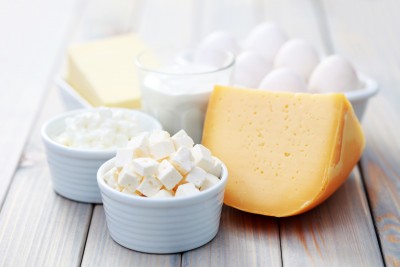
Saturated fats are what most people have in mind when they talk about ‘bad’ fat. They are found in meat, sweets, dairy products, butter, cheese, whole fat dairy products and almost any commercial or fast food product. Regular intake of saturated fats can cause unhealthy cholesterol, blocked arteries, different heart diseases, type 2 diabetes and a lot more diseases even cancer.
Trans Fats – The “Evil”

Trans fats are similar to saturated fats and can also create negative health effects. Trans fats are found in many food and oil products like candy bars, fried foods, chips, doughnuts and many more.

How many healthy fats to eat?

The ideal diet for weight loss and health is the balanced diet. A balanced diet contains those macronutrients necessary for good health and proper functioning of the different body organs. These include protein, carbohydrates, vitamins and minerals and unsaturated fat.
A diet low in fat excludes or minimized the consumption of fat. Whether is it healthy or not depends on how restrictive is on fat usage. In general a balanced diet should include:
Fat intake no more than 30% of daily calories
Saturated fats to less than 10% of calories
Trans fat to 1% of calories
1-3 grams of omega 3 fatty acids per day.

Fat and calories

Fat contains double the calories of protein and carbohydrates. One gram of fat is about 9 calories while a gram of protein or carbohydrates is only 4 calories. One pound of fat is approx. 3500 calories.
So, a low fat diet that excludes saturated and trans fat sources is welcomed but a low fat diet that does not include healthy fats is not desirable.

The role of healthy fats in our everyday diet

Help creating a strong immune system
Diets that restrict the consumption of omega 3 and 6 can negatively affect our immune system. Studies have also shown that the regular consumption of omega 3 is beneficial for many diseases including arthritis.
Required for good mental health
Fatty acids can improve the functioning of the nervous system and act against conditions of the brain like Alzheimer’s and depression. They also protect against memory loss.
Omega 3 fatty acids can fight cholesterol
Bad cholesterol levels can be reduced and at the same time improving the levels of good cholesterol. Fatty acids can also help prevent certain heart diseases, stroke and Type 2 Diabetes.
They are good for the skin, hair, eyes and bones
Unsaturated fat and omega 3 fatty acids are beneficial for the hair, skin and bones as well as the eyes.

Tips for using healthy fats in your diet

  1. Try to avoid trans fats from your diet. You can always read the food label and choose products low in these types of fat.
  2. Reduce the consumption of saturated fats. Saturated fats are almost everywhere but you can do some simple food replacements and minimize their consumption. You can choose chicken, fish and poultry over red meat, olive oil over butter, non-fat yogurt (try Greek yogurt) over sour cream and low fat dairy products over full fat dairy.
  3. Make sure that sources of poly and mono unsaturated fats (fish, grains, almonds, peanuts, hazelnuts, avocados, soymilk, peanut butter, olives, and vegetable oils) are part of your daily diet.
  4. Cook with low fat or no fat products. Olive oil is a great choice instead of butter or margarine.
  5. Eat nuts for snacks. Nuts are great fat burners and can be taken as snacks between meals.
  6. Avoid salad dressings. Salads are healthy and recommended but without the dressing. Instead use olive oil, vinegar and lemon choice.
  7. Prefer baked or grilled food instead of fried.
  8. Make it a habit to eat fish twice per week so as to ensure that you are getting the minimum dosage of omega 3 fatty acids.
  9. Remove the skin from the chicken.
  10. Avoid packaged snack foods e.g. microwave popcorn.


Source

Tuesday, 17 November 2015

How to Cook Healthier Meals

Learn how to cook smarter and healthier

If you are someone who enjoys food and cooking, but still want to watch your weight and eat healthy nutritious foods, it can sometimes be difficult to find a balance between the foods you love to cook and the diet you are supposed to be following.  Food often seems to fall into one of two categories (this is the general belief), the delicious – but calorie and fat laden, or the healthy -low calorie but completely boring and tasteless.
Fortunately, watching your weight does not mean you have to give up cooking and eating your favourite meals and dishes.  With a few simple modifications in cooking techniques and ingredients, most dishes can be modified to improve their nutritional value and lower their fat and calories without losing too much of their flavour.  Whilst some things are more difficult to make healthier than others, if you are a keen cook, this is a great opportunity to expand your skills and experiment with different ingredients and cooking methods to create healthier versions of your favourite dishes.

10 Cooking tips for healthier and calorie friendly meals

To start you on your way to healthier, flavour packed meals for all your family, here are some tips to improve the nutritional value using various cooking techniques and ingredient substitutes.

1. Baking

Baking can refer to any cooking that takes place in the oven and generally does not require much added fat, although a little may be used to stop foods from drying out.  This means it is a relatively healthy cooking technique for foods such as fish, meat, and vegetables.  Baking fish in a foil parcel with some vegetables and a little olive oil, herbs or spices is an easy way to cook moist fish which retains its natural juices.
Baked foods such as cakes, pastries, pies, and biscuits are not such healthy choices, but recipes for your favourite sweet treats can often be modified to improve their nutritional value and lower fat and calories.  Good substitutions in baking include:
  • Butter or olive oil for margarine
  • White refined flour for wholemeal varieties
  • Reducing sugar, or substituting with artificial sweeteners if you prefer
  • Using apple sauce or fruit to sweeten rather than sugar
  • Making yogurt or olive oil based pastry as this has less saturated fat
  • Adding nuts or bran increase fibre
  • Using low fat ingredients such as milk and yogurt in baking.

2. Healthier cooking methods

By opting for healthier cooking techniques you can really cut down on the amount of fat that is added to the dish and thus also reduce the calories.  Healthier methods include, grilling, poaching, baking, broiling, steaming, and stir-frying as these require minimal or no fat to be added to the dish.  Often foods that are normally fried can be cooked in the oven or grill with similar effects but much less fat, for example fries.
Methods such as frying, deep frying, and roasting can add a lot of fat to the dish and really bump up calorie content.  However, there are a few methods you can use to make them as healthy as possible, if you really feel a dish needs to be cooked this way.
  • When deep frying, make sure the oil is as hot as possible, as this means the food will absorb less of the oil.  If the oil is not hot enough, the food is soggy rather than crispy and you are also eating a lot more of the fat.
  • Dry frying is a good method to replace frying, and basically involves frying without oil in a good non-stick pan.
  • When roasting, try to add minimal fat before cooking, and baste roast during the cooking progress to keep moist.
  • If you do use fat, try to use an unsaturated fat such as olive oil, rather than butter.

3. Choosing the healthiest versions of foods

Starting with healthier ingredients will result in a healthier dish in the end, so it is worth looking for low fat versions of products such as yogurt, milk, cream and cheese.
  • Try to choose low fat cuts of meat, and trim any visible fat before cooking, as well as removing chicken skins.
  • When buying pre-prepared foods such as minced meat, look for lean varieties, it is worth paying a little extra for meat that is lower in saturated fat.

  • Fish is also a great alternative to meat as it is lower in saturated fat and higher in omega three fatty acids which are good for heart health.
  • Always try to choose fresh, unprocessed foods where possible as these contain no artificial colour, flavours, preservatives, sodium and fillers that may be found in processed foods.
  • Fresh vegetables are ideal, but frozen are often just as good as they are snap frozen soon after harvesting, meaning that they retain their nutritional value better than vegetables that are sitting on supermarket shelves for weeks.

4. Ingredient substitutes

When cooking, substituting one ingredient for a healthier alternative can make a big difference to the nutritional content of your meal.  Good substitutes include:
  • low fat yogurt instead of cream in soups
  • Olive or canola oil instead of butter for all cooking that requires fat
  • Low salt tinned foods instead of normal varieties
  • Low fat cheese or a smaller amount of strong flavoured cheese in pastas and other dishes.
  • Wild rice instead of white
  • Whole grain pasta instead of white
  • Yogurt and a little lemon juice mixed with tuna on a sandwich rather than mayonnaise

5. Flavour options

Flavourings can add a lot of calories, or other undesirable things such as sodium to a meal.  Instead of adding salt and fat to food for flavour, try to use options such as herbs, spices, vinegars and lemon juice as these add loads of flavour, but very few calories.  Condiments such as tomato sauce, mayonnaise and salad dressing can also add a lot of calories so look for low fat /sugar/salt alternatives or make your own so you can control the amounts of oil, sugar and salt that go into them.


6. Sneaky Vegetables or legumes

By adding vegetables or legumes such as lentils, chickpeas, and beans to cooking you not only increase the amount of nutrients in the dish, but also the amount of fibre. (See also: Fiber Can Help You Lose Weight, But Only A Specific Type). As an added benefit, this can also be used to make a dish go further as it increases the quality with cheap ingredients. Legumes and vegetables are low in fat and calories and therefore generally reduce the calorie content of a dish when used to replace some of the meat.   This is also a good way to get children to eat vegetables, as if they are chopped finely or grated, they are unlikely to even know they are there.
Dishes which lend themselves well to these healthy additions include:
  • Hamburgers; mix grated zucchini or carrot into the mince mixture
  • Lasagne:  Mix grated or finely chopped vegetables into mince, or replace some of the mince with cooked lentils.
  • Pies:  reduce the quantity of meat and add extra veggies or legumes to fillings
  • Tuna sandwiches:  mix grated carrot with tinned tuna and a little low fat mayo or yogurt
  • Cheese sauce:  purred up white vegetables such as cauliflower and stir into sauce for a hidden veggie boost.  Alternatively if you don’t mind the strange colour, try purred carrots or broccoli.

7. Avoid unnecessary fats

Think about if you really need the fat you add to certain foods.  Often you will find you taste very little difference without them, for example butter on the bread of a sandwich, or oil in the pan when you fry an egg.

8. Downsize

A sure way to cut down on calories in a meal is to eat a smaller portion.  Sometimes this can take a little getting used to, but to make it less obvious, try using a smaller dish or plate.  This means a smaller portion of food still fills the plate and doesn’t look so lost.  Studies have shown that people who eat from smaller plates generally eat less calories over a day.
It is also important to allow yourself a good twenty minutes to digest after finishing a meal.  If you are still hungry after that, you can go back for seconds, but often this is the time required for the body to register that it is full.

9. Serve all meals with vegetables

It is suggested that vegetables should make up the largest portion of your plate in every meal, so make sure you serve all meals with a salad, or vegetable side.  By filling up on vegetables, rather than carbohydrates, protein or fat, you will get more vitamins and minerals in your meal.  You will also reduce you calorie intake, as vegetables are very low in calories and fat.

10. Avoid accidental calories.

Remember when cooking that calories consumed whilst cooking, such as licking the bowl or tasting a spoon or two of the dish before serving all count.  You may in fact be eating a lot more than you are sitting down to on your plate.  Try to limit snacking whilst cooking, or compensate by serving yourself a smaller portion afterwards.
Similarly, finishing up the scraps off someone else’s plate or the unfinished food of a child also contributes to calories.  If you are no longer hungry stop eating and store leftovers or feed to a hungry pet to avoid waste.

Comment below if you found this helpful. Do you find yourself adding extra calories when unnecessary? Let me know down below in the comments section if you want to see more articles like this. Have a great day!


Source

Sunday, 1 November 2015

The Big Fat Truth: Why Non-Fat Isn't the Answer

The Skinny on Fat


You've shied away from eating it and worked on the treadmill to burn it off. But fat, it turns out, can be your friend. "Your body needs it in order to function," says Barbara Roberts, MD, director of the Women's Cardiac Center at the Miriam Hospital in Providence and author of How to Keep from Breaking Your Heart. "Fats help you absorb vitamins A, D, and E, and they are vital for your nervous system." Not only that, women who ate a Mediterranean diet filled with healthy monounsaturated fat lowered their risk of heart disease by 29 percent, according to a new study in Circulation.
Of your total daily calories, 25 to 30 percent should come from fat. The keys: Pick good-for-you fats, and limit the bad kinds. Don't know a saturated from a poly? Here's the skinny on which fats to eat and which to avoid.


The Good: Unsaturated Fats


Monounsaturated Fats What they do: These fats, known as MUFAs, raise good HDL cholesterol, lower bad LDL cholesterol, and protect against the buildup of plaque in your arteries. They also help prevent belly fat, according to research.
Where you'll find them: In olive oil and olives, canola oil, almonds, cashews, peanuts, peanut butter, sesame seeds, and avocados.
How much you need: Most of the fat you eat should be unsaturated, like MUFAs. "Just two to three tablespoons of olive oil a day can raise HDL levels and protect against heart disease," says Dr. Roberts.
Polyunsaturated FatsWhat they do: In addition to lowering your LDL, these fats contain essential omega-3 fatty acids — which boost brain function and may help strengthen your immune system and improve your mood — and omega-6 fatty acids, which in small amounts can keep skin and eyes healthy.
Where you'll find them: Omega-3s are primarily in fish like salmon, mackerel, and herring, as well as canola oil, flaxseed, walnuts, and tofu. Omega-6s are in corn and safflower oil, corn-fed chicken and beef, and farmed fish.
How much you need: Most of the polys you eat should be omega-3s. Too much omega-6 can lead to inflammation, which is linked to heart disease. Trade vegetable oil for olive and canola oils, and eat grass-fed beef and wild-caught fish.


The Bad: Saturated Fats


What they do: They raise cholesterol levels and increase your risk of heart disease.
Where you'll find them: In meat and poultry, in dairy products like cream, butter, and whole and 2 percent milk, and in some plant foods like coconut and palm oil.

How much you need: Limit saturated fat to less than 10 percent of your total daily calories. One easy way to cut back: "Remove any hard fat you can see, such as the skin on chicken," says Christine Gerbstadt, MD, RD, a spokesperson for the American Dietetic Association.


The Ugly: Trans Fats 


What they do: Made from unsaturated fat that's been chemically altered to prolong the shelf life of packaged foods, trans fats raise bad LDL and lower good HDL, increasing inflammation throughout the body. "They 100 percent promote heart disease," says Dr. Gerbstadt.
Where you'll find them: In shortening, margarine, doughnuts, french fries, and processed foods such as crackers, cookies, chips, and cakes.
How much you need: Zero. But know this: The FDA allows food manufacturers to claim that a product contains "zero trans fats" if one serving of it has 0.5 grams of trans fats or less. "That means if you eat more than one serving, you could be getting a gram or more," warns Dr. Gerbstadt. Before buying foods, check the ingredient labels for "partially hydrogenated vegetable oil" — trans fats' sneaky pseudonym.


Fight the Flab


"The average person has 10 billion to 20 billion fat cells," says Philipp Scherer, PhD, director of the Touchstone Diabetes Center at UT Southwestern Medical Center in Dallas. Researchers aren't sure what determines your number, but they do know genetics and lifestyle play a role. Eat too much for too long and your body can create new fat cells, says Susan K. Fried, PhD, director of the Adipocyte Core at the Boston Obesity Nutrition Research Center at Boston University School of Medicine. "If you lose weight, fat cells shrink, but they don't disappear."
To outfox your fat, follow a healthy, balanced diet of lean protein, fruits and vegetables, low-fat dairy, and whole grains. Do cardio and strength training regularly. And if you have belly fat, which research has linked to an increased risk of heart disease, cancer, and diabetes, pick up your pace by doing interval training four times a week: Alternate two minutes of sprinting with 60 seconds of walking for half an hour.


Feeling Like You Need a Fat Fix?


You may have a "fat tooth." The tongue has a receptor for fat, just as it does for sweet and salty, research shows. "The richness and creaminess of foods like ice cream and the texture of chocolate can make them irresistible to us," says Bonnie Taub-Dix, RD, a national spokesperson for the American Dietetic Association. To curb your fat cravings, eat every three hours, advises Emily Rubin, an RD at the Jefferson Digestive Disease Institute in Philadelphia. "Munch on lean protein and fiber-rich foods, such as chicken and vegetables, which keep you feeling full — and less likely to pig out."


Get-Slim Picks


Trying to lose weight? "Have a small amount of fat at every meal," says Katherine Zeratsky, an RD at the Mayo Clinic in Rochester, Minnesota. "It digests slowly, so you'll feel satisfied for a longer period of time, and you'll eat less overall." Reach for a few of these heart-healthy choices every day.
Almonds
1 ounce (23 nuts): 163 calories, 14g fat (1g saturated)
Walnuts (chopped) 
1/4 cup: 193 calories,18g fat (1g saturated)
Avocado 
1/4 California avocado: 57 calories, 5g fat (1g saturated)
Olive Oil 
1 tablespoon: 119 calories, 14g fat (2g saturated)
Peanut Butter (smooth) 
1 tablespoon: 94 calories, 8g fat (2g saturated)
Olives (green or black) 
8 jumbo olives: 54 calories, 5g fat (1g saturated)
Sunflower Seeds (unsalted, roasted, hulled) 
1/4 cup: 186 calories, 16g fat (2g saturated)


Three Smart Swaps


Need to start small? Switch from...
  • ...Regular bacon to turkey or Canadian bacon. "Pork bacon is loaded with saturated fat," says Emily Rubin, RD. Canadian and turkey bacon are much leaner choices.
  • ...Stick margarine to tub — or even better, to butter. Stick margarine can have three times the trans fats the tub version does. Butter has no trans fats.
  • ...Premium ice cream to low-fat. "Two scoops of the premium kind can have 11 grams of saturated fat — about half the amount you should eat for the entire day," warns Rubin. Low-fat ice cream can have less than one gram.


Source
http://www.fitnessmagazine.com/recipes/healthy-eating/tips/why-non-fat-isnt-the-answer/