Showing posts with label benefits. Show all posts

Friday, 26 February 2016

Can Eating Pickles Cause Weight Loss?

Weight loss is about burning more calories than you eat, so simply eating pickles won't melt away the pounds. But pickles are low in calories -- so they can fit into a weight loss, calorie-controlled diet -- and have some properties that might help with fat loss. But their high sodium content means you might gain water weight after eating them, which can impact the results you see on the scale.

A Low-Calorie Snack for Weight Loss

Including pickles in your diet as a healthy snack can help you shed pounds, thanks to their low calorie count. A cup of dill pickles -- regular or low sodium -- has just 17 calories. Even if you're following a very restricted diet of 1,200 calories per day, that's less than 2 percent of your daily calorie allowance. If you're craving dill pickle-flavored chips or popcorn, satisfy your craving with actual pickles to lose weight. Each 1 ounce serving of dill pickle chips has 160 calories -- if you swapped out the chips for real dill pickles three times a week for a year, you'd save enough calories to lose more than 6 pounds of fat. 

Make sure you stick with unsweetened pickles for your low-calorie snack, though. Sweetened pickles, like bread and butter pickles, are much higher in calories -- 146 calories per cup. Most of those calories come from the sugar use to sweeten the pickles, which means sweetened varieties aren't ideal for a weight loss diet.

Potential Benefits From Vinegar

Pickles' sour taste comes from the vinegar mixture that makes up the pickle brine. This vinegar contains acetic acid, which might play a role in weight loss. One animal study, published in Critical Reviews in Food Science and Nutrition in 2015, reports that rats fed acetic acid were more resistant to obesity than rats that didn't get acetic acid. Vinegar might also keep food in your stomach for longer after a meal -- literally "filling" you up and boosting satisfaction after a meal -- according to a review published in Nutrition Reviews in 2014. The review also notes that vinegar might boost your calorie burn throughout the day, which makes it easier to burn more calories than you eat and lose weight. However, the review also notes that the evidence for vinegar and weight loss is preliminary; while these early results show promise for vinegar as a weight loss aid, more research is needed to know just how well it helps you shed pounds.

Sodium and Weight Loss

Pickles have one major drawback -- their sodium content. Sodium doesn't actually prevent you from losing fat, but it can make it harder to notice weight loss in your regular weigh-ins. That's because sodium makes your body retain water, so you might gain a few pounds from the added water weight. Regular dill pickles have 1,157 milligrams of sodium per cup -- that's 48 percent of the daily value -- while sweet pickles have 731 milligrams of sodium, or 30 percent of the daily value, per cup. For a healthier option that won't make you gain water weight, go for low-sodium pickles. This variety has a negligible 26 milligrams of sodium per cup.

Serving Pickles for Weight Loss

Use pickles -- the low-sodium variety, of course -- to add flavor to diet-friendly meals without adding much fat or calories. Chopped pickles work well on a leafy green salad, while pickle slices in turkey or chicken breast sandwiches give a flavor boost so you don't have to use fattier flavorings like mayo. Add chopped pickles to your tuna and chicken salads. Pickles are lower in calories than the other ingredients in these salads -- including the chicken, tuna and mayonnaise -- so adding pickles to the mix lets you eat a larger portion size for roughly the same number of calories. 
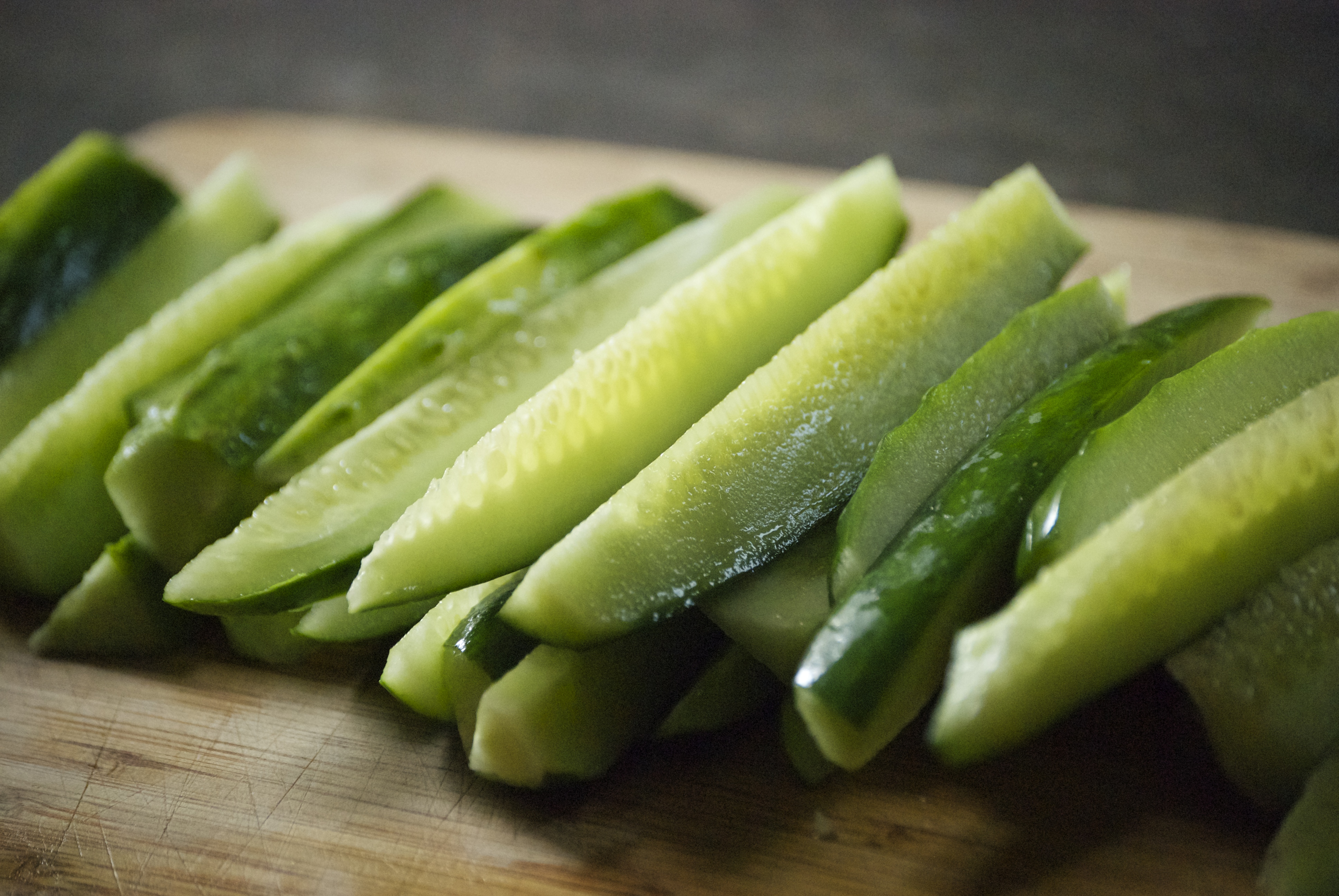
If you get bored with plain cucumber pickles, experiment with other low-sodium pickled veggies. Pickled beans, beets, cauliflower and even asparagus make low-calorie snacks, and they help you boost your vegetable intake while you satisfy your salt craving.
Are you a fan of pickles? Found any good recipes where pickles are included? Comment below, and share the knowledge.


Source

References

Sunday, 1 November 2015

The Big Fat Truth: Why Non-Fat Isn't the Answer

The Skinny on Fat


You've shied away from eating it and worked on the treadmill to burn it off. But fat, it turns out, can be your friend. "Your body needs it in order to function," says Barbara Roberts, MD, director of the Women's Cardiac Center at the Miriam Hospital in Providence and author of How to Keep from Breaking Your Heart. "Fats help you absorb vitamins A, D, and E, and they are vital for your nervous system." Not only that, women who ate a Mediterranean diet filled with healthy monounsaturated fat lowered their risk of heart disease by 29 percent, according to a new study in Circulation.
Of your total daily calories, 25 to 30 percent should come from fat. The keys: Pick good-for-you fats, and limit the bad kinds. Don't know a saturated from a poly? Here's the skinny on which fats to eat and which to avoid.


The Good: Unsaturated Fats


Monounsaturated Fats What they do: These fats, known as MUFAs, raise good HDL cholesterol, lower bad LDL cholesterol, and protect against the buildup of plaque in your arteries. They also help prevent belly fat, according to research.
Where you'll find them: In olive oil and olives, canola oil, almonds, cashews, peanuts, peanut butter, sesame seeds, and avocados.
How much you need: Most of the fat you eat should be unsaturated, like MUFAs. "Just two to three tablespoons of olive oil a day can raise HDL levels and protect against heart disease," says Dr. Roberts.
Polyunsaturated FatsWhat they do: In addition to lowering your LDL, these fats contain essential omega-3 fatty acids — which boost brain function and may help strengthen your immune system and improve your mood — and omega-6 fatty acids, which in small amounts can keep skin and eyes healthy.
Where you'll find them: Omega-3s are primarily in fish like salmon, mackerel, and herring, as well as canola oil, flaxseed, walnuts, and tofu. Omega-6s are in corn and safflower oil, corn-fed chicken and beef, and farmed fish.
How much you need: Most of the polys you eat should be omega-3s. Too much omega-6 can lead to inflammation, which is linked to heart disease. Trade vegetable oil for olive and canola oils, and eat grass-fed beef and wild-caught fish.


The Bad: Saturated Fats


What they do: They raise cholesterol levels and increase your risk of heart disease.
Where you'll find them: In meat and poultry, in dairy products like cream, butter, and whole and 2 percent milk, and in some plant foods like coconut and palm oil.

How much you need: Limit saturated fat to less than 10 percent of your total daily calories. One easy way to cut back: "Remove any hard fat you can see, such as the skin on chicken," says Christine Gerbstadt, MD, RD, a spokesperson for the American Dietetic Association.


The Ugly: Trans Fats 


What they do: Made from unsaturated fat that's been chemically altered to prolong the shelf life of packaged foods, trans fats raise bad LDL and lower good HDL, increasing inflammation throughout the body. "They 100 percent promote heart disease," says Dr. Gerbstadt.
Where you'll find them: In shortening, margarine, doughnuts, french fries, and processed foods such as crackers, cookies, chips, and cakes.
How much you need: Zero. But know this: The FDA allows food manufacturers to claim that a product contains "zero trans fats" if one serving of it has 0.5 grams of trans fats or less. "That means if you eat more than one serving, you could be getting a gram or more," warns Dr. Gerbstadt. Before buying foods, check the ingredient labels for "partially hydrogenated vegetable oil" — trans fats' sneaky pseudonym.


Fight the Flab


"The average person has 10 billion to 20 billion fat cells," says Philipp Scherer, PhD, director of the Touchstone Diabetes Center at UT Southwestern Medical Center in Dallas. Researchers aren't sure what determines your number, but they do know genetics and lifestyle play a role. Eat too much for too long and your body can create new fat cells, says Susan K. Fried, PhD, director of the Adipocyte Core at the Boston Obesity Nutrition Research Center at Boston University School of Medicine. "If you lose weight, fat cells shrink, but they don't disappear."
To outfox your fat, follow a healthy, balanced diet of lean protein, fruits and vegetables, low-fat dairy, and whole grains. Do cardio and strength training regularly. And if you have belly fat, which research has linked to an increased risk of heart disease, cancer, and diabetes, pick up your pace by doing interval training four times a week: Alternate two minutes of sprinting with 60 seconds of walking for half an hour.


Feeling Like You Need a Fat Fix?


You may have a "fat tooth." The tongue has a receptor for fat, just as it does for sweet and salty, research shows. "The richness and creaminess of foods like ice cream and the texture of chocolate can make them irresistible to us," says Bonnie Taub-Dix, RD, a national spokesperson for the American Dietetic Association. To curb your fat cravings, eat every three hours, advises Emily Rubin, an RD at the Jefferson Digestive Disease Institute in Philadelphia. "Munch on lean protein and fiber-rich foods, such as chicken and vegetables, which keep you feeling full — and less likely to pig out."


Get-Slim Picks


Trying to lose weight? "Have a small amount of fat at every meal," says Katherine Zeratsky, an RD at the Mayo Clinic in Rochester, Minnesota. "It digests slowly, so you'll feel satisfied for a longer period of time, and you'll eat less overall." Reach for a few of these heart-healthy choices every day.
Almonds
1 ounce (23 nuts): 163 calories, 14g fat (1g saturated)
Walnuts (chopped) 
1/4 cup: 193 calories,18g fat (1g saturated)
Avocado 
1/4 California avocado: 57 calories, 5g fat (1g saturated)
Olive Oil 
1 tablespoon: 119 calories, 14g fat (2g saturated)
Peanut Butter (smooth) 
1 tablespoon: 94 calories, 8g fat (2g saturated)
Olives (green or black) 
8 jumbo olives: 54 calories, 5g fat (1g saturated)
Sunflower Seeds (unsalted, roasted, hulled) 
1/4 cup: 186 calories, 16g fat (2g saturated)


Three Smart Swaps


Need to start small? Switch from...
  • ...Regular bacon to turkey or Canadian bacon. "Pork bacon is loaded with saturated fat," says Emily Rubin, RD. Canadian and turkey bacon are much leaner choices.
  • ...Stick margarine to tub — or even better, to butter. Stick margarine can have three times the trans fats the tub version does. Butter has no trans fats.
  • ...Premium ice cream to low-fat. "Two scoops of the premium kind can have 11 grams of saturated fat — about half the amount you should eat for the entire day," warns Rubin. Low-fat ice cream can have less than one gram.


Source
http://www.fitnessmagazine.com/recipes/healthy-eating/tips/why-non-fat-isnt-the-answer/

Wednesday, 2 September 2015

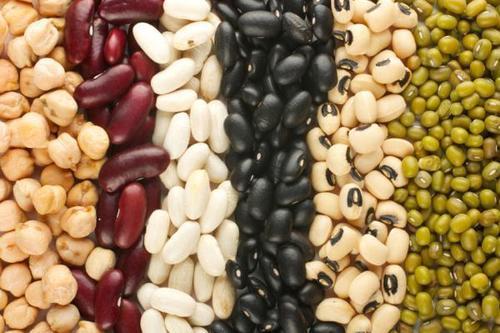
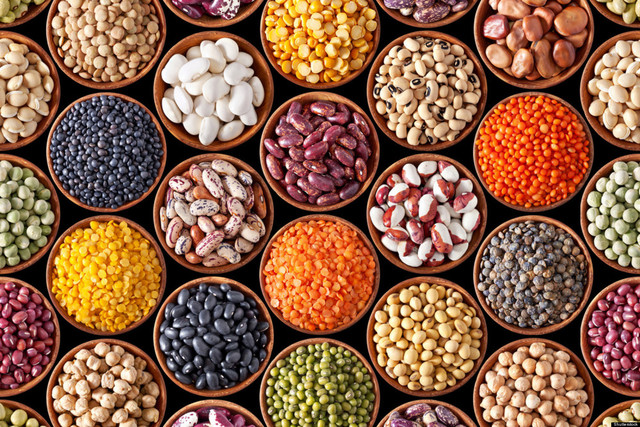
What Are Legumes?

Perhaps you’ve heard legumes are good for you.

Or, maybe you’ve even been told by a paleo promoter that they’re to be avoided.
Either way, today I’m going to cover your queries on “what are legumes,” and reveal whether they are they something you should go out of your way to add to your diet.

What are legumes?

There are actually two types of legumes, mature and immature.
Mature legumes are the dried seeds found inside pods, for example kidney beans or chickpeas.
Immature legumes are those that have been harvested before they mature, such as green beans and garden peas.
Some of the most common legumes include alfalfa, clover, peas, beans, lentils, lupins, and peanuts (a peanut is a legume whose pod does not split open on its own).

Why should you eat legumes?

Here are just a few reasons:
  • Excellent source of protein
  • Good source fiber (approximately 15 g/cup)
  • Most varieties provide half our folate requirements
  • A good source of phosphorus, potassium, iron, zinc, calcium, and selenium
  • Contain Thiamin (B1), Riboflavin (B2), Niacin (B3), B5 and B6
  • Rich in antioxidants
  • Low Glycemic Index

What counts as a serving?

A serving is 3 heaped tablespoons of beans.
Remember, beans and pulses count as a serving of your daily vegetable requirements, but only as 1 portion, no matter how many you eat.

Interesting facts about legumes

Below are a list of the nutrient highlights from some of the more commonly consumed bean varieties,
Red beansTop antioxidant bean containing more antioxidants than blueberries when compared gram-per-gram. Reds are also the top bean source of iron.
Kidney beans
Second ranking antioxidant bean on the USDA’s list, and are also a top fiber source.
Black-eyed beans
These beans contain more calcium than any other bean, as well as being a source of folate and magnesium.
Black beans
In addition to ranking among the best antioxidant bean sources, black beans are the top bean source of magnesium.
Pinto beans
The top bean source of selenium, they are also ranked higher than the blueberry in their antioxidant power.
Now that you know what legumes are, how do you eat more when you’re not in the habit of it?

How to eat more legumes

  • Choose beans as your protein source once or twice each week.
  • Change your favorite recipe by replacing half of the meat with legumes.
  • Stock your pantry with a variety of canned legumes for a quick meal, or side dish.
  • Prepare soups, stews and casseroles with added beans.
  • Try a new legume each week – most supermarkets stock a wide variety of both dried and canned.
  • Vary your lunches with a bean soup, or salad, instead of your normal sandwich.
  • Use pureed beans as the basis for dips and spreads.
  • Snack on a handful of soy nuts rather than crisps or chocolate.


Hope you find this helpful and informative! Do you include legumes into your diet? Let me know! 


Source
http://dietrebel.com/what-are-legumes/

Saturday, 8 August 2015

How Important Is Consistency in Fitness?

Time to take an informal poll. Who here fits in two strength training sessions, 1-2 sprint/interval sessions and 3-5 hours of walking or low level cardio on top of ample play time – every single week? I’m betting there’s still a lot of hands raised in this crowd, but I’m going to wager I lost quite a number as the list went on. In an ideal world with a perfect schedule, we’d all consistently reach these goals. The best results come from this general protocol. That said, this level of regularity is probably the exception rather than the rule if you’re talking about the long-term – month after month, year after year. And, yet, plenty of us are in great shape – even if we didn’t always fit in the above full regimen. Hmm… Maybe the concept of consistency is more nuanced than we normally give it credit for.
The fact is, there are a lot of legitimate reasons to skip workouts now and then. You’re sick. Your kids are sick (and it’s the kind where there’s really no getting away). A minor catastrophe at work keeps you (long) after hours. You overdid it during your last workout or are paying for a weekend warrior stint that pushed you far beyond your comfort zone. You spent weeks dedicated to P90X or some other high octane routine, and now you’re totally burned out on it. You joined a gym and became a regular in a couple of classes, but now you’re not feeling it anymore. Maybe you tend to jump from thing to thing, experimenting with equipments and trends here and there. Like most people, you go through periods of consistency, even intense dedication, and then you settle out into phases of rest or even brief recess.
However erratic this might sound to some people, I’d venture to say our ancestors lived similarly changeable patterns of activity. There were in many regions, after all, seasons of migration for humans and for animals. With those migrations came hunting spurts as well as times of intense work on new shelters or winter preparations. A hundred different factors might have slanted Grok’s activity from one end of the spectrum to the other. Yet, it all evened out at some point.
Whatever the varied reasons behind our missed workouts in the present day, there’s this essential truth. The body requires adequate recovery from physical exertion to maximize its gains. Heavy exertion, after all, creates muscle damage, and the body then needs to repair that damage. Fitness, as it happens, accrues during recovery – not during the workout. Generally speaking, the harder you worked out, the longer you need to recover.
Working out manically – whether it’s spending hours every day on chronic cardio or not observing smart recovery time between lifting or other strength training sessions – won’t give you the results you deserve, and it’s frankly a waste of time and effort.
The fact is, life happens and sometimes the body is just tired. Pushing it isn’t going to help – especially if you’re low on mental or physical reserves.
If you’ve had poor sleep lately, for example, you’ll almost inevitably have a less productive workout. While light to moderate activity may help you modulate your energy and even support better sleep, intensive exercise probably won’t do you any favors. Not only are you more prone to injuries, but the added strain on an already off-kilter system may worsen the stress of sleep deprivation.
Even excessive mental stress can likewise alter your body’s response to exercise. Subjects in one study who were undergoing significant life stress events or perceived emotional stress showed impaired recovery following a heavy resistance training protocol. Their actual recovery of both muscular function as well as their recovery from fatigue and soreness took a hit for 96 hours (nearly 4 days) following their heavy exertion compared to those without measures of significant perceived or life stress events. This likely isn’t news to anyone who’s experience in the gym shifted in the face of personal crisis or even considerable work or family related stress.
Sure, the fitter you are, the more you have before you’re truly out of basic shape, but those working at a high maintenance performance level will see dips in those performance measures pretty quickly. For most people, however, two to four weeks is enough for losses to begin accumulating, and VO2 max (a key measure for cardiovascular fitness) tends to recede first with muscle mass losses on the heels. In one small study, non-exercising but otherwise “healthy” young men reduced activity from roughly 10,500 steps to around 1300. Two weeks later, their VO2 max had declined by 7% as did their insulin sensitivity and lean leg mass.
When we’re talking about consistency, however, we’re not talking about long hiatuses. We’re talking days here and there – with more workouts made than missed. Sometimes, we curtail rather than abandon our efforts as we navigate a gap in motivation or look for a new interest that will renew our dedication. And yet we’re still soundly on the fitness path.
Perhaps the most illuminating point about consistency can be found in looking more closely at the word itself. Consistency doesn’t just suggest a regular frequency per se but a general steadiness, an unfluctuating focus.
Consistency is an aspect – and tool – of discipline, but it’s not the core feature. Some people can stick to a routine like nobody’s business. Others would be rebelling outright if told they had to “do” their fitness in any kind of uniform way – whether it be the schedule or type of exercise they pursue. Nonetheless, over the course of a given time, they end up exercising a lot – as much or maybe even more than someone who makes a formula out of it. One way isn’t necessarily better than another.
In keeping with that, let’s pull back in our wordsmithing for the day and look at the concept of “consistent with.” Synonymous with it are phrases like “compatible with,” “congruent with,” “in tune with.” Here’s where we get to the meat of the matter.
Commitment is the real center here. If we’re committed, we’ll do what’s necessary to maintain if not progress our fitness – however loosely (and sometimes inconsistently) that actually happens. The heart of commitment is a steady focus. Workout inconsistencies aren’t necessarily undermining to that principle – or how strongly it operates in our fitness.
How about leaving some room for recalibration as well as real life? What would happen if we give up the pursuit-withdrawal chase of perfection and settle into the experience of self-trust – a value put into practice with the likes of daily or weekly minimumsself-carehealth integrity, etc.?
How many of us then would be raising our hands – and feeling better about our fitness commitment? Maybe the outcomes tell us more than our schedules ever could.
Thanks for reading, everyone. How does “consistency” operate in your fitness. Offer your thoughts, and have a great end to the week.

Source
http://www.marksdailyapple.com/how-important-is-consistency-in-fitness/#axzz3i5NKIES0

The Single Best Way to Lose Weight

It's scientifically proven: The key isn't just what you eat, it's what you write.

If you're anything like me, you have no idea how much food you inhale on a day-to-day basis. Thanks to multitasking, grabbing grub on the go, parking myself in front of the TV while munching, and various other weight-loss crimes, I often barely register that I'm eating. Take last week: I was totally oblivious that I was popping jelly beans into mymouth until my nephew complained that I was about to polish off his bag (sorry again, Jake). It's tough to watch every mouthful you eat, even if you're an expert. Researchers at Louisiana State University asked dietitians to estimate their daily caloric intake — and even the professionals lowballed the number by 10 percent. That may explain why it's so hard to shed pounds, no matter how good the plan is.

But there's a simple solution: Keep a food diary. Studies show that a journal doesn't just aid weight loss — it turbo-charges it. When researchers from Kaiser Permanente Center for Health Research followed more than 2,000 dieters who were encouraged to record meals and snacks, they found that the single best predictor of whether a participant would drop weight was whether the person kept a food diary. It trumped exercise habits, age, and body mass index. The number of pounds people lost was directly related to the number of days they wrote in their log. (It's no coincidence that Weight Watchers, one of the most successful diet programs, asks participants to track what they eat.)
Here are five more reasons to start a journal today — even if you swore off diaries in middle school.

1. You'll get a reality check about how many 

calories you consume.

Americans typically underestimate their daily intake by about 25 percent, reports nutritionist Carrie Latt Wiatt, author ofPortion Savvy. The situation gets even more complicated when you eat out. In a 2006 study led by Cornell University, 105 diners in fast-food restaurants were asked how many calories were in their orders. For the small items, almost everyone guessed correctly; for the larger orders, the diners underestimated the calories by a whopping 38 percent. It may be an issue of perception, says study author Brian Wansink, Ph.D. The larger the quantity, the harder it is to make an accurate guess — the same is true for distances and heights.
Even professionals can be tricked by hefty portion sizes. When an NYU researcher asked 200 dietitians to estimate the calorie count of four popular restaurant dishes, the experts lowballed the number for each by a whopping 250 to 700 calories.
So stop assuming and start calculating. A good manual, like the classic Calorie King Fat & Carbohydrate Counter, makes it easy by giving you the calorie counts and fat grams for a huge number of foods. Or try nutritiondata.com, which also lists the stats for many foods.

2. You'll cut back on 

between-meal munching.


Make a mental checklist of what you ate yesterday. Sure, you can probably rememberbreakfast, lunch, and dinner — but what about that mini Snickers you snatched from your coworker's stash? Or that spoonful of mashed potatoes you took off your husband's plate?
It's easy to overlook bites, licks, and tastes (known as "BLTs" to professionals). But that's a huge mistake — there are 25 calories, on average, in each mouthful. Translation: Six little bites a day add up to around 15 extra pounds a year.
"I remember one client who was keeping a diary and couldn't understand why she wasn't losing weight," says Bethany Thayer, R.D., spokesperson for the American Dietetic Association. "We were discussing the problem when she took out a peppermint. I asked her how many she ate every day, and she said, ‘A bag.' They're nine calories each, but the whole bag is several hundred."
Writing everything down can also help you make smarter food choices. If you often order a Starbucks Grande Dulce de Leche Latte, entering the data will bring you face-to-face with the fact that your beloved drink packs 440 calories, versus 23 calories for the same-size regular coffee with milk.

3. You'll discover where 

your diet detours.


"I thought I ate a lot of vegetables — it seemed like I was constantly cooking spinach, broccoli, or Brussels sprouts," says Melissa Smith, a 32-year-old mom from Omaha who's been keeping a food diary for the past 18 months. "But looking back over a few weeks of my journal, I was surprised to realize that I was only eating veggies once or twice a week." So she made salads a regular part of dinner and noticed that it helped her eat less of her entrée. Her analysis and follow-up action paid off: She's lost more than 27 pounds.

A balanced diet is the key to weight loss, says Suzanne Farrell, R.D., who owns Cherry Creek Nutrition in Denver. "Whole grains, low-fat dairy, green vegetables, orange veggies, beans, nuts — science shows that we need to eat these regularly to reach a healthy body weight. So when I flip through my clients' journals, I always look for what I'm not seeing."
To find out how many servings of each food group you should be eating, go to mypyramid.gov. This tool will calculate the correct portions based on your age, gender, height, weight, and level of physical activity. It'll also tell you the number of calories you should aim for daily to lose weight.

4. You'll learn why you 

pig out.


Experts suggest that, to help break bad habits, you record not only what you eat, but the circumstances that prompt you to eat. For example, maybe you indulge in more sweets at work because you sit close to the vending machine. Maybe you have a milkshake several times a week because you pass Wendy's on the way home. Or maybe every time you worry about money, you retreat into the kitchen for chips.
When you begin to notice these patterns, you can figure out ways to change them. If the vending machine is a constant temptation, stock your desk drawers with fruit and granola bars. If you can't resist a fast-food sign, MapQuest a new route to work. If you eat when you're under pressure, steer clear of snacks and take a short walk instead (it's a scientifically proven stress buster).
Another bonus: "When you increase awareness of what's going into your mouth," says Thayer, "you'll feel fuller sooner than if you were just mindlessly munching."

5. You'll see real results — 

quickly.


Your food diary can be as revealing as the one you kept in fifth grade. For example, to get a glimpse into how much you've improved your diet, compare the entries in week one (Twinkie-filled) to week four or five (ideally, veggie-filled). You can also discover which decisions translated into pounds lost — for instance, that week you had fish for dinner twice might've helped you lose weight.
Food journals also let you give yourself credit where credit is due (personally, I reward myself with a gold star each day I resist eating candy). And that positive reinforcement is essential for shedding pounds.

How to Write Off Pounds: A Cheat 

Sheet to Get Your Food Diary Started


Choose Your Medium

If you're using pen and paper, buy a regular spiral notebook. Or go for a pre-organized book like the DietMinder. Computer addicts should check out online journals, such as myfooddiary.com ($9 per month) and nutrihand.com (free for a basic plan; $10 per month for extras). If you can't live without your PDA, visit weightbydate.com and download the software (starting at $19).

Start Recording

The crucial info to write down: the time you ate, what you ate, and how much you ate. Make a habit of jotting notes right after you eat. "If you wait until the end of the day, it's too easy to leave things out," warns Suzanne Farrell, R.D. Tracking your diet online? Remember to take paper with you to restaurants, so you can write down every ingredient and calculate its nutritional content afterward.
You may also want to invest in measuring cups — they'll help you learn what a one-and-a-half-cup portion looks like (it's a lot less than you think) — as well as a calorie-counter book and a calculator. Armed with these tools, you can track your calories like a nutritionist would.

Get Personal

Customize your diary so it reflects the info that's most useful to you. For example, if you're someone who eats whenever food is in front of you, create columns in your journal to rate how hungry you were before and afterward. If you snack your way through hard days, add a column to describe how you were feeling when you ate. Trying to figure out when you're most drawn to junk food? Record where you were when you indulged and what was going on at the time. Also, if you're trying to break a specific habit, like scarfing down ice cream at night, create a column for that, so you can give yourself a star for each day you resist the urge.


Be Honest

Include every single bite, lick, and taste (anything larger than a crumb counts). And don't forget to keep track of your sips. Even the most diligent diarists often forget to include the glass of white wine they had at dinner (120 calories) and their 3 p.m. can of Coke (155 calories).

Find Your Favorites

Counting calories is easier for creatures of habit: If you have a bowl of cereal forbreakfast almost every morning or a turkey sandwich three times a week, you won't have to look up the number each time.

Keep Your Diary Close

"I'm forgetful, so I always need to put the journal where I can see it — on my kitchen table, on my desk at work. I carry it a lot in my hand, too, as a reminder," says Melissa Smith, 32, of Omaha, who lost 25 pounds keeping a food diary.
You can also try this trick from Maryellen Mealey, 42, of Chicago, who lost big (188 pounds) keeping a journal: "I made a deal with myself that I wouldn't eat anything unless I wrote it down first. It's obsessive, but I'm a mindless snacker and putting everything in the book really helped me be more conscious," she says.

Examine the Evidence

No matter how diligent you are, a food log won't help in the behavior-changing department if you don't analyze it. At night, sit down and calculate how many calories you consumed. Tally up what food groups you're eating, and make adjustments. (A big plus of online tools is that they do a lot of the analysis for you, totaling everything with a click of a button and often giving you charts to show what you can improve.)
You may also want to consult a registered dietitian. A professional may see things in your diary that you don't (cost: usually $50 to $300 for an initial consultation). A two-year study from Fred Hutchinson Cancer Research Center in Seattle showed that participants who consulted a dietitian had better success keeping off weight than those who followed their usual diet.

Reward Yourself

"I read that it takes 28 days to build a habit," says Mealey. "So when I have a new goal — like eating veggies more often — I do it for a month, then treat myself by shopping or going to a movie with a friend. Rewards give me an incentive to keep going."

Source
http://www.webmd.com/diet/obesity/single-best-way-lose-weight