Showing posts with label low-GI. Show all posts

Friday, 27 November 2015

What is the Glycemic Index and Why Should You Care?

You may have heard a lot about GI or glycemic index recently.  Many well known food products use ‘low GI’ as a marketing message, promising ‘long lasting energy’.   Other products simply boast the small GI symbol on their packaging.  There is a GI diet, and many recipe books and magazines feature recipes that are low GI.  But what exactly is GI and is a diet based on low GI foods beneficial for our health?


What is GI?

GI or glycemic index is a rating system from 0 to 100, based on the effect that a food has on blood sugar levels when it is eaten. Only foods containing carbohydrates can have a GI rating, as carbohydrates are broken during digestion to their simplest form, sugars.   High GI foods with ratings of 70 or more are those which are digested and absorbed quickly, causing a rapid increase in blood sugar, usually followed by a substantial drop in levels.  Low GI foods, with a rating less than 55 on the other hand, are absorbed and digested more slowly and therefore cause a more gradual rise in blood sugar levels that is maintained over a longer time frame.

Why is GI important?

The GI of the food you eat is important for everyone.  Quick rises in blood glucose levels, such as those produced by high GI foods, can cause us to feel hungry again soon after eating.  This is due to the rapid drop of the blood sugar after the initial peak.  Low GI foods however, can keep you full for longer, as your blood sugar is maintained at a constant level over an extended period of time.
Maintaining blood sugar levels at a constant level is particularly important for people with Diabetes.  Type 2 Diabetics do not respond to insulin, a hormone in the body that regulates blood sugar levels by allowing the uptake of sugar into the cells for energy.  If people with diabetes experience large increases in blood sugar levels, over time, this can do extensive damage to the body.
GI is also important when doing sport.  Athletes need to eat the correct foods for training and competing to ensure their blood sugar levels stay constant.  Exercise increases insulin production, so if a person does a lot of exercise their blood sugar levels can drop very low.  An athlete may need to eat high GI foods before competing or during a race to boost depleted levels of blood sugar quickly.

What are the benefits of a low GI diet?

A low GI diet has proven benefits for health. A diet based on low GI foods can be beneficial for weight control, due to delayed hunger and appetite control produced by stabilized blood sugar levels.  This means that you eat less overall, contributing to weight loss or control, and are less likely to crave high sugar and calorie foods.
Insulin resistance is also reduced with a low GI diet.  When the body is constantly producing insulin to facilitate the uptake of glucose into the cells of the body and reduce the blood glucose levels, eventually the body can become resistant to this insulin.  This means that blood sugar levels stay high, which can do damage to blood vessels and organs in the body.  This is how type 2 Diabetes usually develops.
The Harvard School of Public Health has performed studies that suggest that the risk of lifestyle diseases such as Type 2 Diabetes and heart disease are related to the overall GI of a person’s diet, and that a lower GI diet reduces risk of these conditions.  The World Health Organisation (WHO), recommends that people living in industrialised countries should follow a low GI diet to reduce risk of these common diseases.

What are some low GI food options?

So we know a low GI diet can have health benefits, but what foods should we actually be eating?  Choosing healthy low GI options can be more difficult that it seems.  Whilst fresh foods are easy to identify as low or high GI, composite foods made up of multiple ingredients can be more difficult.  Unfortunately, foods with a high fat content usually have a low GI.  This is because fat slows gastric emptying and therefore increases digestion time.  Ice cream and chocolate are both relatively low GI foods, but are obviously not healthy choices and are likely to contribute to weight gain. See also how to read a nutrition label 
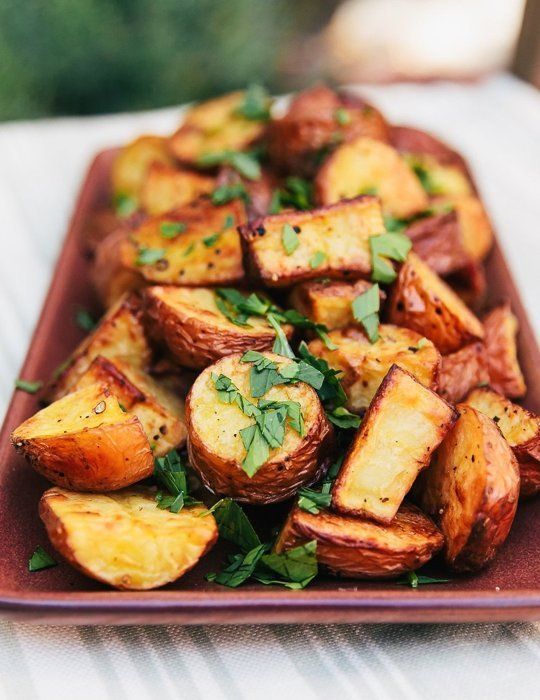
Combinations of foods in a meal can also affect blood sugar levels.  If a high GI and low GI food are eaten together for example, the effect will be a moderate rise in blood sugar levels.  An example of this is eating a potato with baked beans, the potato is high GI, but the beans are low, so the effect on blood sugars is moderated.
For optimum results it is best to eat low GI foods the majority of the time, however, if the occasion arises where this is not possible, try to at least combine high GI choices with lower GI options to reduce the effect on your blood sugars. See also: What are the healthiest foods to lose weight

Easy low GI food swaps

Cereals

Swap puffed rice cereals (GI 82), cornflakes  (GI 80)and puffed wheat  (GI 80) for porridge (GI 58), natural muesli  (GI 40) or All-Bran (GI 50)

Bread

Swap white bread (GI 71), baguettes (GI 98) and bagels (GI 72) for wholewheat(GI 49), soya and linseed  (GI 36)or sourdough (GI 54).
Swap taco shells (GI 68) for wheat tortilla (GI 30)

Fruit

Swap dates (GI 103) for prunes (GI 30)
Swap watermelon (GI 80) for apples (GI 34)

Vegetables

Swap potatoes (GI 60) for sweet potatoes (GI 48)
Swap pumpkin (GI 75) for carrots (GI 41)
Most vegetables are quite low in carbohydrates and have a low GI

Snack foods

Swap pretzels (GI 83) for nuts (GI 13-25)
Swap water crackers (GI 78) and rice cakes  (GI 87)for oatmeal crackers (GI 55)
Swap maple flavoured syrup (GI 68) for  jam (GI 51) or Nutella (GI 33)
Swap scones (GI 92) and donuts  (GI 76) for a nut and seed muesli bar (GI 49).

Pasta and rice

Swap short grain rice (GI 83) for long grain (GI 50) or brown rice (GI 50)
Swap rice noodles for wheat pasta (GI 54) or instant noodles (GI 47)

Dairy

All dairy products are low GI with the exception of ice cream which is classified as medium (GI 62)

Legumes

All legumes are low GI.


Source

Monday, 2 November 2015

Low GI still a winner

The low-GI diet proves that weight loss doesn't have to be complicated, restrictive or expensive.


Hardly a week goes by without a new weight-loss craze hitting the headlines. From pills and detox programs to prepackaged meals, it's no wonder dieters can become confused. But there's one diet that has been helping people to successfully lose weight for years. It's backed by sound scientific research, it can be followed by eating everyday foods and all the information you need to follow it is free.
The low-GI diet was based on research that shows that some carbohydrates have a different effect on blood glucose levels than others. While some flow into the bloodstream quickly, causing glucose to spike, others trickle in slowly, keeping it low. Based on this research, the glycaemic index, or GI, was established about 25 years ago. It's a scale that ranks foods from zero to 100 based on their effect on the body's blood glucose, but how does it relate to our weight?
Your body performs best when blood glucose is kept relatively constant. If blood glucose drops too low, you are left fatigued and looking for your next food fix. But if it goes too high, the pancreas secretes more insulin. This brings the level of glucose down, but primarily by converting the excess glucose into stored fat.


Weight-loss "power tool"

The low-GI diet was originally intended to help people with diabetes control their blood glucose levels, but it was quickly adapted to help people trying to lose weight as it also helps to control cravings and appetite.
Jennie Brand-Miller, a professor of human nutrition at the University of Sydney and a world authority on the GI, describes the diet as a "power tool" for healthy weight loss. "This is not a low-carb, low-fat or high-protein diet," she says. "On this diet you will be eating sensible quantities of bread, pasta, cereal, rice and noodles. It is just a matter of choosing the low-GI varieties."
Professor Brand-Miller says there are many benefits to the diet. One is that it promotes fat loss rather than muscle or fluid loss, and it increases the rate of weight loss compared to conventional low-fat diets. If you have "dangerous" levels of belly fat, a low-GI diet can help to get rid of that too.
All of the information you need to know about the GI, including a comprehensive database of food rankings, can be found free of charge on the glycaemic index website (www.glycemicindex.com). If you want to follow a specific 12-week diet plan, you can buy The Low GI Diet (Hachette Australia) by Professor Brand-Miller and her team.
When looking through the food database, a few things might come as a surprise. One is that some healthy, high-fibre foods, such as brown rice, have a high GI ranking. "Fibre is essential in our diet, but for a lot of people, eating everything 'brown' isn't very appealing," says Professor Brand-Miller. "One of the great things about the low-GI diet is that it is naturally high in fibre. People can eat low-GI bread, pasta and basmati rice, and not have to eat the brown versions."

Beneficial carbs

Also, certain high-fat foods, such as chocolate, have a low-GI ranking. "High-fat and saturated-fat foods still need to be limited as they would in any healthy diet," says Professor Brand-Miller. Lisa Renn, a Melbourne-based accredited practising dietitian and a spokesperson for the Dietitians Association of Australia, gives the diet a thumbs up. "The GI is a scientifically sound way of eating, as opposed to 'fad' diets which may avoid food groups, as it is based on eating carbohydrates which are generally higher in fibre and less refined," she says.
"The GI diet also teaches people about different types of carbohydrates, and how some may be more beneficial than others to their health. And it helps people to understand that carbohydrates are part of a healthy diet and can be useful for weight loss."
And there's more. "The GI diet does not require any supplements or [different] foods to be purchased," Renn says. "And the fact that people following this diet will prepare more meals at home will also be a saving for their budget in these tough economic times."
The key points
  1. High-GI foods have a ranking of 70 or higher, such as potatoes and most breads.
  2. Low-GI foods have a ranking of 55 or lower, such as pasta, legumes and porridge.
  3. Low-GI foods are best for most people most of the time, because they reduce the risk of heart disease and type 2 diabetes.
  4. Low-GI foods are the most satisfying to eat, and help suppress appetite.
  5. Low-GI foods help people with diabetes control their blood glucose levels.
  6. Low-GI foods help people lose and control weight.
  7. Low-GI foods help reduce blood insulin levels.

The GI symbol
 The University of Sydney has developed a GI symbol to help consumers make healthier carbohydrate choices. The symbol appears on a range of foods that have been tested for the glycaemic index by an accredited testing laboratory.

    Switching to a low-GI diet- the basics

    1. Eat breakfast cereals which include oats, barley and bran.
    2. Eat breads with wholegrains, stone-ground flour or sourdough.
    3. Reduce your consumption of potatoes.
    4. Enjoy all other types of vegetables and fruit.
    5. Cook basmati or doongara (a low-GI) rice.
    6. Eat pasta, noodles and quinoa.
    7. Eat plenty of salad with vinaigrette dressing.


    Comment below if you liked this article and found it helpful. Let me know what you think, love hearing from you. :)


    Source