Showing posts with label detox. Show all posts

Monday, 28 March 2016

6 reasons why you'll need a post-Easter detox

Follow a healthy detox after your Easter binge and your health will thank you!
The supermarket shelves are lined with chocolate eggs and hot-cross buns - and then there are the Easter specials on alcohol. Nobody wants to hold back on Easter celebrations, but we all feel the familiar slump by the time the sun is setting. Unlike last year, we have 6 reasons you should consider a detox so you can bounce back in no time.


Blood-sugar levels

Your blood-sugar levels are the first to suffer from too many chocolates and hot-cross buns. Sugary junk food will give you a sharp spike in energy, but it won’t last long. Ever wondered why you’re so lethargic by the end of Easter Sunday? It’s because these sharp spikes are quickly followed by sharp dips. These dips also result in more hunger pangs; just a short time after you gorged yourself on yet another chocolate bunny.


Liver

This is the first line in our body’s natural detoxification process. It has a direct impact on fat regulation, hormone balance, digestion and circulation by filtering nutrients from your food and rejecting the junk. During Easter this ratio heavily favors the junk, meaning your poor liver is working extra hard. A build up of too many toxins from alcohol and junk food means your liver could become blocked, fatty or bloated. The result? A wide range of health issues, including high cholesterol.

A healthy detox can help restore your liver to its best and let your natural detoxification process get back on top.


Skin

Find yourself developing extra zits or bad skin after Easter? Your body sweats as a way to get rid of toxins, so the more chocolate you’re eating the more toxins make their way to your skin. But you can reverse these effects by cutting out the bad stuff. Even a short detox can help clear up skin concerns and that’s exactly what members who have completed the body+soul revolution detox discovered. 

“I agree that there are some dodgy detoxes out there but I found the body+soul revolution detox plan great! My eczema cleared right up, now my skin looks healthier and so do I!” Louise from Victoria


Bloating

While wholegrain carbs are actually an important part of a healthy diet, the highly refined carbs in hot-cross buns are not. Don’t forget to think about all the added sugar that make them taste so sweet and you’re doing your intestines a serious disservice.

There’s a reason you feel bloated after indulging your sweet tooth. Our bodies produce gases when eating and drinking, and even more so when you make unhealthy choices, plus they can start smelling particularly foul! These gases start in the colon and move around the body until they find an escape or are absorbed, leaving you feeling bloated.

Swapping junk for nourishing whole foods will help give your body’s good bacteria a chance to do their job and stop the bad bacteria from taking over and take the edge off bad smells!


Bad breath

Some sugars found in junk foods are fuel for the bacteria in your mouth. This not only results in bad breath, but it can end up building thick layers of plaque on your teeth and gums which means even worse breath and a range of oral diseases. Do yourself and those around you a favour by following your Easter chocolate binge with a few weeks of completely healthy eating to get your breath fresh again.


Kidneys

Alcohol might not be a traditional part of Easter indulgences, but they’re a common part of Aussie celebrations. This, along with extra sugar and refined carbs, puts enormous pressure on your kidneys making it much harder for them to do their job and remove the toxins from your blood. 

On average, kidneys process about 200 litres of blood and produce about the same amount of urine each day. Give these hard-working organs a chance by feeding your body only healthy, nutritious foods. Fewer toxins entering your system means they can get rid of them much faster.

I hope you had a fantastic Easter indulging in its delights and spending time with family and friends! Now lets get ready to get back into routine! Comment below what you enjoyed most about your Easter!


Source

Thursday, 31 December 2015

Your Post-Binge, 3-Day Diet Detox Plan

An extra serving of sweet potatoes, a sliver of pecan pie, a Campari cocktail or two. By itself, each of these festive splurges seems so innocent. But like holiday presents, dietary indulgences come at a cost. Most of us never lose the 1 to 2 pounds we gain between Thanksgiving and New Year's Eve—and over the years, they add up. The damage is even worse when December's hearty eating patterns take hold and last well into spring, as they often do.
That is why we developed this 3-day quick weight loss plan—to get you out of party excess mode and put you on a healthy eating track for the new year. It's simple, fast, and effective. Stick with it and you will have those extra pounds gone before you take down a single decoration.
BREAK THE CYCLE
The Splurge:
 Those dreams of sugarplums dancing in your head may be more like a nightmare brought on by too many sweet treats. While experts used to dismiss the notion of sugar addiction, a growing body of research suggests that the sweet stuff can hijack the same brain circuitry that's affected by drugs and alcohol, leading to a vicious cycle of cravings and binges. And holiday desserts with high levels of both sugar and fat provide a double whammy. The sugar hooks you, while the fat piles on the pounds. 
The Solution: Eliminate desserts that are rich in sugar and fat for at least 3 days—7 to 10 would be even better. This will help quell cravings while you start to reestablish a taste for naturally sweet foods, such as fruit and starchy vegetables.
RESIZE YOUR BELLY
The Splurge:
 As the "it's a holiday, I'll diet tomorrow" mentality sets in, one of your natural appetite control systems—the stomach's network of stretch receptors—starts losing its effectiveness. Normally, when your stomach is full, these receptors send messages to the brain that say "I'm satisfied." But prolonged periods of overeating make the receptors less sensitive. This helps explain why that feeling of "I'm so full, I'll never eat again" is followed the next day by the sense that you're even hungrier than usual.
The Solution: If you keep eating the same high-calorie foods but merely reduce the quantity, your stretch receptors will signal your brain that you're starving and need emergency rations—now. But you can short-circuit this by eating healthy-size servings of low-calorie, high-fiber foods such as fruits, vegetables, and whole grains. Their bulk will keep the receptors happy while avoiding excess calories.   
CUT DOWN ON COCKTAILS
The Splurge:
 So you had a few too many spiked eggnogs. The problem isn't just the sugar and fat. The alcohol itself packs in 7 calories per gram (compared with 4 for protein and carbs and 9 for fat). And the stomach and brain don't register liquid calories in the same way as solids, so it's easy to go right on eating and drinking—without compensating for the added calories. 
The Solution: Satisfying, low-calorie beverages can boost metabolism and even temper your hunger. Tea (lose the cream and sugar) has zero calories and lifts metabolic rate. Or prepare a pitcher of flavored water. Add sliced oranges, lemons, and limes to a pitcher—or toss in berries or sprigs of mint or lemongrass. They're refreshing and give you healing antioxidants. 
YOUR 3-DAY DETOX DIET
Now that you know the principles, you're ready to jump-start your new year's resolution. Our diet plan provides about 1,250 calories a day. To cut the craving for sweets, we've eliminated most refined sugars. To keep your stretch receptors happy, we feature plant-based foods that are rich in fiber. And instead of high-calorie cocktails, we give you delicious low- or no-cal drinks. If you're not back to your normal weight in 3 days, repeat for a total of 6 days.
DAY 1 
  • Egg white-veggie scramble: ½ c egg whites (or 4 egg whites) with 1 c chopped mixed vegetables (tomato, bell pepper, baby spinach leaves), prepared with cooking spray
  • 1 slice toasted whole grain bread or ½ whole wheat English muffin with 2 tsp 100% fruit spread
  • 1 c fat-free Greek-style yogurt Coffee or tea with ¼ c fat-free milk 
SNACK: 1 sheet graham cracker with 2 tsp natural (no added sugar) peanut butter 
LUNCH:
  • Hummus-veggie pita sandwich: ½ whole grain pita spread with 1 tsp deli mustard and 1 Tbsp hummus, then stuffed with vegetables (bell peppers, sprouts, lettuce, tomato) and 2 slices avocado
  • 1 medium orange or 2 tangerines
  • Unsweetened herbal tea (hot or iced) with cinnamon stick 
SNACK: 1 piece fresh fruit or 1 c mixed vegetables with 2 tsp oil and vinegar dressing 
DINNER:
  • 3 oz grilled salmon brushed with citrus glaze while cooking
  • Citrus glaze: 1 Tbsp each orange juice, honey, and reduced-sodium soy sauce
  • ½ c cooked brown rice prepared with 1 tsp olive oil
  • 1 c cooked winter squash, broccoli, or asparagus 
DESSERT: ½ c fat-free plain Greek-style yogurt with 2 tsp 100% fruit spread 
NUTRITION 1,288 cal, 91 g pro, 181 g carb, 27 g fiber, 26 g fat, 4.5 g sat fat, 1,322 mg sodium, 82 mg cholesterol
DAY 2 
BREAKFAST:
  • 1 c low-fat (1%), no-added-salt cottage cheese with ½ c pineapple chunks
  • 5 whole grain crackers
  • Coffee or tea with ¼ c fat-free milk 
SNACK: ½ turkey sandwich: 1 slice whole grain bread with 2 oz low-sodium or reduced-sodium turkey breast, lettuce, tomato, and 1 tsp mustard 
  • Pasta tuna salad: 1 c cooked whole grain pasta spirals or bow ties with 1 c chopped cherry tomatoes and our tuna salad
  • Tuna salad: 4 oz water-packed tuna mixed with 2 Tbsp chopped white onion, 1 Tbsp fat-free Greek-style yogurt, and 2 tsp Dijon mustard
  • Water with sprigs of mint or lemongrass 
SNACK: 1 medium orange 
DINNER:
  • 3 oz broiled or grilled boneless chicken breast
  • 1 medium baked sweet potato topped with 2 tsp light spread
  • 2 c tossed field greens drizzled with 1 Tbsp vinaigrette dressing
  • Unsweetened herbal tea (hot or iced) with lemon 
NUTRITION 1,242 cal, 122 g pro, 146 g carb, 26 g fiber, 21.5 g fat, 4 g sat fat, 1,565 mg sodium, 162 mg cholesterol
DAY 3 
BREAKFAST:
  • 1 c cooked oatmeal topped with ¼ cup fat-free plain or vanilla Greek-style yogurt and 1 c berries
  • Coffee or tea with ¼ c fat-free milk 
SNACK: 1 oz low-fat cheese with 5 whole grain crackers 
LUNCH:
  • 1 c low-sodium lentil soup or minestrone soup
  • 2 c mixed salad greens with ¼ c low-sodium water-packed tuna or low-sodium diced turkey and 1 tsp olive oil with lemon juice or balsamic vinegar
  • Unsweetened herbal tea with cinnamon stick 
SNACK: 1 piece fresh fruit (banana or apple) or 1 c berries, with 8 oz fat-free plain or vanilla Greek-style yogurt 
DINNER:
  • Veggie burger on whole wheat bun topped with 2 slices avocado
  • Spinach salad: 1½ c baby spinach; ¼ red onion, sliced; ¼ c fresh mandarin orange slices; and 1 tsp olive oil with balsamic vinegar
  • Seltzer water with sliced lemon, orange, or lime 
NUTRITION 1,277 cal, 86 g pro, 173 g carb, 34 g fiber,32 g fat, 5 g sat fat, 1,577 mg sodium, 38 mg cholesterol


Let me know if you found this 'post-holiday detox' plan helpful. Do you struggle with weight gain over the holidays? Let me know tricks and tips you've learnt to help battle the weight gain.

Source

Friday, 9 October 2015

Alcohol and Weight Loss

Alcohol and weight loss are enemies, but an occasional drink can have a place in a healthy lifestyle. In fact, many experts note the potential health benefits of consuming a single drink per day, including a reduced risk for high blood pressure If, however, you are exceeding one drink daily, you might be sabotaging your weight loss plans.


Alcohol is metabolized differently than other foods and beverages. Under normal conditions, your body gets its energy from the calories in carbohydrates, fats and proteins, which are slowly digested and absorbed within the gastrointestinal system. However, this digestive process changes when alcohol is present. When you drink alcohol, it gets immediate attention (because it is viewed by the body as a toxin) and needs no digestion.

On an empty stomach, the alcohol molecules diffuse through the stomach wall quickly and can reach the brain and liver in minutes. This process is slower when you have food in your stomach, but as soon as that food enters the small intestine, the alcohol grabs first priority and is absorbed quickly into the bloodstream.

As the alcohol reaches the liver for processing, the liver places all of its attention on the alcohol. If you drink very slowly, all the alcohol is collected by the liver and processed immediately—avoiding all other body systems. If you drink more quickly, the liver cannot keep up with the processing needs and the alcohol continues to circulate in the body until the liver is available to process it. That's why drinking large amounts of alcohol (or drinking alcohol quickly) affect the brain centers involved with speech, vision, reasoning and judgment.


When the body is focused on processing alcohol, it is not able to properly break down foods containing carbohydrates and fat. Therefore, these calories are converted into body fat and are carried away for permanent storage on your body.

Alcohol is a diuretic, meaning that it causes water loss and dehydration. Along with this water loss you lose important minerals, such as magnesium, potassium, calcium and zinc. These minerals are vital to the maintenance of fluid balance, chemical reactions, and muscle contraction and relaxation.

Alcohol contains 7 calories per gram and offers NO nutritional value. It only adds empty calories to your diet. Why not spend your calorie budget on something healthier?

Alcohol affects your body in other negative ways. Drinking may help induce sleep, but the sleep you get isn't very deep. As a result, you get less rest, which can trigger you to eat more calories the next day. Alcohol can also increase the amount of acid that your stomach produces, causing your stomach lining to become inflamed. Over time, excessive alcohol use can lead to serious health problems, including stomach ulcers, liver disease, and heart troubles.


Alcohol lowers your inhibitions, which is detrimental to your diet plans. Alcohol actually stimulates your appetite. While you might be full from a comparable amount of calories from food, several drinks might not fill you up. On top of that, research shows that if you drink before or during a meal, both your inhibitions and willpower are reduced. In this state, you are more likely to overeat—especially greasy or fried foods—which can add to your waistline. To avoid this, wait to order that drink until you're done with your meal.

Many foods that accompany drinking (peanuts, pretzels, chips) are salty, which can make you thirsty, encouraging you to drink even more. To avoid over-drinking, sip on a glass of water in between each alcoholic beverage.

Skipping a meal to save your calories for drinks later is a bad idea. Many drinkers know they'll be having some alcohol later, whether going to a bar, party, or just kicking back at home. Knowing that drinking entails extra calories, it may be tempting to "bank" some calories by skipping a meal or two. This is a bad move. If you come to the bar hungry, you are even more likely to munch on the snacks, and drinking on an empty stomach enhances the negative effects of alcohol. If you're planning on drinking later, eat a healthy meal first. You'll feel fuller, which will stop you from overdrinking. If you are worried about a looming night out with friends, include an extra 30 minutes of exercise to balance your calories—instead of skipping a meal.


What are more important, calories or carbs? You might think that drinking liquor is more diet-friendly because it has no carbohydrates, while both wine and beer do contain carbs. But dieters need to watch calories, and liquor only has a few calories less than beer or wine. Plus, it is often mixed with other drinks, adding even more empty calories. Hard liquor contains around 100 calories per shot, so adding a mixer increases calories even more. If you are going to mix liquor with anything, opt for a diet or club soda, instead of fruit juice or regular soda. Sweeter drinks, whether liquor or wine, tend to have more sugar, and therefore more calories. In that respect, dry wines usually have fewer calories than sweet wines.

The list below breaks down the number of calories in typical alcoholic drinks. Compare some of your favorites to make a good choice next time you decide to indulge in a serving of alcohol.


DrinkServing SizeCalories
Red wine5 oz.100
White wine5 oz.100
Champagne5 oz.130
Light beer12 oz.105
Regular beer12 oz.140
Dark beer12 oz.170
Cosmopolitan3 oz.165
Martini3 oz.205
Long Island iced tea8 oz.400
Gin & Tonic8 oz.175
Rum & Soda8 oz.180
Margarita8 oz.200
Whiskey Sour4 oz.200

Alcohol can easily be the enemy when it comes to weight loss. It adds extra calories to your diet, encourages you to eat more food, and alters the normal digestive process. Not only are the extra calories a hindrance, but the changes in food breakdown sends turns those extra calories into unwanted body fat. Alcohol does have a bad reputation when it comes to weight loss, and rightfully so, so be smart about your alcohol choices if you're watching your weight. This article has been reviewed and approved by Spark People's nutrition expert Becky Hand, MS, Licensed and Registered Dietitian.


Source
http://www.sparkpeople.com/resource/nutrition_articles.asp?id=563&page=2

How to lose weight by cutting alcohol

What's the key to successful weight loss? Nutritionist and Ocsober ambassador Lola Berry tells you what you need to do

Weight loss is always a big topic for discussion. We all want to know the latest tricks and tips, like if there is some new exotic fruit which will speed your metabolism up or if there's some magical shake that will make you less hungry. Sure, these things do exist but what happens when you go off these special weight loss supplements and go back to normal eating? You guessed it, the weight piles back on, and often with interest. Take it from me, I’ve tried and seen it all. So what are the true pillars of weight loss?

How to lose weight by cutting alcohol

Eating real food

The things you want to go for are fresh fruit, veggies, nuts and seeds, and when it comes to animal products I’d be going for organic or free range when you can. I know they cost more but that's just my preference both ethically and from a health perspective. 

Giving up alcohol (for awhile)

Now what about the booze? If you're really serious about dropping weight then it's got to go, just for a little while. Use a campaign such as Ocsober as motivation to keep off the alcohol, if only for a month. It's not even the fact that you're drinking empty calories, but there's more to it than that. When you drink alcohol your body needs to burn it off straight away, so if you're out for dinner, then that meal you’re eating is being stored rather than burned off. 


Think about how often we have a few drinks at dinner time. On top of that, we want our liver to be in tip top shape to be losing weight as it's a key player in fat emulsification. So if you're liver is out of whack then it's going to be harder for your body to break down fats. When you are trying to lose weight, keep your water intake high as you'll be detoxing so staying hydrated is going to help keep you regular and flush whatever toxins your body is getting rid of.


Get regular sunshine

Getting a bit of sunshine every day is key. I’m not saying roast, but just a little walk in the sun most days will give you a nice hit of vitamin D which is needed for your metabolism. 

Be happy

Finally, most importantly be happy. If you're not happy you won't be compliant and you'll keep reverting to the "easier" option. Plus when we're not happy we turn to other things to make us happy like sugar, carbohydrates or alcohol. So make sure you're doing things to make you happy, things that feed the soul.


Comment below you thoughts, love hearing from you xx


Source
http://www.bodyandsoul.com.au/weight+loss/lose+weight/how+to+lose+weight+by+cutting+alcohol,27635

Thursday, 3 September 2015

Go with your gut: the secret to weight loss lies in our stomach's bacteria

It’s the variety of food you eat that dictates your health, writes Rosie King.

Go with your gut: the secret to weight loss lies in our stomach's bacteria

One decade, we’re told to cut fat from our diets to lose weight. The next, we’re told to count calories. Then it’s all about ditching carbs. But could it be that we’ve had it wrong all along and the secret is actually already within us? More specifically, within our gut?
Tim Spector, a professor of genetic epidemiology and author of The Diet Myth [Hachette], says yes. “The more diverse your gut microbes, the more likely you are to be healthy and lean, and the more sparse your microbes, the more likely you are to be overweight,” Spector says. “This is knowledge that didn’t exist five years ago.” 

Welcome to your microbiome

Each person has up to 2kg of microbes in their stomach and together these microbes make up their unique gut microbiome. The microbes, which include trillions of bacteria, fungi and viruses, help the body produce vitamins and amino acids. They also play an important role in the digestive and immune systems, blood pressure and mental health.
Scientists first discovered that an unbalanced microbiome could lead to obesity in animals. In 2006, researchers from Washington University in the US looked at genetically engineered obese mice and identified that a class of gut microbes called firmicutes were consistently over-represented. These particular microbes were found to be too efficient at extracting energy from food and breaking down fibre, and also increased the absorption of fat. 
To put their findings to the test, the team plucked firmicutes from the obese mice and tube-fed them to bacteria-free mice. The latter put on a significant amount of weight over two weeks, even though they ate less. Now there are numerous studies showing that not only are the microbiomes of obese humans lacking in diversity, they are swarming with firmicutes.
A recent study has taken it a step further with “faecal transfers” from humans to mice, which are both gross and fascinating. The study published in the journal Science in 2013 revealed that healthy mice could be made obese by transferring faecal matter, teeming with gut microbes, from obese humans. The research team also found that transferring faecal matter from lean humans prevented mice from putting on weight.
There’s only one report of a human-to-human faecal transfer that resulted in weight gain. A 32-year-old woman in the UK underwent a poo transplant in 2011 after recurrent clostridium difficile, an infection that causes inflammation of the colon. The donor microbes came from her 16-year-old daughter, who was overweight, and the mother weighed 62kg with a BMI of 26 at the time of the transfer. Just over a year later, the woman weighed 76kg and had a BMI of 33. She’s still obese today, despite an exercise program and supervised diet.

What are we doing wrong?

A seemingly timeless weight-loss mantra is that in order to shed unwanted kilograms we need to burn more calories than we eat. Spector, however, argues that this approach fails to take into account one crucial fact: “Each person’s microbiome is unique, which means each of us responds differently to carbohydrates and fats and sugar.” It isn’t just calorie-controlled diets that he claims are bogus. He says that any diet plan that excludes whole food groups damages your microbiome and increases your likelihood of putting on weight.
“Exclusion diets may help you lose weight for the first few weeks because you’re eating less and selecting carefully what you do eat,” he says. “But long-term, they’ll decimate your microbes by reducing their diversity and can end up making you fatter.”
Naturopath Savannah Daisley has been helping Sydneysiders lose weight by targeting their gut flora for 15 years, and she agrees with Spector. “An imbalance of gut flora stops our digestive system from working properly so our use of calories isn’t as efficient and our energy levels drop,” Daisley says. “The increased fatigue means the fat-storing stress hormone cortisol kicks in, leading to heightened blood sugar and insulin levels. Basically, weight gain is inevitable when there’s an imbalance of good and bad bacteria in our guts.”

Your gut craves variety

Spector wants us to forget thinking of our body as a temple and instead think of it as a microbe garden that requires a diverse diet of fibre-rich nutritious foods. “A garden with rich soil, plenty of species and change is always going to be fuller and healthier than a scant garden with weeds, few plants and packed with toxins,” he says.
Our much-slimmer ancestors 15,000 years ago enjoyed about 150 ingredients each week and no doubt had flourishing microbe gardens. Most people today have just 20 different foods in their weekly diet. Most worryingly, many are artificially refined and wreak havoc on the biodiversity of our microbiome.

What can we do?

For anyone looking to lose weight and restore gut health, Daisley says ditching sugar and alcohol is non-negotiable. “I’d usually put them on a strict 14-day detox to overhaul their microbiota, which can see them lose up to 5kg. For people who don’t want something so drastic, I’d encourage them to cut out sugar and alcohol for two weeks – they’re toxins that stop good bacteria from growing and feed bad bacteria, so getting rid of them will do a world of good for your gut, weight and energy levels,” she says.
Although fruit contains fructose, which is a type of sugar, it isn’t the enemy. Daisley says berries, in particular, are great for combating cravings, while Spector says whole fruit with the pulp is good for you and your microbes.
“For high-fibre fruits, the fibre and polyphenols can balance out the effects of the fructose,” he says. “Strawberries are good as they contain a relatively high amount of fibre and more than 95 polyphenols, which the microbes feed off and which act as antioxidants.”
Spector agrees that while everyone can benefit from better gut health, overweight people may need a kick-start, such as a detox or intermittent fast, as their microbiome may be over-run by toxic bacteria. However, he generally takes a more balanced approach.
“No-one can go wrong if they enjoy a diet with as much diversity as possible and cut out processed foods,” he says. While he’s not a fan of diets, he adds: “The Mediterranean diet meets most of the criteria for a balanced, gut-friendly diet. It has variety – olive oil, yoghurt, dairy, nuts, seeds, veg, fruit, grains, legumes, fish and meat occasionally.”
But he says the most important shift we need to make is how we define a good diet: “We need to change our concept from thinking that fat is bad and sugar is bad and carbohydrates are bad – diversity is key.”

The 5 golden food rules

1. Eat as many different wholefoods as possible. The average person only has 20 different foods a week, which is way too low, considering our ancient ancestors would have eaten about 150, Spector says. 
2. Eat fermented foods daily. Foods such as kimchi, kefir, sauerkraut and yoghurt have large amounts of good bacteria that our gut craves.  
3. Cut sugar and alcohol to reset your gut. Daisley says these are the two biggest culprits in preventing the growth of good bacteria in your gut. Avoiding these for two weeks will make a huge difference to your gut’s performance, and desired weight loss.
4. Eat fibre-rich food after a junk meal. Plenty of vegetables, fruit and wholegrains will help replenish the good bacteria that the junk food has wiped out. 
5. Spector says the Mediterranean diet is the best option for gut health – it  meets the most criteria for a gut-friendly diet as it has the most variety, and includes a lot of olive oil, yoghurt, onions and red wine – all top gut foods. 

Top gut friendly foods

These foods act like fertilisers for our microbe gardens by helping the growth of good bacteria and increasing the biodiversity of our microbiome, Spector says. Try to add fermented foods to your diet daily and make sure you incorporate the other foods on at least a weekly basis.
• Fermented foods, including sauerkraut, kimchi, kefir and yoghurt
• Leeks
• Artichokes
• Chicory root
• Onion
• Garlic
• Capsicum
• Extra virgin olive oil
• Coffee
• Green tea
• Dark chocolate
• Natural cheese
• Red wine

Comment below what you thought. I do believe that stomach bacteria has a HUGE impact on health and ultimately weight loss. What do you think? Do you agree/disagree? Please let me know, I love hearing what you lovelies have to say! 


Source
http://www.bodyandsoul.com.au/nutrition/nutrition+tips/go+with+your+gut+the+secret+to+weight+loss+lies+in+our+stomachs+bacteria,38401

Sunday, 2 August 2015

This 1-Day Cleanse Will Reset Your Body ASAP

Was your weekend filled with greasy, cheesy, or alcohol-infused fun? Now's the time to get back on track. Undo your weekend with our meal ideas, from breakfast to dessert, that take advantage of the best detoxifying foods around. Read on for the recipes!

Breakfast: Detox Green Juice


Breakfast: Detox Green Juice

This detox green juice recipe is full of fresh ingredients that have naturally detoxifying properties, like lemon, ginger, watercress, and celery.


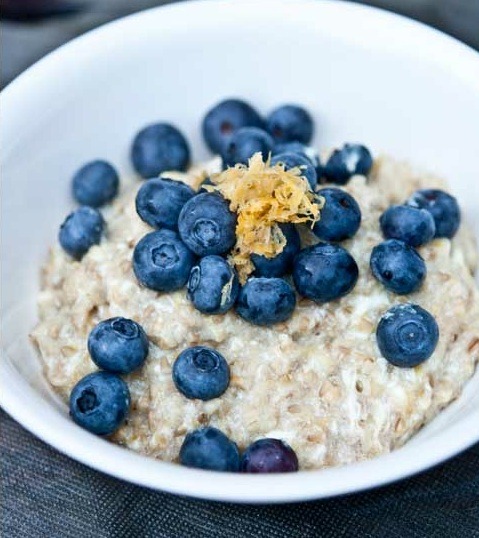
Breakfast: Buckwheat Porridge


Breakfast: Buckwheat Porridge

Whole grains are great for detoxing since they help keep everything moving in your gut. If you're over oatmeal, try this buckwheat porridge recipe.


Midmorning Snack: Fresh Fruit


Fresh fruits are one of the best ways to detox, since you'll get your fill of vitamins and antioxidants; fresh fruits also have a high water content, which will help you flush out any toxins, so grab an apple when hunger strikes between breakfast and lunch!


Lunch: Watercress Soup


Lunch: Watercress Soup

This quick watercress soup is high in vitamins A and C as well as iron and fibre, and you'll appreciate the varied textures and flavours of this potato-filled soup.


Lunch: Toasted Quinoa and Cabbage


Lunch: Toasted Quinoa and Cabbage