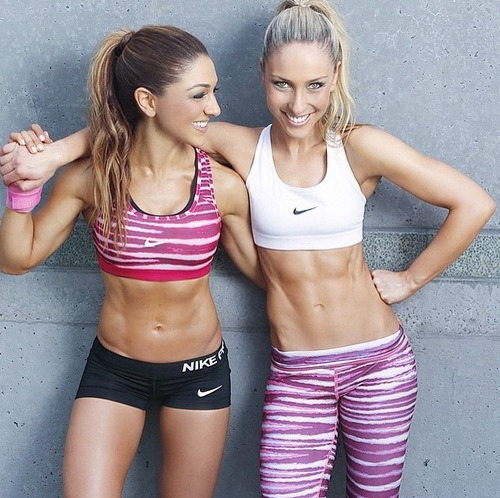
Showing posts with label social circle. Show all posts

Thursday, 2 June 2016

Weight Loss Can Lead To Friend Loss

The Detroit Free Press reports that the lifestyle change necessary to embark on a fitness or weight loss regimen can be alienating for those closest to you. One woman garnered the ire of her granddaughter when her fitness regimen meant that she stopped having time to drive her to school and the girl was forced to walk the 2.5 miles herself. Another lamented losing a friendship that involved a lot of cooking and eating. Another recalled sensing that her coworkers were jealous of her newfound health and fitness after she changed her lifestyle.
Meeting a weight loss or fitness goal, especially a significant one, often shifts the dynamics of your interpersonal relationships. Friends say you're different, and that they have to get used to the new you. Your wife is suddenly more affectionate, and you wonder why you waited a decade to drop that beer belly.
A dramatic change in lifestyle will likely impact one's interpersonal relationships; anyone who has attempted to dedicate themselves to anything that takes a large time commitment is going to have to give up something- work, friends, or sleep. When I decided to start training for a marathon last summer, I found myself having to turn down dozens of invitations to parties, and eventually people stopped asking me to hang out on Friday nights.
That being said, spending time around someone who has devoted all of their spare time to losing weight can be intolerable, especially if all they want to talk about is how their pants are totally too big on them now and how awesome their butt looks. In some ways, weight loss can lead to an uptick in self-worth that can lead to some insufferable self-absorption and borderline vanity. If someone's working on a fitness goal- say they're training for a triathlon- they may become similarly absorbed in their goals. I'm only a few weeks in to my push to the October marathon, and I'm already finding myself unable to find anything else to talk about besides running-
"How are you today, Erin?"
"Just fine, except I have a five mile interval workout later, and I'm hoping to run four X:XX mile splits with a 400 meter break between them. I'm nervous because my shin's been bothering me and the last thing I need are shin splints. I started doing these foot exercises again to strengthen this tendon that can cause shin pain if it's too weak, but I'm not sure if it's working. Also I think my left second toenail is going to fall off. I can't get a pedicure for the rest of summer. Ha ha!"
(other person walks away.)
See? Annoying.
I'm fully in support of people taking care of themselves and following their doctor's advice when it comes to what's best for their health, but significant lifestyle changes will obviously cause significant changes in what you have to talk about with other people.
The Detroit Free Press article suggests readers sit down and talk to loved ones about impending lifestyle changes and how they might effect the relationship, but I think the solution's much simpler than a long, drawn out conversation. Are you going to have less free time? Schedule a date to watch a movie or TV show or talk on the phone once a week. Do you spend time around your friends in cooking/eating situations? Cook/eat healthy food! Are people jealous of your weight loss? Fuck 'em. Who would want to be friends with someone that mentally small that they can't be happy for a healthy lifestyle change?
How about you? Have any of you experienced a change in friendship as a result of you or a friend changing their lifestyle to include more exercise?


Source

Tuesday, 31 May 2016

How your friends make you fat—the social network of weight

One of the big health news stories of 2007 was a study showing that your friends influence the size of your waist (and the rest of your body). Like any study, it raised as many questions as it answered, including whythis happens. A new study from Arizona State University looked into that question by testing three pathways by which friends might influence one another’s body size:
  1. Collaboration. Over time, you might start to share the ideas of the people close to you after talking with them about what the proper body size is. Then you might choose your food and exercise habits in order to reach that body size, whether that means eating more food to look like your plus-sized friends, or less food to look like your thin ones.
  2. Peer pressure. You feel bullied into trying to look like your friends and family members. They make you feel bad about your body, so you go about eating and exercising to look like them.
  3. Monkey see, monkey do. You change your habits to mirror those of your friends without necessarily thinking or talking about an ideal body weight. Alexandra Brewis Slade, PhD, one of the Arizona State researchers, gave an example of this pathway that most of us can relate to: You’re at a restaurant with friends and the waiter brings over the dessert menu. Everyone else decides not to order anything, so you pass, too, even though you were dying for a piece of chocolate mousse cake.
All three of these pathways are based on the idea that loved ones share social norms, the implicit cultural beliefs that make some things okay, others not.
To test which if any of these pathways affect weight, the researchers recruited 112 women between the ages of 18 and 45 years; half of them were overweight or obese. The researchers then contacted male and female friends, spouses, family members, and coworkers of these women, and ended up with 812 pairs. All of the people were asked about their weight and their feelings about and perceptions of body weight.
The results confirmed the 2007 study’s conclusion that if you have heavier friends, family members, and colleagues, it is more likely that you will be heavier, too. The stronger the relationship between the two people, the stronger the link between their weights. But only one of the pathways—number three—explained why people of the same size clustered together. The study was published in the American Journal of Public Health on May 9, 2011.
“I was surprised,” Dr. Brewis Slade told me during a phone interview. “I would have thought that pathway number two was the most powerful, since it’s really about your struggle to meet other people’s expectations, but it turns out it’s not the best explanation. The key message is that behavior and what people do together is important. So parents might want to go bicycling with their kids, go to a salad bar with kids, focus on what they do together.”
There are, of course, many reasons why people gain weight, and the Arizona State study provides only one possibility. But it also provides another motivation for each of us to make healthy choices—they help not only our own waistlines, but those of our friends and family, too.


Source

Sunday, 29 May 2016

Why your friends don't want you to lose weight

Every group of friends needs a 'fat one'. Craig Morris explains how to make sure it isn't you


The Goonies had Chunk, Take That had Gary Barlow, the college fraternity of Robot House from Futurama had Fat Bot and your mates have, um, you.
Sorry, but it seems to be an unshakeable cliché that every group of friends needs a Fat One; someone to be the lovable, chubby butt of all the pie jokes; to make the other members of the group look and feel slimmer in comparison. So what happens when you decide to lose weight and decide you no longer want to be that person?
The people you work with, live with and socialise with can have a huge impact on your weight loss, because they have the power to inform everything from your diet and fitness regime to your self-esteem. This can be a real positive if they’re cheering you on, but the danger arises when this power is wielded irresponsibly. As Men’s Health Forum editor Martin Tod puts it, “Men are less likely to recognise that they’re overweight than women – and less likely to consider being overweight a risk to their health – so male friends will probably start off less than sympathetic.”
The problem may be that your mates don’t want you to lose weight. This problem tends to manifest itself in one of three ways. The first, and easiest to recognise, is bullying. Because social occasions for groups of male friends tend to revolve around food and alcohol, a positive change in behaviour for one member of the group can serve to highlight the extravagant behaviour of the rest. As Martin Tod says, “Sometimes it's easier to make a joke about someone who's trying to lose weight than to confront that you might need to do it yourself.”
It’s all too easy to chalk this stuff up as friendly banter, but as Tod warns, banter can be harmful and counterproductive. When your mates are mocking you for ordering salad at the steakhouse or struggling to do your first sit-up, they’re bullying you every bit as much as when they used to get you to perform the Truffle Shuffle back in school. As Tod advises, this behaviour stems from a psychology of hierarchy that exists in male peer groups. If the alpha male types become threatened it’s natural to respond to a threat with increased aggression; albeit that tends to be passive aggression rather than pinning you down and scenting you with their urine (if that happens, you definitely need new mates).
The second, slightly less obvious way in which your mates can ruin your diet is misplaced advocacy. This is where your friends, seemingly with their hearts in the right place, belittle your lifestyle choices by insisting that having dessert “won’t kill you”, or telling you with cast-iron certainty that you need to do P90X or you don’t stand a chance.
Registered Dietician Aisling Pigott of the British Dietetic Association explains that in this behaviour stems from social politeness, “It’s the desire to ensure our mates don’t go without,” she says. “It’s the reason we continue to offer that extra lager or bag of chips, even if they are aware that the person is trying to lose weight.”
From Tod’s perspective, the problem is that men tend to prefer to be more proactive than reactive; we prefer to weigh in with our own opinions and be problem-solvers, rather than be supportive good listeners. All well and good when we have expert knowledge of a given subject, but we’re all too happy to blag it when we don’t know what we’re talking about.
The third, manifestation of your mates not supporting you is pure-and-simple apathy. It’s unlikely that your social circle will consciously aim to sabotage your efforts (see the note about urine above if so), but the bottom line is that people don’t like change and will usually do anything to maintain the status quo, so if you find that your mates are ribbing you for the “rabbit food” on your plate, or for cutting down on the lager and pub snacks, or for the way you look in your sweatpants, it’s important that you understand their motives. Once you realise that this behaviour says more about them than it does you, you’ll be able to look at ways to combat it.
So, once you understand the negative effect your friends are having on your weight loss, what can you do about it?

Solution: Cut negative people out of your life
Let’s start with the bullies. The extreme solution would be to cut these people out of your life. It’s like your mum always said, if they were your real friends they would understand and support you. Assuming they have some redeeming characteristics, the answer here would be to accept that support isn’t their strong suit and simply put the worst offenders on the back burner for a while, until your diet is more firmly on course. If you can’t cut them out, dilute them – think of the positive people in your life and drop them a text about a game of squash.

Solution: Understand where they’re coming from
The key to this, as with all bullying, is to recognise that it’s all about self-esteem. When your mates are belting out “Who Ate All the Pies?” the object is not to make you feel bad, but to make themselves feel good. We each carry our own personal feelings of inadequacy and the secret is that we’re all pretty much as crazy as each other and they’ll have their own concerns they don’t want highlighting. When you start to lose weight the bully now begins to fear that the focus will turn to his baldness, shortness, and/or inability to pronounce the letter ‘R’.

Solution: Watch your language
Start talking about your weight loss efforts in a different way. Martin Tod suggests that some of the negative associations men hold with dieting might simply be about the terms we use. “You’re probably more likely to have the piss taken out of you if you say you’re dieting than if you say you’re getting fit. Men aren’t too keen on the ‘D’ word” - perhaps because products like Diet Coke are marketed so squarely at women, making a diet a somewhat emasculating prospect for a bloke.”
Instead, focus on your exercise regime and how much stronger and fitter you’re getting. Focus on the foods that are enabling you to smash through your personal bests. You’re beefing up on protein to increase your lean muscle mass and you’re balancing all the cardio by massively increasing your nutrient intake with vitamin-rich foods. Throw in some impressive-sounding terms and a statistic or two and they’ll be hooked.

Solution: Get honest and explain why you need this to work
Guys who have a healthy relationship with food never understand the rest of us who don’t. The men who claim they can “eat anything and never put on any weight” don’t have some kind of superhuman metabolism; they just don’t know what it means to truly overeat; habitually, without heed. Explain how you feel about it. Tell your mates that you can’t give yourself an inch without taking a mile; that allowing yourself to let the diet slip for a day can set you down a slippery slope. If you decide that placating them is the easier option all round, plan ahead so you can fit the odd treat into your lifestyle without blowing the whole thing and jumping crazed into a Scrooge McDuck-style vault full of chocolate coins.

Solution: Involve your friends in your weight loss
This brings us to the final tactic you can employ to get all of your friends onside, no matter which category they fall into, and that’s getting them involved. Martin Tod says, “Your mates can be a great support - particularly if they decide to join you in tackling their weight and improving their fitness as well.” This could be something as simple as getting them competitive and organising a kick-about before the pub, or it could be something monumental, like training together for an actual marathon and raising a few sovs for a charity close to your hearts.
Aisling Pigott explains that you might also want to find a new HQ. With 1g of alcohol containing almost as many calories as 1g of fat, alcohol is a diet-killer for many reasons. “Despite being very energy dense, alcohol stimulates most peoples’ appetites, leading to feelings of hunger. And because alcohol lowers our inhibitions, this in combination with stimulating appetite often leads to a trip down to the kebab shop.”


Source

Friday, 27 May 2016

The “Friend Diet”: How Your Social Circle Can Help You Lose Weight

Did you know that if your two best friends are fat, you’re 150% more likely to be fat, too?
Obesity spreads like a cold or the flu. The Framingham Heart Study–data on the health and well-being of people in the town of Framingham, Massachusetts, spanning three generations back to 1948–shows that people with a friend who became clinically obese were 57 percent more likely to become obese, too.
Astonishingly, you don’t even have to know someone to be influenced by them. In Framingham, people whose friend’s got fat were 20 percent more likely to gain weight, too!
The research–by Harvard’s Nicholas A. Christakis and UC San Diego’s James H. Fowler, authors of “Connected: The Surprising Power of Our Social Networks and How they Shape Our Lives”–shows the powerful influence of social networks on our health.
What–if anything–can you do to ensure the social influences shaping you are healthy ones?

  • Join a group of Active People. A walking group, a sports team, even a gardening club–all these are likely to help you build the kinds of friendships that will encourage an active, healthy life. Your local chapter of the Sierra Club will likely have organized physical activities likes hikes, skiing, and camping trips. Just show up–you’re sure to meet people who will encourage you to stay active.

  • Find a Healthy Mentor. Blogger Jeff Goins recommends the following steps: 1. find someone you want to be like; 2. study him to see what his habits are; and 3. take your time before making the request. But it doesn’t stop there–one of the most important steps is to show appreciation for all that your mentor does.

  • Date Someone Active. You mate has a huge effect on your behavior. One study in Israel showed that the wives of men who were participating in a weight loss program lost weight themselves when they learned about the diet—even though they weren’t officially dieting. If you don’t have a partner, find one! Websites like eHarmony.com can be a great resource. If you struggle with dating, hire a coach—someone like Evan Marc Katz 
Turns out that weight gain (or loss) isn’t the only thing we “catch” from our friends.  Smoking, excessive drinking, tendency to divorce and even unhappiness are also contagious.  So, know that your friends impact you–and if you don’t have enough of the good ones, go on a Healthy Friend Diet!


Source

Sunday, 15 May 2016

Why Your Friends Can Be Bad For Your Weight

Being overweight is often viewed as a failure of personal responsibility.


“She just hasn’t tried hard enough.”

“He eats too much sugar and he knows it’s bad, but he won’t give it up.”

“Gosh, she’s reeeeally let herself go.”

While personal habits are part of the weight-loss equation, the idea that they’re the only factor is misguided.

“The notion that we are somehow islands when it comes to our weight simply isn’t true,” write Walter Willett and Malissa Wood in Thinfluence: The Powerful and Surprising Effect Friends, Family, Work, and Environment Have on Weight.

As hormonal and other physiological changes in midlife make unwanted pounds easier to put on than take off, it is important to remember that many other factors come into play, including how much money you make, local and national politics, the ubiquity of fast (and often unhealthy) foods, even the design of many homes (think of how many contemporary dining areas are outfitted with, or adjacent to, a television — a distraction that can cause you to unwittingly eat more than you think you have).

“We encounter influences like these and more every day,” the authors write. “They are often so commonplace and subtle, they have become invisible — until they hit our waistlines, that is. These ‘blind spots’ affect our efforts to lose or maintain our weight. And their impact is considerable.”

One of the major factors — and the emphasis of Willett's and Wood’s book — is who you hang out with. Social networks, their research says, play a significant role in weight.
Wood is a clinical cardiologist, staff physician at Massachusetts General Hospital in Boston, and assistant professor of clinical medicine at Harvard Medical School. I talked with her about the power of "thinfluence" and what everyone needs know about maintaining a healthy weight in midlife.

Next Avenue: What is Thinfluence?

Wood: It is very hard to be the one person making a healthy change in a group of heavy people who like to eat and don’t like to exercise. But losing weight is isolating if you don’t engage other people in the process.


If you want to lose weight, you need to find people who support that behavior. Most often, the friends you have who are overweight are not going to want to change. If you decide to break the norm, you will be isolated. You need to find even just one person in your circle who wants to do what you’re doing  — or find someone else outside that circle.


What hurdles do people face when they’re looking to surround themselves with more health-motivated friends?

Stigma deeply affects weight loss efforts because people are embarrassed to go out in public. I love when I see a really heavy person racing in an event; it takes a lot of strength to do that. I did a triathlon a few weeks ago and the last finisher was a 350-pound woman. To surround yourself with people so different is hard.

That is the basis of our book: We surround ourselves with people who are like us. So if people want to lose weight, they have to hang out with people different than themselves in order to get to a better place.

Some people say, “Sure, social networks might affect some people, but not me. Obesity just runs in my family.” What do you tell them?

Plenty of people have a family history of obesity and are not obese. The biggest thing is recognizing you have that risk and you have to work harder to avoid the downstream effect.
Epigenetics [the ability to influence gene expression through behavior and lifestyle modification] affects genes and weight. So it’s important to recognize that you’re at risk and change your behavior. You could consult an obesity specialist and say, ‘What are my options?’

What is unique about weight gain and weight loss in midlife?

I’m the perfect person to ask. I’m 51, and once you pass age 40, your body biology changes. And what worked in past — say, skipping a meal or two — doesn’t work. You have to eat regular meals and exercise.

Most people coast through their 40s; I recommend treating the 40s as a bootcamp for midlife. Start minimizing sugars and ramp up exercise because it will be easier when the 50s come. Eat a little less bread and fewer French fries. These small changes can have a huge impact, and a gradual change in your 40s is much easier than making a drastic change when you hit 50.


If you find you’ve put on pounds in midlife, you need to be more aggressive about exercise. Look at each day and say, ‘Where do I have fifteen or twenty minutes today to fit in exercise?’

What you do ninety percent of the time affects your health; what you do ten percent of the time doesn’t. If you have a business dinner, you may think, ‘All bets are off.' No. Those things matter. If you stick with it most of the time, you will see the benefits, and those small changes will have a long lasting effect.

How can people find new social networks that support weight loss?

Whatever poor choices you make, you will gravitate toward people who make those same bad choices. But all it takes to change is one person. You just have to find one person.
Look at your friends: If they support better health, stick with them. If they’re keeping you from achieving better health or encouraging you to make choices that don’t support your health, then find new groups. Go to a race, bump into someone from your past, go walk the track in the morning.

You don’t have to abandon friends and family; you just need to have more support during change so you can achieve success.

Here’s an example: I went to do a race, but I hadn’t been exercising a lot before then. I bumped into a friend I hadn’t seen in 30 years. She hadn’t been exercising regularly much either. So we were like, ‘Let’s eat healthier and exercise together.’ It’s important to realize that people who will support you are out there; you just need to find them.

What one thing would you want everyone to walk away from this interview knowing?

It is never too late to change. One little step at time makes a huge difference, and within a year you can make substantial changes.


Source