Showing posts with label seafood. Show all posts

Tuesday, 17 November 2015

The Best Fish to Eat For Weight Loss

When embarking on a weight loss diet, it is essential to incorporate a good source of lean protein that is relatively low in calories and fish makes the ideal addition.  Fish is nutritious and although some types are considered ‘fatty’ or ‘oily’, unlike red meat, they are high in healthy omega three fatty acids and low in unhealthy saturated fats.

best fish to eat for weight loss

Fish oil and omega three fatty acids have been associated with numerous health benefits, including lowering blood triglycerides and reducing risk of heart disease as well as possible benefits for a huge range of illnesses from arthritis to stroke.
Ideally we should all include fish in our diets for health, but how does it fit into a calorie controlled weight loss diet and does the type of fish make a difference to weight loss?

Can a high intake of fish be beneficial for weight loss?

Studies have shown that as part of a calorie controlled weight loss diet, fish and fish oil can enhance weight loss.  This may be due to the fact that fish is generally lower in calories than the red meat that it might replace in an average diet and that a larger quantity can be eaten for the same amount of calories, which may help to keep you fuller for longer.
Fish is also an excellent source of lean protein, a high intake of which is also thought to contribute to weight loss.
Omega 3 fatty acids from oily fish or fish oil supplementation have also been associated with better weight loss in a number of studies, so it can be concluded that fish can play a valuable part of a healthy weight loss diet.
It is important to remember, however, that in order to lose weight, a calorie restricted diet needs to be followed and introducing more fish into your diet alone will probably not lead to weight loss unless it is combined with such a diet.


Does the type of fish matter?

A 2007 study published in the International Journal of Obesity suggested that the type of fish was not particularly important when it came to enhanced weight loss.
The study in overweight males compared weight loss after following a calorie restricted diet over the course of four weeks.  Four groups received the same amount of calories, but one group had a diet free of seafood, another with oily fish, the third with lean fish and the final group with fish oil supplements.
It was found that over the four weeks that the groups who ate both types of fish and the fish oil lost around one kg more than the seafood free group, suggesting that any type of fish may have some effect on weight loss when combined with an energy restricted diet.
Other studies have associated omega three fatty acids, which are more prevalent in oily fish, with weight loss; however, as these fish are generally higher in calories than lean fish, this may result in no real difference in effect.
Fish oil may also help with weight loss, however, eating the whole fish is probably preferable due to the extra nutrients that are present and the protein that can help with satiety levels.


What are the healthiest fish to eat?

The best fish to eat when it comes to health benefits can vary depending on where you are as different conditions can mean that the same species of fish have differing nutritional qualities.
It is also important, especially in terms of weight loss, to consider how a fish is prepared or cooked.  Deep fried, battered or crumbed fish tend to be a lot higher in fat and calories than steamed, grilled or BBQ varieties, so try to choose healthier cooking methods where possible.


Popular fish generally considered to be amongst the healthiest

  • Black cod or sable fish:  These are an excellent source of omega three fats and also rich in the antioxidant selenium.
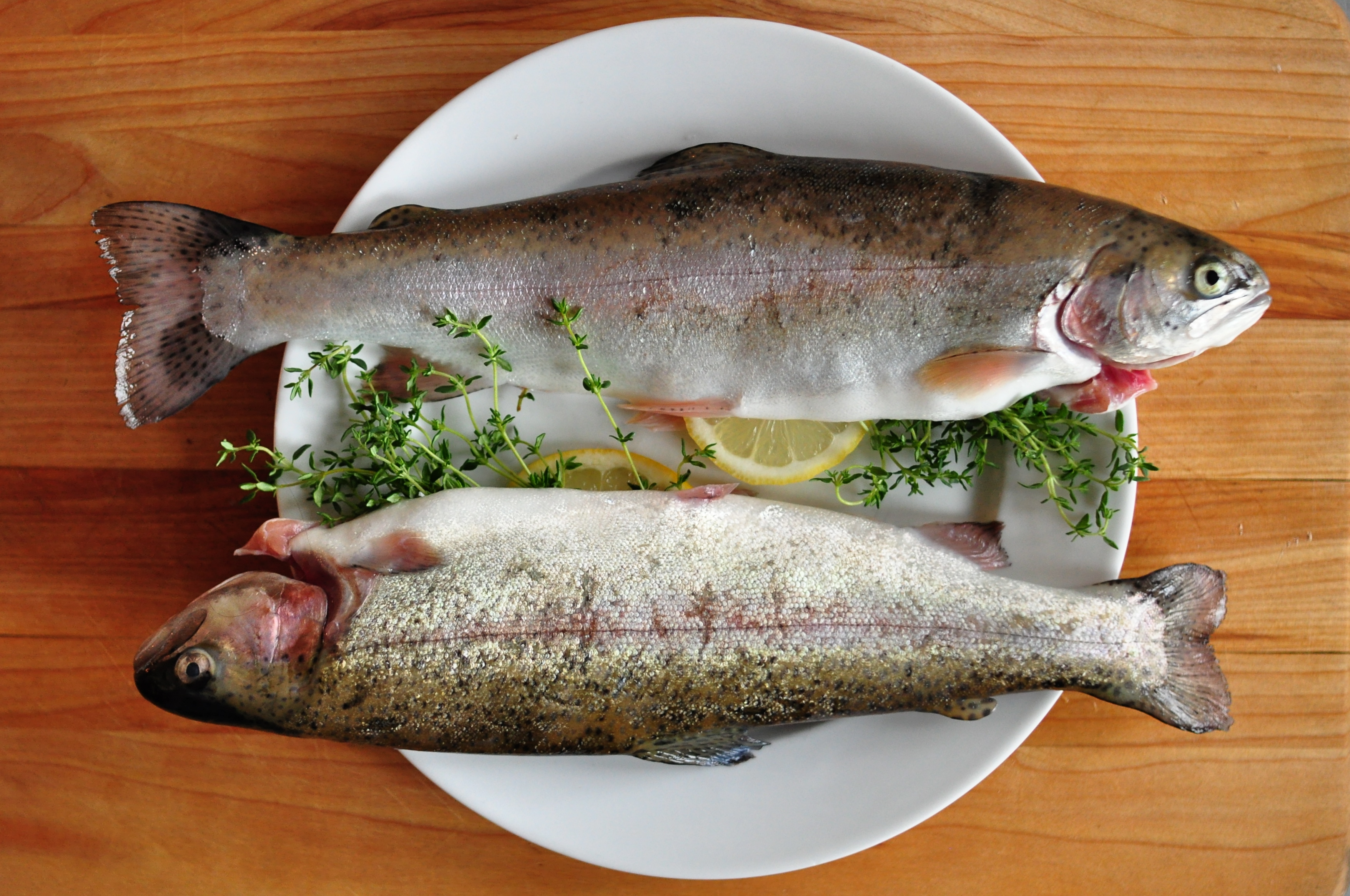
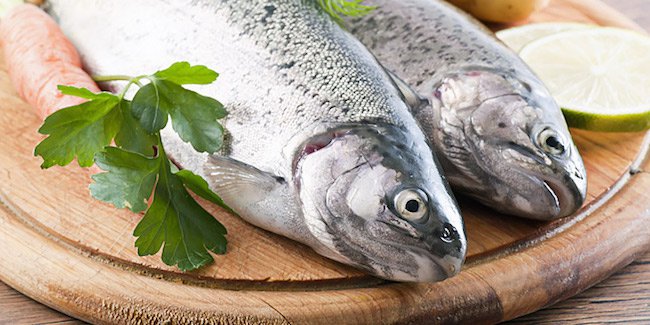
  • Rainbow trout:  These contain more than a day’s recommended serve of omega three fatty acids and are also a good source of vitamin B12 which is important for the health of the nervous system.

  • Halibut:  Once again, these contain almost an entire day’s worth of omega three fatty acids and are low in fat overall, making them a great choice for weight loss as the low fat content also means fewer calories.  They are also high in potassium and vitamin D, but can be high in mercury and so consumption may need to be limited in high risk groups.
  • Sardines, herrings and anchovies:  These fish are all high in omega threes, whether they are fresh or canned.  Canned varieties are an excellent way to incorporate more fish into your diet in a convenient and cheap manner.
Comment below if you found this helpful, let me know what you think :)


Source
References used in this article

Monday, 16 November 2015

6 Best Fish for Weight Loss

Fish are confusing.
Was it halibut that you ate last night—or haddock? Was it fluke or flounder? Redfish or whitefish? Bluefin or yellowtail? Snow crab or stone crab? Which one was good for the environment? Which one was good for your waist? And which one was so loaded with mercury it was like chewing on a thermometer?
One thing we do know for certain is that regularly eating seafood as part of a healthy diet can do wonders for your weight loss goals—so long as you choose the right kind. That’s where the waters get murky again. So we had our research team here at Eat This, Not That! dive into the science behind your seafood. Let’s see if we can’t clear things up with this list of the best fish for losing weight.
1
HALIBUT


You might be surprised to learn that steamed white fish like halibut tops fiber-rich oatmeal and vegetables in the satiety department. The Satiety Index of Common Foods, an Australian study published in the European Journal of Clinical Nutrition, ranks it the number two most filling food—bested only by boiled potatoes for its fullness factor. A separate Australian study that compared the satiety of different animal proteins found a nutritionally similar white fish (flake) to be significantly more satiating than beef and chicken; satiety following the white-fish meal also declined at a much slower rate. Study authors attribute the filling factor of white fish like halibut to its impressive protein content and influence on serotonin, one of the key hormones responsible for appetite signals. Just make sure you avoid tilapia.
2
OYSTERS


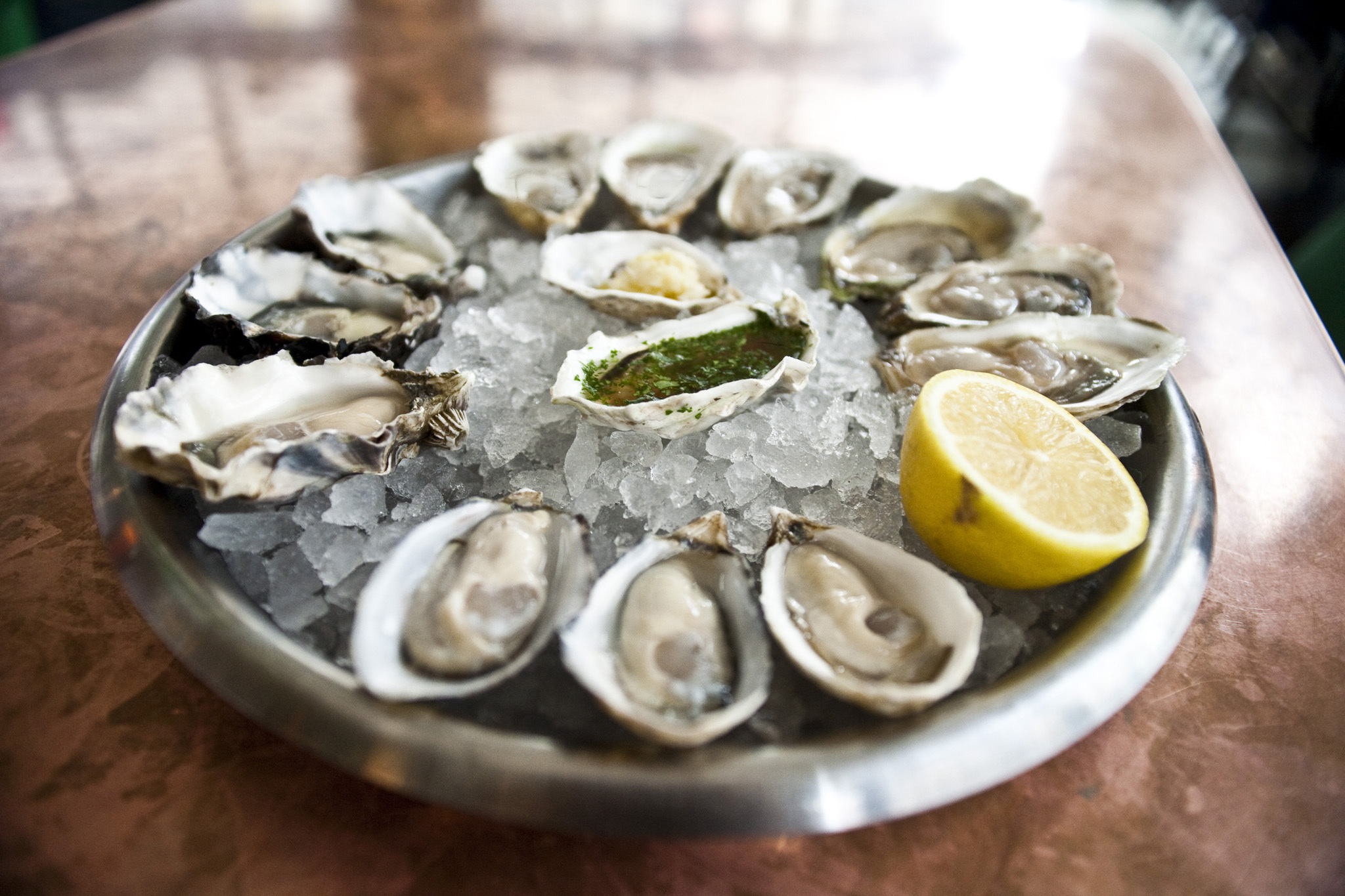
Scientists have yet to prove oysters well-known reputation as an aphrodisiac, but research has shown oysters’ lesser-known potential as natural weight loss aid. A half dozen order will set you back a mere 43 calories (the equivalent of a single Saltine cracker!), and provide 21 percent of your recommended daily allowance for iron, deficiencies of which have been linked to a significant increase in fat gene expression. What’s more, oysters are one of the best food sources of zinc, a mineral that works in tandem with the “I’m hungry!” hormone, leptin, to regulate appetite. Research shows overweight people tend to have higher levels of leptin and lower levels of zinc, in comparison to lean folks. One study in the journal Life Sciences found supplementing with zinc could increase leptin production in obese men by 142 percent. Get a shuck-load of zinc, naturally, with oysters—just six fulfills your recommended daily need by 200 percent! So make a happy-hour habit of hitting up the raw bar for a dozen on the half-shell; the order will get you into your skinny jeans, even if it doesn’t get you into anyone else’s.
3
WILD
SALMON


Don’t let salmon’s relatively high calorie and fat content fool you; studies suggest the oily fish may be one of the best for weight loss. (In fact, it makes our list of the fatty foods that will help you lose weight.) In one study, participants were divided into groups and assigned one of three equi-caloric weight loss diets that included no seafood (the control group), lean white fish, or salmon. Everyone lost weight, but the salmon eaters had the lowest fasting insulin levels and a marked reduction in inflammation. Another study in theInternational Journal of Obesity found that eating three 5-ounce servings of salmon per week for four weeks as part of a low-calorie diet resulted in approximately 2.2 pounds more weight lost than following a equip-calorie diet that didn't include fish. Wild salmon is leaner than farmed, which is plumped up on fishmeal; and it’s also proven to be significantly lower in cancer-linked PCBs. So go wild—literally!
4
SCALLOPS


The seafood jury rules scallops shall remain innocent until proven guilty! While they’re often guilty as by association with creamy and decadent restaurant sauces (not great for weight loss), the high-protein, low-calorie mollusks themselves are great for your waistline, and even your cholesterol. One study published in the Journal of Food Science found bioactive capsules made from scallop byproducts to show significant anti-obesity effects. Animals fed the capsules—a mixture of scallop and seaweed—over the course of 4 weeks showed greater reductions in body weight and body fat, compared to a control, which authors attribute to scallop’s high protein content (In fact, a scallop is 80 percent protein, and the part you eat is the mollusk’s adductor muscle!). A separate study that looked at the effects of different proteins on adipose tissue and glucose tolerance found scallops to reign supreme. Mice fed scallop protein showed lower blood cholesterol and diet-induced obesity levels compared to mice fed equi-caloric portions of casein or chicken protein.
5
LIGHT
CANNED TUNA


Tuna or to-not? That is the question. As a primo source of docosahexaenoic acid (DHA), canned light tuna is one of the best and most affordable fish for weight loss, especially from your belly! One study in the Journal of Lipid Research showed that omega 3 fatty acid supplementation had the profound ability to turn off abdominal fat genes. And while you’ll find two types of fatty acids in cold water fish and fish oils—DHA and eicosapentaenoic acid (EPA)—researchers say DHA can be 40 to 70 percent more effective than EPA at down regulating fat genes in the abdomen, preventing belly fat cells from expanding in size. But what about the mercury? Mercury levels in tuna vary by species; generally speaking, the larger and leaner the fish, the higher the mercury level. Bluefin and albacore rank among the most toxic, according to a study in Biology Letters. But canned chunk light tuna, harvested from the smallest fish, is considered a “low mercury fish” and can–and should!–be enjoyed two to three times a week (or up to 12 ounces), according to the FDA’s most recent guidelines.
tuna on bread
6
PACIFIC
COD


Fish and chips won’t help you lose weight, at least not out of the fryer. But research suggests a regular serving of Pacific cod, the fish that’s typical of fish sticks, may keep you stick thin. One study in the journal Nutrition, Metabolism & Cardiovascular Diseases found that eating five servings of cod per week as part of a low-calorie diet for eight weeks resulted in an extra 3.8 pounds of weight loss compared to a diet with the same amount of calories but no fish. And a second study in the European Journal of Clinical Nutrition found that people ate 11 percent less at dinner after having cod for lunch versus those who ate a beef lunch. Researchers attribute the satiating and slimming properties to cod’s high protein content and amino acid profile, which can help regulate the metabolism. No wonder Captain Birdseye looks so smug!


Comment below if you're a huge fan of food. Would you incorporate more seafood into your diet to boost weight loss? Let me know :)


Source