Saturday, 27 June 2015

Almond Milk and Weight Loss

Almond milk is much better for you. The carbohydrates are what gets converted by your liver into fat that gets stored on your stomach and hips. With this substitution of almond milk for fat free milk, you’re getting 11g fewer carbohydrates and the fats that you get will be much healthier for your body than the casein (milk protein) that you would have gotten from the milk. In addition you’re skipping all the hormones that are naturally and un-naturally added to the milk. Those hormones cause you to grow and store fat too.

A popular diet for weight loss is Zone diet. It has 30 % calories from proteins, 30 % calories from fats and 40 % calories from carbohydrates. Unfortunately, you didn’t give height/weight, so I can’t estimate the number of grams, but here’s an example:
5′ 8″ girl is 170 lbs and wants to lose weight. Her starting BMI is 25.9.
If she went down to BMI 22.0 she’d be about 145 lbs. With a bit of light exercise she’d need 2000 calories to maintain her weight at 145, and might need to cut to about 1750 or 1700 calories to lose weight safely at 1 to 2 lbs per week. BMI isn’t always right, but it’s pretty good for average people who are not professional athletes or body builders. Each gram of fat is worth 9 calories, so when losing weight on 1750 calories x 30 % fats / 9 calories/g = 58 g of fat in diet per day. No more than 10 g should be saturated fats according the the US govt suggested diet.


Source
http://ifeellight.com/ok-unsweetened-almond-milk-weight-loss-diet/

Friday, 26 June 2015

How much weight can someone possibly lose with natural weight loss method?

Here are some good ideas:
1. Do something that gets your heart rate up a bit like, walking, running, biking, and swimming.
2. Eat Whole, Organic foods like: Broccoli, Cabbage, Organic Brown Rice, Beans, Spinach, Sweet Potato, Apples, and other fruits and vegetables in their Natural State.
3. Avoid eating corn, white bread, white rice, white potatoes, candy, sodas, chips, and anything else that you already know you shouldn’t be eating.
4. Drink clean water as your beverage of choice. Avoid Fruit drinks and fruit juices (unless YOU juice them yourself)
5. Stop smoking, drinking beer & wine, and drinking coffee.
6. Get 8 hours of sleep each night.
7. Hang out with people who want to be healthy.
8. Avoid anything with High Fructose Corn Syrup.
9. Look into taking a multi-vitamin.

Tone up the muscles:

1. Join a gym and get a trainer.
2. If you’re short on cash, start a light stretching & yoga regimen.
3. Do push-ups, and light dumbbell curls for the upper body.
4. As I said above, walk, run, swim, and or bike
5. Take an aerobics class, a yoga class, or some other fitness class.
6. Join the local YMCA.
7. Buy or borrow this book by Bill Pearl called GETTING STRONGER.
In the book, he describes everything you need for a great fitness plan.
8. Crunches & Curl ups for the abs.

Mental Health:

1. Get a friend to talk to each day about your feelings.
2. If you have some money or insurance, get a counselor to talk to.
3. Learn how to meditate.
4. Join a support group for the issue you’re dealing with.
5. Ask your Higher Self (or God) for guidance.
6. Start keeping a diary or journal about your feelings & thoughts.
7. Write a ‘gratitude’ list every night.
8. Do something that makes you happy each day like: listen to your favorite music, draw, paint, write, or anything creative.
9. Do something for someone else who needs help.
10. If the above suggestions don’t improve your mental health, talk with your therapist about the possibility of taking some medication.
11. Check out the book FEELING GOOD by David Burns.
Take care of yourself


Source
http://ifeellight.com/lose-weight-with-natural-weight-loss/

The Ideal Weight Loss Exercise Plan At The Gym

Regular workout is very important if you are on a mission to lose a lot of weight at a certain period of time. Certainly, gym is the best place you can be to burn off your body fat, build muscles and thus get a great body shape with small waist and broader shoulders that looks incredibly well from the outside. With such a great look, you will not only look good from the outside but also feel amazing from the inside, boosting your confidence level to a great extent.


Therefore, developing a proper weight loss exercise plan is mandatory here with the workout schedule that should also be combined with proper diet to get fast and effective results. Before joining the gym and start lifting weights, you have to make sure your body and its joints are flexible and fit enough to start lifting weights. Therefore, make sure you have been on a free hand exercise program for at least a month before starting to take on the weights. As a beginner at the gym, you should start with the basics with very light weights and effective cardio sessions. Moreover, you will also be targeting different parts of the body at each day of the workout sessions. For example, the chest and triceps on one day followed by back and biceps the other day and legs and shoulders the next day. After the end of 3 days of continuous workout sessions, you will take a minimum of two days rests to start all over again from the next day. Furthermore, you will end each of your sessions with some basic abs exercises.
Therefore, keeping all these factors into consideration, let us have a look at the training schedule you must follow to achieve the best figure possible.
Day 1
Chest & Triceps
Cardio –  25 to 30 minutes including treadmill, cycling, skipping, jumping jacks
Push-ups – (15×3)
Bench Press -  (15×3)
Incline Bench Press – (15×3)
Dumbbell Fly – (15×3)
Pull Over – (15×3)
Bench Dips – (15×3)
Tri-Push Down – (15×3)
Overhead Extension – (15×3)
Crunch – (20×3)
Leg Raise – (10×3)
Side Bend – (20×3)
Day 2
Back and Biceps
Cardio – 30 minutes
Assisted Chin up – (10×2)
Lat Pull Down – (15×3)
Seated Cable Row – (15×3)
One Arm Dumbbell Row – (15×3)
Barbell Bicep Curl – (15×3)
One Arm Dumbbell Bicep Curl – (15×3)
Hammer Curls – (15×3)
Crunch – (20×3)
Leg Raise – (10×3)
Side Bend – (20×3)
Day 3
Legs and Shoulders
Cardio – 15 minutes (Only Cycling)
Squat (Without weights) – (15×3)
Leg Press – (15×3)
Leg Extension – (15×3)
Leg Curl – (15×3)
Military Press – (15×3)
Dumbbell Shoulder Press – (15×3)
Side Raise – (15×3)
Front Raise – (15×3)
You should follow this workout schedule for at least six weeks and change the routine based on your progress. Never follow the same routine for a long time as the body will start adapting to same routine and you will see fewer changes in your body. Moreover, following the same routine will make you feel boring all the time and therefore, making continuous changes to the routine will keep you motivated in the workout program. Also make sure to start lifting heavier weights slowly as the time progresses depending on your strength and energy levels. As you progress further in the gym workout routine, your exercises will get tougher with heavier weights and more sets while setting the repetitions accordingly based on the weights you are taking.
Make sure to track your progress all the time by routinely checking your weights from time to time. Also check for the sizes of the different parts of the body such as your waistline, your chest and the arms. After the end of each workout routine, check how much of waist line you have lost and how much muscles you have developed in your arms and chests. If you all this procedure effectively with proper diet, nutrition and supplementation, you will see how much progress you have made at a certain period of time.


Source
http://ifeellight.com/ideal-weight-loss-exercise-plan-gym/

Thursday, 25 June 2015

Home Remedies for Obesity & Weight Loss

Obesity, which is excessive accumulation of fat in the body, is determined by measuring a person’s Body Mass Index (BMI). Generally, a BMI between 18.5 and 25 is considered desirable. If your BMI is 30 or more, you are considered obese.
You can calculate your BMI using the following:
  • BMI=(Weight in lbs / (Height in inches x Height in inches)) x 703, or if you measure with the metric system use BMI= Weight in kg / (Height in meters x Height in meters), or
  • the U.S. National Institutes of Health’s online BMI calculator.

This problem is mostly attributed to poor lifestyle choices, such as eating processed foods high in fat, oversized food portions, overeating, excessive drinking, lack of physical activity, lack of sleep, and other similar habits. Genetic factors and hormonal problems also tend to increase the risk of developing obesity.
Obesity is a great concern not merely because of the excess weight, but also because it makes you susceptible to a number of serious health problems such as Type 2 diabetes, high blood pressure, heart disease, and others.
It is important to adopt healthy lifestyle changes to combat this problem. In addition, you can use some easy yet effective natural remedies to help with your weight loss efforts.
Here are the top 10 home remedies for obesity.

1. Lemon Juice

Lemon juice is one of the best home remedies for fighting obesity. It helps improve digestion and aids in detoxification. Healthy digestion is an essential pre-requisite for weight loss as it helps your body get the nutrients required to burn fat. Furthermore, it helps remove toxins from your body that slow down your metabolism.

  1. Mix three teaspoons of lemon juice, one teaspoon of honey, and one-half teaspoon of black pepper powder in one glass of water. (If you use freshly ground black pepper, then just add one-quarter teaspoon.)
  2. Drink it in the morning on an empty stomach.
  3. Do this daily for at least three months.
Alternatively, you can simply have a cup of warm water mixed with a teaspoon of lemon juice.

2. Apple Cider Vinegar

Raw, unfiltered apple cider vinegar is another popular home remedy to reduce excess weight. Though the actual weight loss benefits of it are still unknown, preliminary research has shown that it can help protect against obesity. It helps breakdown fat and hence prevents the accumulation of body fat.
  • Mix two teaspoons of raw, unfiltered apple cider vinegar in a glass of water. Drink it daily in the morning and preferably before meals.
  • You can also drink a glass of water mixed with one teaspoon each of raw, unfiltered apple cider vinegar and lemon juice.

You can have up to two tablespoons of apple cider vinegar in a day. Do not exceed this amount, as it may reduce your blood potassium levels over time and lower your bone mineral density.

3. Aloe Vera

Aloe vera is useful in treating obesity because it stimulates the metabolism, increases energy consumption, and mobilizes unused fat in the body. It contains natural collagen proteins that make the body work harder in order to absorb the proteins. In addition, it helps remove toxins from the digestive system and colon.
  1. Take two fresh aloe vera leaves, peel them, and scoop out the pulp.
  2. Put it in a blender along with one cup of citrus juice, such as orange or grapefruit juice, or simply water. Blend it for two to three minutes.
  3. Drink this daily for at least a month.

4. Green Tea

Green tea is another popular natural remedy to promote weight loss. A study at Penn State revealed that epigallocatechin-3-gallate (EGCG), a compound found in green tea, helps slow down weight gain by limiting fat absorption and increasing the body’s ability to use fat.
Furthermore, green tea is packed with nutrients such as vitamin C, carotenoids, zinc, selenium, chromium, and other trace minerals.
Drink about three to four cups of green tea daily to combat obesity. You can also combine it with ginger tea or cayenne pepper.

5. Cayenne Pepper

Cayenne pepper helps control obesity and aids in weight loss. It contains capsaicin that stimulates your body to burn fat and increase energy expenditure. In addition, it stimulates digestion and suppresses excess appetite caused by malabsorption of nutrients in the body.
  • Make cayenne pepper tea by pouring a glass of hot water over cayenne pepper (start with one-tenth of a teaspoon or just a dash of cayenne pepper and gradually increase its quantity to one teaspoon). Squeeze the juice from half a lemon in it. Drink this tea regularly at least for a month.
  • Mix two tablespoons each of lemon juice and maple syrup in 10 ounces of water (one glass contains 8 ounces). Stir in a dash of cayenne pepper and drink it.
  • Use cayenne pepper and other spices, such as ginger, black pepper, and mustard seeds, generously in your meal preparations.

6. Curry Leaves

Eating 10 fresh curry leaves daily in the morning works as a great Ayurvedic remedy to deal with obesity and diabetes caused by obesity. Continue this treatment regularly for at least three to four months.
Research shows that curry leaves contain mahanimbine, an alkaloid that has anti-obesity and lipid-lowering effects. Thus, it helps lower body weight and reduces total cholesterol and triglyceride levels.

7. Tomatoes

Eat a couple of tomatoes every morning on an empty stomach. Make sure you eat the peels and seeds as well because they contain dietary fiber. Tomatoes contain compounds that tend to alter the levels of hormones that affect your appetite.
Furthermore, being rich in vitamins A, C, and K, and magnesium, manganese, choline, folate, and other nutrients, they are good for your health. Also, they are packed with antioxidants that protect against cancers.

8. Cabbage

Make raw or boiled cabbage an integral part of your weight loss diet. It contains tartaric acid that inhibits the conversion of sugar and other carbohydrates into fat. Moreover, it is rich in vitamin C and low in calories but high in fiber and water content.
Being a cruciferous vegetable, it contains phytochemicals that help improve the imbalance of estrogen metabolism that not only causes your body to store fat but also promotes breast cancer, ovarian cancer, and others. Other cruciferous vegetables such as broccoli, cauliflower, Brussels sprouts, and Swiss chard are also beneficial in this regard.

9. Fennel

Fennel seeds are believed to be useful in weight loss because of their diuretic properties. Diuretics help you lose weight quickly by reducing water retention. They do not cause long-term weight loss though.
  • Slightly dry roast and grind fennel seeds. Sieve the powder. Take one-half teaspoon of this powder twice daily with warm water. This remedy will also help relieve abdominal gas, indigestion, and constipation.
  • You can also drink fennel tea 15 minutes before meals.

10. Honey and Cinnamon

Include honey and cinnamon tea in your diet to boost your metabolism, increase your energy, and detoxify your body. All of these effects support weight loss. Honey fights obesity by promoting fat metabolism. Cinnamon helps you avoid overeating by fighting insulin resistance and also reduces oxidative stress associated with metabolic syndrome.
  1. Pour a cup of hot water over one-half teaspoon of cinnamon powder (you can also use cinnamon sticks). Let it steep for half an hour.
  2. Mix in one teaspoon of organic honey.
  3. Drink half of it in the morning on an empty stomach, about half an hour before breakfast. Store the rest in the refrigerator and drink it at night before going to bed.
Along with these remedies, make sure you drink eight glasses of water throughout the day to flush toxins out of your body.
Studies have found that plant-based foods can help fight obesity becausethey contain phytochemicals that prevent oxidative stress, which contributes to obesity. So, opt for more plant-based foods rather than processed, fast foods. Plus, include grapes, peaches, figs, carrots, and blueberries in your diet.
Another very important yet ignored tip to fight obesity is to have a proper breakfast. Research shows that those who have a big breakfast are more likely to lose weight and even a few inches off their waistline compared with those who eat a large dinner.


Source
http://www.top10homeremedies.com/home-remedies/home-remedies-obesity.html

The Natural Diet: Best Foods for Weight Loss

You can eat more and still lose weight.

It seems natural: You want to lose weight fast, so you do a diet slash-and-burn, eating less and thinking about food more. The usual result also seems pretty natural: You feel denied, so you give up. Repeat as diet fads come and go.
Enough already! Why not eat more for weight loss and weight maintenance, instead of less?


How to Eat More … and 

Still Lose Weight


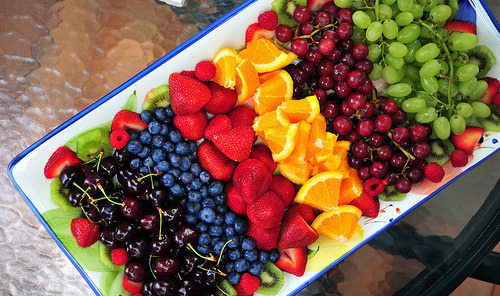
The trick to eating for weight loss isn’t really so tricky: It’s as simple as eating more colorful, good-for-you fruits and vegetables.
Now we all know we’re supposed to eat fruits and veggies for their vitamins and minerals, their roughage, and powerful disease-fighting benefits. But apparently good nutritionjust isn’t alluring enough for most of us. Only 20% of Americans eat as many as five pieces of fruits and veggies a day.
So maybe it’s time we turn the tables and instead look at fruits and veggies as a delicious way to “cheat” on a healthy weight loss diet. From fire-engine red bell peppers, and buttery-yellow zucchini, to juicy grapes as purple as wine, “eating enough produce seems to be one of the key elements in weight loss and weight maintenance,” says Dave Grotto, RD, LDN, dietitian and author of 101 Foods That Could Save Your Life.
So how does eating more food actually help you weigh less?


The Secrets of Fruits 

and Vegetables


The first secret of fruits and veggies is simple: they’re nutrient dense. This means that for their weight, most produce is low in calories; so you can eat a lot more when your diet is rich in veggies and fruits -- and still not consume a whole lot of calories. Just try that withchocolate!
The second secret: Satiety. All produce, from a juicy pear to a crispy bunch of red lettuce is packed with water and fiber, says Seattle dietitian Kerry Neville, MS, RD, and both of these not only keep the calories down, they make you feel fuller longer. This means you could be satisfying cravings for something sweet or crunchy every day -- and still lose weight.
Think about it. Maybe you’re in a 3 p.m. slump and want a snack to get you through to dinner. Which will fill your belly better, a palmful of potato chips with 155 calories, or three cups of whole strawberries with 138 calories? A can of sweetened cola at 136 calories, or a heaping cup of grapes with about the same number? In each case, the produce lets you eat a lot more, fills you up fast, and keeps you full longer.


The Real Fruits and 

Vegetables Bonus


Along with helping in a weight loss diet, don’t forget the ultimate boon when you enjoy crisp veggies and succulent fruit: You’re getting disease-fighting nutrition with all that taste, too.
A palmful of potato chips won’t reduce your risk of certain types of cancerheart disease,type 2 diabetes, and lower bloodcholesterol, but research shows that the antioxidants, fiber, vitamins, and minerals in produce like a sweet peach, handful of berries, or a bowlful of bok choy may.
Of course, to get the full benefits of fruits and vegetables -- weight loss, great taste, a reduced risk of chronic disease -- produce needs to replace at least some of the fattier, calorie-dense foods in your diet.
But what if you’re not ready to cut out your favorite cookies or forego a single chip? “Even if you change nothing else in your diet, you’re still getting the phytonutrients, chemicals, and as-yet unknown nutrients [in produce] that can help protect you fromcancerdiabetes, and heart disease,” says Christine Gerbstadt, MD, RD, a spokeswoman for the American Dietetic Association.
Yet, once we start snacking on fruits and veggies, most of us will gradually eat fewer calorie-rich goodies, says Gerbstadt, who adds that because produce helps fill you up and gives your body a boost, “you naturally eat less chips, cookies, and other foods that just don’t make you feel good.”


Fruits and Vegetables: Fresh, 

Frozen, Canned, or Dried?


So the great news is that fruits and vegetables can give weight loss a real boost. Now the question is, how should you enjoy them: fresh or frozen, canned or dried?
“All of the above,” Gerbstadt tells WebMD. Though local, seasonal produce may have a slight nutrient edge at times, "dried, canned, and frozen fruits and vegetables are usually picked just before peak ripeness and then packaged,” says Gerbstadt, “so you’re really getting very fresh food.”
Fresh and healthy -- so long as you avoid the butter sauce or drenching of cheese, say the pros.
The USDA suggests we get two cups of fruit a day, and two and a half cups of vegetables (for a 2,000 calorie diet).
  • Fresh, frozen, or canned fruit and vegetables: “When you’re eating canned fruit, watch out for additions like syrup,” Neville says, “Look for fruit packed in water or juice.”
  • Fruit juices: 100% fruit juice can have more calories per ounce than sweetened soda, and because a lot of its fiber is missing, it also isn’t nearly as filling as fresh fruit. Stick to whole fruits when you can.
  • 100% vegetable juices: Vegetable juices usually have far fewer calories than their fruity kin, but they often pack a sodium wallop, so keep an eye on portions here as well.


In Search of the Super Food


So maybe you’re sold on fruits and vegetables as a great way to “cheat” in a healthy eating plan. Now you might be wondering, which fruits and veggies will give you the most bang for your nutrition buck?
The answer is: all of them.
“Every fruit and vegetable is a super food,” Gerbstadt says. “You can say the colorful ones have more nutrients for you but…even the ones that don’t have as much color, we’re discovering that all along they’ve had nutrients we need -- we just didn’t have the lab test yet to analyze them.”
So while one lobbying board may tout the better-for-you benefits of blueberries, and another may talk up the antioxidant power of pomegranate, in the overall scheme of things it doesn’t matter so much which fruits and vegetables you eat “it just matters that you get them inside you,” Grotto tells WebMD.
And when you head down the produce aisle next time, take a laser-sharp focus on flavorfirst, Grotto suggests. Buy the fruits and vegetables you really love, “because no one cares if it’ll save their life if it doesn’t taste good.”
However you find yourself enjoying those peaches and potatoes, the asparagus spears and the spinach, one thing is important: Just do it!


Source
http://www.webmd.com/diet/the-natural-diet-best-foods-for-weight-loss

SOURCES:
Centers for Disease Control and Prevention, “How to Use Fruits and Vegetables to Help Manage Your Weight.”
USDA National Nutrient Database.
Kerry Neville, MS, RD, registered dietitian, spokesperson, American Dietetic Association. David W. Grotto, RD, LDN, author, 101 Foods That Could Save Your Life.
Christine Gerbstadt, MD, RD, spokesperson, American Dietetic Association, registered dietitian.
WebMD Feature, “10 Amazing Disease Fighting Foods.” WebMD Medical Reference from Healthwise, “High blood pressure: Using the DASH Diet.”
National Heart, Lung, and Blood Institute, “Serving Size Card.”
Vaden Health Center, Stanford University, “How Am I Supposed to Eat All Those Fruits and Vegetables?”