Showing posts with label almond milk. Show all posts

Thursday, 27 August 2015

What's in your milk?

Milk has become a health and consumer battleground, writes Elizabeth Meryment.


One of the great staples of my childhood was the reassuring sound each morning of the milkman delivering fresh bottles of creamy milk to the door.

I used to like the blue-topped bottles – homogenised and full cream – while my sister preferred the gold-topped variety – unhomogenised, so she could scoop the cream off the top with a teaspoon. It seemed a fairly simple choice.

These days, look on the supermarket shelves – home delivery of milk having long since gone the way of many luxuries, including milk in glass bottles – and the range on offer is utterly bamboozling. There's skim milk, high-calcium milk, A2 milk, vitamin-enriched milk, soy milk, lactose-free milk, organic milk and much, much more.

At the same time, supermarkets have radically altered the market by offering no-brand milk at the astonishing price of $1 a litre, making it cheaper than bottled water.

But for all this, has the quality of our milk improved?


Creating consistency

Ask dairy farmers and milk producers about the milk market today and they all agree things have changed.

But many say the changes have not resulted in a better product for consumers, let alone a better deal for farmers.

"Most milk has been standardised down these days, so the one thing people can say is that it tastes the same today, tomorrow and next week," says Queensland dairy farmer Richard Schroder, who produces one of the state's last remaining independent milk brands, Cooloola Milk. "It's hard to find milk now that is not adulterated to make it all taste the same."

NSW independent farmer John Fairley, who owns Country Valley milk, agrees and says nearly all milk sold today is actually a reconstituted product, often containing other dairy by-products.

Fairley says when big companies produce milk, they "pull it apart and put it back together again".

Helen Dornom, Dairy Australia's sustainability manager, agrees the components of milk are adjusted. She says this is to give us the levels of protein, fat and calcium that we expect. "For example, in early spring the natural protein levels in the milk straight from cows are low. This means the fat and carbohydrate levels will be higher in proportion, so these components are adjusted accordingly," she says.

Milk standardisation has been occurring since the late 1970s.


What's in milk?

"Reconstituted" milk is perfectly legal, but Fairley says most of this standardised milk contains a by-product from the dairy production process called permeate, which occurs when the milk proteins and fat are removed. Permeate has been used in Australian milk for about two decades.

Body+soul nutritionist Lisa Guy says permeate is cheaper than milk to buy, so combining the two makes a cheaper product for milk companies.

"Adding permeate to milk doesn't seem to reduce the nutritional value of milk, though. Milks with added permeate and pure milks seem to have a very similar calcium, protein and fat content," Guy says.

Fairley says permeate can taint the taste of the milk and increase its lactose (milk sugar) quotient. "It's high in lactose and if you are even mildly lactose intolerant, it might put you over the edge," he says.

Lactose intolerance is caused by a lack of the enzyme involved in the breakdown of lactose in the body. Dornom argues there is no link between lactose intolerance and permeate. "Adding permeate to milk will not increase its lactose level because the fat, protein and carbohydrate or sugar levels are always the same to ensure a consistent product throughout the year."

For many who find dairy hard to digest, the problem is not lactose, but casein, one of the main proteins in milk, explains Peter Nathan, CEO of dairy company A2. "About a quarter of people have a perceived intolerance to dairy but only about five per cent of people are diagnosed as lactose intolerant," he says. A2 only uses milk from breeds of cows that produce milk with a form of casein that many people find more digestion-friendly. "Many people can drink A2 where they couldn't otherwise drink milk," Nathan says.


Choices, choices

All milks for sale, regardless of how they are processed or whether they have permeate added, have to comply with the Australia New Zealand Food Standards Code. These standards set minimum and maximum requirements for fat and minimum requirements for protein.

Queensland Dairy Organisation president Brian Tessman agrees cheap supermarket milk "meets basic standards of milk" but, he says, there is milk and then there is premium-quality milk.

So what's a confused consumer to do?

Guy recommends the natural approach. "Ideally, choose milks that are as close to their natural state as possible."

Tessman encourages consumers to select the branded milk of small or large producers rather than unbranded supermarket milk because the return to the farmer is greater. He also believes the product is often superior.

"Each month [since the introduction of cheap milk] the average farmer is $700 to $800 out of pocket," he says.

For Fairley, interest in Country Valley milk has surged since the supermarket price war.

"When the $1 a litre milk came in, our sales the next month went up 25 per cent," he says. "Some people have made the decision to buy our milk to keep it local."

Schroder, too, hopes consumers will opt for the taste of local milk. "They might be paying a little bit more for it, but it's not adulterated," he says. "It actually tastes like milk."


Local milk

  • NSW: Country Valley, Norco, Over the Moon, South Coast Dairy, Udder Farm.
  • Victoria: Demeter Biodynamics, Jonesy's Dairy Fresh, La Latteria, Sungold.
  • Queensland: Barambah Organics, Cooloola, Ivyhome, Maleny Dairies, Mungalli Creek Dairy, Misty Mountain Farms.
  • SA: Alexandrina Cheese, BD Farm Paris Creek, Fleurieu Milk & Yoghurt Company, Tweedvale Milk.
  • WA: Bannister Downes, Margaret River Organic Creameries, Ravenhill Dairy.
  • Tasmania: Ashgrove, Elgaar Farm, Pyengana.


What about other milks


  • Almond milk: Made from raw almonds and water, almond milk contains no lactose or cholesterol. While this milk is rich in vitamin E, selenium and manganese, it does not contain the same levels of calcium or protein as cow's milk. It can be made at home.
  • Sheep's milk: Most often found on shelves in yoghurt or cheese such as fetta, sheep's milk is easy to digest and contains more calcium than cow's milk. It has a high mineral content and a mild, faintly salty taste. Sheep's milk contains lactose (as does goat).
  • Rice milk: Rice milk is typically made from unsweetened brown rice. It does not contain high amounts of calcium or protein but is often fortified to boost calcium levels. It is free of cholesterol and lactose, making it suitable for those with lactose intolerance.
  • Goat's milk: Goat's milk contains different proteins and fats to regular cow's milk, so many people find it easier to digest. Goat's milk is now commonly found in supermarkets and contains as much potassium, phosphorus, magnesium, iron and calcium as cow's milk.
  • Soy milk: The most common alternative milk, soy milk is made from soybeans or soy protein isolate. There is a wide range of soy milks available, many  of them fortified to create a nutritional profile similar to cow's milk. Vanilla and chocolate  milks are also available.


Source
http://www.bodyandsoul.com.au/nutrition/nutrition+tips/whats+in+your+milkr,16527

Which milk is best for you?

We weigh up the nutritional benefits of six different types of milk.


At least 75 per cent of the world's population is intolerant to lactose, the sugar naturally found in cow's milk. While vegans, some children and those who are unable to digest dairy avoid lactose like the plague, are there any other reasons the rest of us should shun it? And if we do, what are the alternatives? Here, we take a look at the health benefits of six sources of milk.


Cow's milk

Available in low-fat and full-fat varieties, cow's milk is higher in calcium than most milks (calcium-enriched milks are comparable) and is rich in protein.

Research shows ingredients in low-fat cow's milk may help to reduce the risk of osteoporosis, colon cancer and type 2 diabetes. A two-year study published in The American Journal of Clinical Nutrition revealed those who consumed a high amount of non-fat or "skimmed" milk products lowered their risk of high blood pressure by 50 per cent, compared to drinking small amounts or none at all.

Need to know: Full-fat cow's milk is high in saturated fat, so those at risk of heart disease or diabetes should drink it in small amounts or avoid it completely. Also, producing cow's milk comes at a cost to the environment: cow's need to drink at least three litres of water to produce one litre of milk. Therefore, most high-producing dairy cows are drinking at least 150 litres of fresh water every day.


Goat's milk

It's not the easiest to find but for some goat's milk can be worth the search. Goat's milk contains different proteins and fats to cow's milk, making it easier for some people to digest. Goat's milk is high in phosphorus, zinc, essential fatty acids and contains as much potassium, magnesium, iron and calcium as cow's milk.

It's considered a good choice for health-conscious adults too. A University of Granada study showed drinking goat's milk regularly may help to reduce cholesterol levels, and support those with iron deficiency anaemia, since it helps to regenerate haemoglobin.

Need to know: Some people find goat's milk tastes unpleasant. It isn't suitable for vegans, and still contains lactose, although this is lower than cow's milk. This milk is becoming more common in health food stores and supermarkets. Always look for goat's milk that has been pasturised, warns Dietitian Denise Griffiths from the Dietitians Association of Australia. "Unpasteurised milk is a health hazard because of the dangers of bacterial diseases."


Soy milk

One of the most common non-dairy sources, soy milk is traditionally made from a mixture of soybeans and water. Soy milk is lactose-free, rich in calcium and protein and contains no saturated fat.

Need to know: Controversy still surrounds the effects soy has on women's hormone health. body+soul nutritionist Lisa Guy says soy milk is not suitable for infants and young children, particularly girls, since it could potentially disrupt hormone production if consumed in high amounts.

"Soy can act like oestrogen in the body, attaching to oestrogen receptors," she says. The isoflavones in soy however, could offer relief for menopausal women. "Soy [milk] is beneficial for menopausal women as it makes the body think it has more circulating oestrogen," she says.


Oat milk

If you dislike nutty-tasting milk, oat milk's mild and oaty flavour might be for you. Oat milk is high in fibre, folic acid, vitamin E and phytochemicals that could help prevent heart disease, stroke and some types of cancer. Researchers from Tufts University in Boston found that antioxidants in wholegrain oats help to prevent coronary heart disease and also lower cholesterol levels. Oat milk is free of lactose and cholesterol, and low in saturated fat. In fact, "All plant-based milks have less saturated fat than animal milks," explains Griffiths.

Need to know: Oat milk is not gluten free and contains less protein than cow milk's. Many non-fortified versions contain as little as 7mg of calcium per 250ml, but calcium-fortified brands have just as much as cow's milk with 300mg per 250ml.


Rice milk

Rice milk is traditionally made from unsweetened brown rice. Since it is free from cholesterol, saturated fat and lactose, rice milk is considered a healthy choice for those intolerant to dairy.

Need to know: Rice milk is low in calcium and protein, so look for brands that have been fortified (some with chickpeas) to boost calcium levels. "Rice milk is also considered a high-GI food, and lacks the vitamin A that full-fat cow's milk contains," Guy says.


Almond milk

Made from finely ground raw almonds and water, almond milk does not contain cholesterol or lactose.
Need to know: While this milk is high in antioxidant-rich vitamin E and low in fat, it contains much less protein than cow's milk. Some supermarket brands contain added sugar too, so read the label carefully, warns Guy. A healthier alternative is to make your own almond milk at home.
1. Soak one cup of almonds in water for six hours
2. Drain and discard the water.
3. Blend the almonds with three cups of fresh water and two dates until almost smooth.
4. Strain with a cheesecloth or a nut milk bag then refrigerate for up to four days.


Source
http://www.bodyandsoul.com.au/nutrition/nutrition+tips/which+milk+is+best+for+your,16541

Wednesday, 29 July 2015

11 Benefits of Almond Milk You Didn’t Know About

Those looking for a dairy-free milk substitute have probably stumbled across almond milk and wondered, “Is almond milk good for you?” Whether you’re a vegan, sensitive to milk or just don’t like the taste, almond milk is a fabulous alternative.
While almond milk is becoming more and more popular, it’s important to note that it doesn’t provide as much protein or calcium to be a completesubstitute, so make sure you receive adequate amounts from other sources. One cup only has one gram of protein versus 8 grams in cow’s milk, and 2 milligrams of calcium versus 300 milligrams in cow’s milk.
As with everything you buy, make sure to check the labels and purchase almond milk that contains the least amount of preservatives and other additives.

11 Benefits of Almond Milk

1. It helps with weight management.

One cup of almond milk contains only 60 calories, as opposed to 146 calories in whole milk, 122 calories in 2 percent, 102 calories in 1 percent, and 86 calories in skim. It makes for a great substitute that will help you lose or maintain your current weight.

2. It keeps your heart healthy.

There’s no cholesterol or saturated fat in almond milk. It’s also low in sodium and high in healthy fats (such as omega fatty acids, typically found in fish), which helps to prevent high blood pressure and heart disease.

3. It keeps your bones strong.

While it doesn’t offer as much calcium as cow’s milk, almond milk does offer 30 percent of the recommended daily amount, as well as 25 percent of the recommended amount of vitamin D, reducing your risk for arthritis and osteoporosis and improving your immune function. Plus, these two nutrients work together to provide healthy bones and teeth formation.

4. It keeps your skin glowing.

Almond milk contains 50 percent of the recommended daily amount of vitamin E, which contains antioxidant properties essential to your skin’s health, such as protecting it against sun damage.

5. It barely impacts your blood sugar.

Almond milk (with no additives) is low in carbs, which means it won’t significantly increase your blood sugar levels, reducing your risk for diabetes. Because of its low glycemic index, your body will use the carbs as energy so the sugars aren’t stored as fat (score!).

6. It contributes to muscle strength and healing.

Although almond milk only contains 1 gram of protein per serving, it contains plenty of B vitamins such as iron and riboflavin, both important for muscle growth and healing.

7. It keeps your digestion in check.

Almond milk contains almost one gram of fiber per serving, which is important for healthy digestion.

8. It doesn’t contain lactose.

Lactose intolerance impacts about 25% of the US population, which means they have difficulty digesting the sugar in cow’s milk. This makes almond milk a suitable, lactose-free substitute.

9. It tastes better than cow’s milk.

Almond milk doesn’t taste like cow’s milk, perfect for those who are turned off by the taste. It has its own unique flavor many describe as being light and crisp. Bonus: it’s versatile, meaning you can use it instead of cow’s milk in recipes that require it. It won’t have the same taste, but it will have the same consistency.

10. It doesn’t require refrigeration.

Knowing that you don’t have to refrigerate almond milk means you’ll be more likely to take it with you to work, or on a camping trip. It’s perfectly fine at room temperature which makes it a convenient, nutritious staple to pack, automatically upping your daily intake of all the fabulous nutrients above.

11. It’s easy to make.

Being that it’s a tad inconvenient to have a cow grazing in your backyard, almond milk is the convenient alternative to make at home. It’s made by finely grinding almonds and placing them in a blender with water, then filtering the pulp with a strainer to separate it from the liquid. Want to give it a try? Here’s a delicious almond milk recipe.


Source
http://www.lifehack.org/articles/lifestyle/benefits-almond-milk.html

Tuesday, 28 July 2015

HOMEMADE VANILLA ALMOND MILK

Do you know what one of my favorite parts of my juice cleanse was? It was finally getting to that moment in the day where I was able to enjoy the vanilla almond juice. It was the final juice of the day, and by far, my favorite. Unlike the other juices, this one had more of a smoothie consistency, feeling far more substantial and filling. It also tasted amazing. It was hard to believe there was no sugar in the drink! There were only four ingredients: vanilla bean, almonds, dates, and filtered water.
Even though I didn’t love the last juice cleanse I did, I must admit that I miss drinking that final juice of the day. Of all the juices I’ve ever had, in my life, I have to say it is my favorite.
While I’d love to have that drink every day of my life, I don’t think my paycheck could support that kind of habit! So an alternative will have to do.
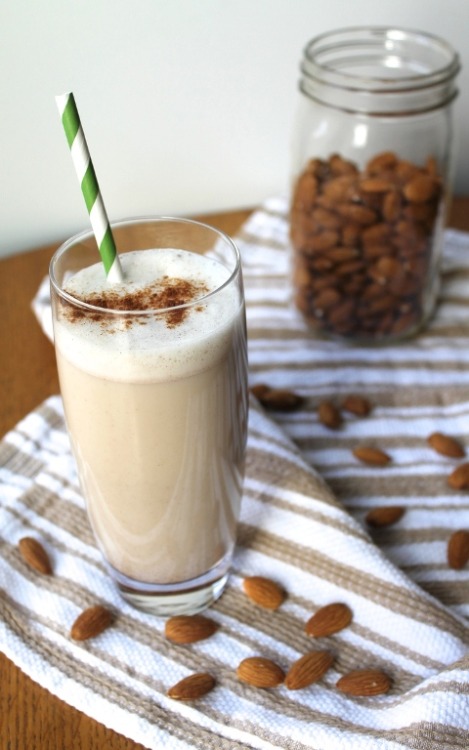
Almond milk isn’t exactly the same as the vanilla almond juice that I had in my cleanse, but it’s close, and it definitely satisfies my cravings! This recipe uses the same ingredients as the drink from my cleanse, and it’s a surprisingly easy recipe to follow! Grab your cheesecloth and get started!
Homemade Vanilla Almond Milk
Makes 5-6 cups of almond milk
Ingredients:
  • 1 1/2 cups raw almonds
  • 5 + 2 cups filtered water
  • 1 tsp Pure Vanilla Extract (or real vanilla bean) [I chose to use pure vanilla extract instead of real vanilla bean based on price]
  • 2-4 large Medjool dates, pitted
Directions:
1. In a large bowl, soak the raw almonds in filtered water. Make sure the filtered water covers the top of the almonds. Cover the bowl and let the almonds soak overnight. They will expand to nearly twice their size! You can soak them up to 24 hours, but don’t let them soak longer or else they might begin to rot!
2. When you’re ready to make the almond milk, drain and rinse the plump almonds. Then, throw the almonds in the blender or food processor (I’m using a Vitamix) along with 5 cups of filtered water, vanilla extract, and dates. Blend until smooth.
3. Now it’s time to strain the almond juice using the cheesecloth. Lay the cheesecloth over a large bowl (for your almond milk). Pour some of the blended almond milk over the cheesecloth to strain out the chunks. Do this little by little so you aren’t overwhelmed! Wring the cheesecloth to get all the moisture possible out of the blended almonds.
The pulp that remains in the cheesecloth is actually almond meal. You can set that aside and freeze to use in recipes (like in macarons!)
4. Continue to strain the almond juice until you have no blended almonds remaining.
That’s it! Shake the juice before drinking, as separation WILL occur. Keep refrigerated, and drinking within 5 days.
*Tip* for a thicker almond milk, add less filtered water. For a sweeter almond milk, add more dates.

Source
http://www.thesassyRlife.com/homemade-vanilla-almond-milk/

Almond milk — Best milk for weight loss

The creamy nutty flavoured almond milk has become a popular beverage for those who avoid dairy because they are lactose intolerant or simply because they are vegan. Almond milk contains the same amount of essential minerals as whole milk and skimmed milk but offer greater benefits, especially when it comes to weight loss. Let us look at factors that make almond milk acceptable as a part of a weight-loss diet.


Has fewer calories

For effective weight loss, it is necessary that you eat fewer calories than you burn through your daily activities. Opting for unsweetened almond milk over whole milk or skimmed milk will help you achieve this. A glass of unsweetened almond milk contains only 43 calories which is half of the calories found in skimmed milk. Find out thenumber of calories in different types of milk.

Contains healthy fats

Almond milk is lower in fat than cow’s milk.  A cup of unsweetened almond milk contains only 3.5g of fat. However; it may contain a higher percentage of fat than skimmed milk. But the good news is that the fat present in almond milk is unsaturated and thus there is no reason to avoid it. Foods high in unhealthy or saturated fats can increase your abdominal fat that may surround your vital organs. Follow these 5 tips to burn belly fat. Almond milk is also low in cholesterol and can be an appropriate milk substitute for those on a heart-healthy diet.


Low in carbohydrates

A low carb diet is always recommended for weight loss. If you are following a low-carbohydrate diet, almond milk would be a better choice as it contains only 2 grams of carbohydrate per cup compared to skimmed milk which contains 12 grams. Being low in carbohydrate it can also improve your triglyceride or high-density lipoprotein or good cholesterol levels in your body. Here are 5 carbs that can actually help you lose weight.

Rich in vitamins

Most of the almond milk products found in the market are supplemented with vitamins A, D and B12. Vitamin B12 plays a vital role in your body metabolism which in turn can burn calories and help you lose weight. Vitamins A and D play a direct role in performing physiological functions and also helps in the development of the central nervous system.


Tips:

  • Almond milk is available in grocery stores in a variety of flavours and brands. While purchasing almond milk, make sure that you buy the unsweetened one as the sweetened almond milk contains added sugar and is higher in both carbohydrates and calories.
  • Also, do not opt for flavoured almond milk as it can contain as much as 90 calories per cup.


Source
http://www.thehealthsite.com/fitness/almond-milk-best-for-weight-loss-ta0215/

Saturday, 27 June 2015

Almond Milk and Weight Loss

Almond milk is much better for you. The carbohydrates are what gets converted by your liver into fat that gets stored on your stomach and hips. With this substitution of almond milk for fat free milk, you’re getting 11g fewer carbohydrates and the fats that you get will be much healthier for your body than the casein (milk protein) that you would have gotten from the milk. In addition you’re skipping all the hormones that are naturally and un-naturally added to the milk. Those hormones cause you to grow and store fat too.

A popular diet for weight loss is Zone diet. It has 30 % calories from proteins, 30 % calories from fats and 40 % calories from carbohydrates. Unfortunately, you didn’t give height/weight, so I can’t estimate the number of grams, but here’s an example:
5′ 8″ girl is 170 lbs and wants to lose weight. Her starting BMI is 25.9.
If she went down to BMI 22.0 she’d be about 145 lbs. With a bit of light exercise she’d need 2000 calories to maintain her weight at 145, and might need to cut to about 1750 or 1700 calories to lose weight safely at 1 to 2 lbs per week. BMI isn’t always right, but it’s pretty good for average people who are not professional athletes or body builders. Each gram of fat is worth 9 calories, so when losing weight on 1750 calories x 30 % fats / 9 calories/g = 58 g of fat in diet per day. No more than 10 g should be saturated fats according the the US govt suggested diet.


Source
http://ifeellight.com/ok-unsweetened-almond-milk-weight-loss-diet/