Showing posts with label stressors. Show all posts

Monday, 30 November 2015

How to De-Stress in Just 10 Minutes

For all the times you need to cool down fast



We've all had intensely stressful moments in life where you find yourself wishing that wine came in those convenient six-packs of juice boxes with the pop-in straws. As genius as that may sound, getting sloshed before an important meeting or moment in your life probably isn't the most intelligent choice. So how do we deal with stress in a calm and productive way? Yoga is constantly hailed as the golden ticket to instant stress relief, but a full-blown class doesn't always slide effortlessly into your crazy schedule. And unfortunately, there's no one pose that can talk you off the edge once you're precariously dangling. Don't worry, there's a surprisingly simple solution: meditation. 
You've heard it's praises, read the statistics, and yet the idea of sitting with no thoughts is as stressful as the current circus residing in your mind. Here's the good news—I don't want you to clear your mind. I want you to focus it. Let's try to focus it away from the stressors and onto something concrete that will bring us back into a safe and peaceful reality. And did I mention this will only take 10 minutes?
Step 1: Find a quiet place. I know this isn't the easiest request, but try to find a room where you can shut the door. If that isn't an option, grab some noise canceling headphones, earplugs or whatever you can get your hands on. The key is making sure you get 10 minutes of uninterrupted peace. 
Step 2: Turn off the electronics. Yes, all of them, even your cell phone. (Don't even think about putting it on silent—you know you'll check it.) If you can't escape from your computer, at least close the screen or turn off the monitor. You want to nix any possible distraction.
Step 3: Find a comfortable seat. Traditionally, mediation is taken on the ground in a cross-legged position. This isn't always comfortable so you can prop your bottom up on a pillow or even sit in a chair or against a wall. The goal is to keep the spine long and avoid any slouching. Think chest lifted, shoulders back, chin slightly lifted without any strain in your neck. Rest your wrists on your knees with the palms facing up. It may help you focus to use a mudra, a traditional hand gesture to aid intention. For instance, you can bring the index finger and thumb together on each hand. 
Step 4: Let the meditation begin. There are many meditations to choose from out there, but I'm going to offer up a slice of my favorite: Isha Kriya Meditation. The entire ritual calls for three parts, one that includes chanting. Since that probably won't fly in all locations, I'll be focusing on just the first part, though I encourage you to explore the rest of the meditation on your own.
Once you're in a comfortable seat, close your eyes. Take a few moments to slow down your breath. Breathe in and out through your nose keeping your mouth relaxed and your lips slightly parted. As you inhale, think to yourself I am not my body, and as you exhale think I am not even my mind.  Continue to repeat these thoughts to yourself, attaching them to each breath. Take the time to breathe fully without any rush. Keep your internal focus on the spot between your brows (this is called your third eye). Repeat these thoughts and breathing for several minutes or until you feel your body decompress. I deeply recommend that you learn the entire mediation, but this is a beautiful start.
Step 5: Absorb. Here's why this particular meditation resonates with me so much: I find myself stressed and overwhelmed on a regular basis, whether I'm being bombarded by work, emails, requests, or people. When I take the moment to sit and do this meditation, it reminds me of who and where I am. It's easy to get caught up in how I look, how fit I feel, that post I just saw on Instagram, or even how my pants aren't really lifting up my assets the way I hoped. Thinking I am not my body on repeat reminds me that I am not defined by my looks. My body does not represent my success or livelihood. My beauty lies in my heart, my confidence and my actions. I will not attach my success to a number on a scale or a reflection in a mirror. 
Thinking I am not even my mind makes me laugh every time, because once I come to peace with my body, I realize it's my mind that gets me into all the trouble. It tells me to second guess myself. Am I enough? Is there someone better at my job than me? Could I work harder? The next thing you know your mind has woven a web so thick that even the strongest elven sword couldn't cut through it. Don't let your mind tell you stories. That's all they are. Forget the story and remember your soul. Count on what truly matters to you and not the clutter that's shoved in front of your face. Embrace the big picture and go from there. Every time I do this meditation, life comes into perspective and I can breath again. I hope it helps you, too.


Source

Monday, 7 September 2015

What to Eat When You’re Stressed

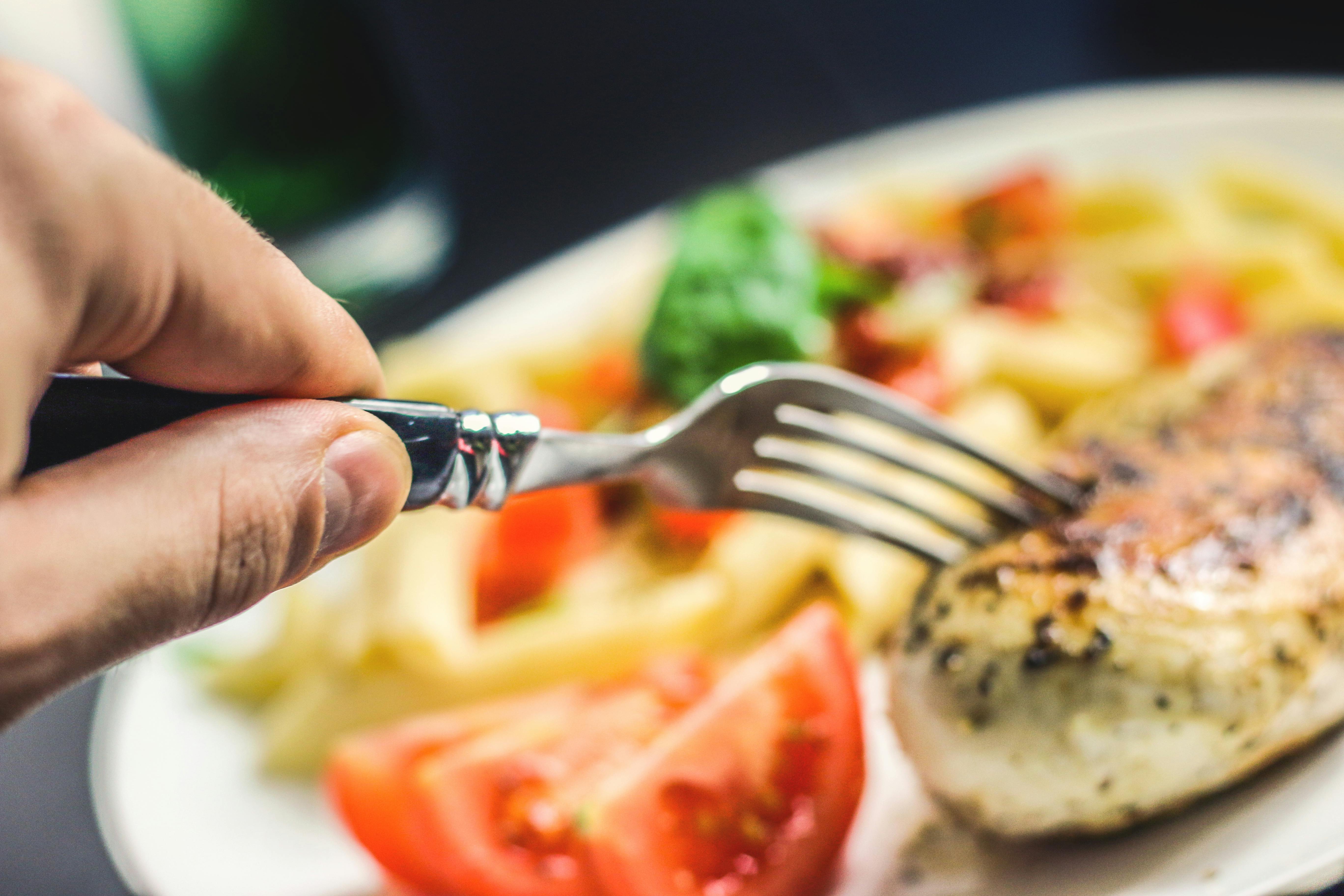
It’s 2pm. The day is in full swing. Your head droops toward the floor into your open hand. Running your thumb and forefinger firmly along your temples produces an involuntary grimace that contorts your face as if an attempt to scare away the day’s worries. Your mind wanders toward an escape from the stressors that are running rampant. Mmm, a doughnut left over from breakfast might do the trick. Maybe another cup of coffee will recharge things. That candy bar hiding in the desk drawer wouldn’t be bad either. Will any of these options offer escape or might they just exacerbate the problem? Let’s delve into some tension nutrition!
It’s inevitable that each day will bring challenges and stressors that can result in tremendous tension. Life throws all sorts of obstacles your way; the last thing you need to do is worsen the tension by polluting your body’s internal system with poor food choices. There are three simple questions one must ask when choosing foods during stressful periods:

  1. Why am I eating?
  2. What foods should I eat?
  3. What foods should I avoid?


    Why Am I Eating?

    Eating can be triggered by a multitude of factors other than hunger. If you were to analyze the intricate chemistry of the human body, it is apparent how stressful situations set off a cascade of hormones that can result in an unexpected calorie binge. Problems arise when we consistently give in to this hormonal calling and begin to depend on food as our escape from the tension of life.
    Jane, one of my clients, has experienced this negative eating pattern firsthand. Multiple times she’s discussed with me how challenging it is to not reach for a quick and easy comfort food when the day turns stressful. I continually reinforce to her that allowing your body’s hormones to lead you to eat calorie-dense foods can lead to weight gain. Excess weight increases your risk of diabetes, heart disease, stroke, gallbladder disease, arthritis, and multiple cancers. Carrying extra physical weight takes quite a toll, but accumulating emotional baggage just might be even more treacherous.  Ahead, we’ll look at foods that tame the “overeat hormones” and strategies for avoiding emotional eating.
    Using food as an emotional crutch is an extremely unhealthy habit. Delicious food acts as an easy escape from life’s problems.  Focusing on eating rather than dealing with a stressful situation can develop into a vicious cycle.  Tension leads to bad food choices, bad food choices lead to more tension, more tension results in more overeating, and so on and so on.  This cycle threatens our emotional stability and can wreak havoc on personal spirituality.
    Through years of counseling clients, I’ve discovered that personal spirituality can play a large role in helping one deal with stress, worry, and anxiety without compromising healthy nutritional efforts.  For example, the Bible says to cast all your anxiety on God because He cares about you so much.  If someone truly believes that God loves them, they can release their negative emotions to Him.  The spiritual danger of consistent emotional eating comes as a result of drowning stress and tension in calories rather than bringing those emotions to God.  Food is innocent and meant to be one of the natural pleasures of life.  Only when our relationship with food is distorted, do we encounter potentially serious issues that threaten our spiritual and physical health.  For all facets of your health, it’s important to stay vigilant against the deception of emotional eating.
    Here are four practical ways to squash emotion-driven eating and reduce daily tension.
    • Analyze your hunger. Ask yourself, “Is my brain craving food or is my stomach hungry?”
    • Stay focused. When you feel tension increasing as your tasks pile up, stand up, stretch, have a glass of water, and refocus on the task at hand.
    • Remove temptation. Simply put – you won’t eat what you don’t have.  Don’t keep unhealthy foods in your bag, at your office, or in your car.
    • Consistently ask God for discernment between true hunger and emotional cravings, as well as discipline to resist the temptation when it arises.
    It’s 2pm again.  The day is in full swing.  The tension is mounting as a million things throttle towards you.  Your head droops toward the floor into your open hand and . . . you pray a silent prayer.  Suddenly, you experience peace and better understand the cravings that gnaw at your brain.  Later, with your tension released and delicious food on your plate, you’ll bow your head one more time and thank God for the guilt-free meal you’re about to savor.  But what foods should be included in that meal?  Or, what would be a healthy snack to help tame those “overeat hormones?”


    What Foods Should I Eat? (What to eat when you’re stressed!)

    The basic components of quality nutrition are the best solution for 99% of scenarios.  It’s no different with choosing foods during times of high stress and tension.  While it may not sound quite exotic enough, the best recommendations are fruits, vegetables, quality protein, essential fats, and whole grains.  Each of these foods work together to maintain a stable environment within your body, resulting in consistent energy levels, reduced cravings, ease of concentration, proper digestion, and adequate recovery.  Here’s a little more specificity to help along the way.
    – Broccoli, oranges, bell peppers, papayas, cantaloupe, and tomatoes are all rich in everyone’s favorite nutrient: Vitamin C!  Research has shown that vitamin C helps reduce the physical and psychological effects of stress, as well as encouraging quicker recovery from stressful situations. Quick side note: mega-dosing vitamin C is not beneficial.
    – Leafy greens, soybeans, 100% whole grains, and nuts are good sources of what has been dubbed the “Anti-Stress Mineral”: Magnesium.  Magnesium helps to relax muscles, regulate your heart rhythm, improve quality of sleep, and plays a vital role in the functioning of your nervous system.
– Almonds, walnuts, flax seeds, and most seafood provide the body with essential fatty acids (or EFAs). I often like to call EFAs nature’s miracle workers. Research with EFAs has shown improved mood, more stable blood sugar levels, possibly reduced inflammation, and potentially strengthened immunity. To take advantage of these benefits, I basically  require all of my clients use a quality omega-3 formula everyday. My top recommendations are: Essential Superior Omega-3 Formula (gel caps) or Vitacost Finest Fish Oil (liquid).


For almost all of the above nutrients, there is tremendous nutrient crossover.  The point is – don’t over complicate things.  Just be sure to reach for fruits, vegetables, nuts, 100% whole grains, and/or lean meats.  You can’t go wrong.  Well, actually you can go wrong.  It’s time to look at what foods are on the opposing side against the nutrient rich, anti-stress foods.

What Foods Should I Avoid?
The list of foods you should eat all had one thing in common; they promote a stable environment within your body which helps it perform at peak function.  Using simple logic, it’s easy to predict that the opposite will be true for the foods to avoid.  The following foods have the potential to increase tension, worsen stress, and trigger the “overeat hormones” resulting in emotional eating.
– Highly processed foods can truly pollute your internal environment.  Carbs are the great double-edged sword.  Consuming processed carbohydrates can result in extreme energy swings, drowsiness, lack of concentration, and uncontrollable cravings.  A quick practical list of processed foods to avoid includes: crackers, chips, candy, any bread or grain product that is not 100% whole, most granola bars, cereal, and canned fruit or fruit juice.
– Caffeine is America’s favorite stimulant.  The problem is not with moderate consumption, but with excessive intake.  Consuming too much caffeine actually mimics stress to the body.  Two to three (8 oz) cups of coffee per day is considered average.  Problems tend to arise when people become dependent and consistently increase their intake.  Be sure to monitor yourself and avoid the pitfall of consistently increasing your consumption.


Source
http://coreylittlecoaching.com/tension-nutrition-eat-youre-stressed/

Sunday, 30 August 2015

Can Stress Cause Weight Gain?

How to keep the world's woes from weighing you down

Your job is hanging by a thread, and the credit-card bills are mounting. Your teenager wants to quit school and become a professional snowboarder. Or maybe it's the increasing tensions in the world, brought to you 24 hours a day on your TV screen, getting you down.
Regardless of the reason, stress is a way of life in the 21st century. And for some people, the effects go beyond feelings of anxiety and discomfort. For these people, stress can mean facing each day ravenously hungry -- and adding weight gain to their list of worries.
"While the immediate . . . response to acute stress can be a temporary loss of appetite, more and more we are coming to recognize that for some people, chronic stress can be tied to an increase in appetite -- and stress-induced weight gain," says Elissa Epel, PhD, an assistant professor in the department of psychiatry at the University of California at San Francisco.
The problem, she says, lies within our neuroendocrine system -- a brain-to-body connection that harkens back to evolutionary times and which helped our distant ancestors to survive. Though today the source of the stress is more likely to be an unpaid bill than a saber-toothed tiger, this system still activates a series of hormones whenever we feel threatened.
"These hormones give us the biochemical strength we need to fight or flee our stressors," Epel tells WebMD.
The hormones released when we're stressed include adrenalin -- which gives us instant energy -- along with corticotrophin releasing hormone (CRH) and cortisol. While high levels of adrenalin and CRH decrease appetite at first, the effects usually don't last long.
And cortisol works on a different timetable. Its job is to help us replenish our body after the stress has passed, and it hangs around a lot longer. "It can remain elevated, increasing your appetite and ultimately driving you to eat more," says Epel.

'Fight or flee' -- or chow down

While this system works fine when our stress comes in the form of physical danger -- when we really need to "fight or flee", and then replenish -- it doesn't serve the same purpose for today's garden-variety stressors.
"Often, our response to stress today is to sit and stew in our frustration and anger, without expending any of the calories or food stores that we would if we were physically fighting our way out of stress or danger," says Shawn Talbott, PhD, an associate professor in the Department of Nutrition at the University of Utah and author of The Cortisol Connection.
"Often, eating becomes the activity that relieves the stress"

In other words, since your neuro-endocrine system doesn't know you didn't fight or flee, it still responds to stress with the hormonal signal to replenish nutritional stores -- which may make you feel hungry.
Following those stress signals can lead not only to weight gain, but also the tendency to store what is called "visceral fat" around the midsection. These fat cells that lie deep within the abdomen have been linked to an increase in both diabetes and heart disease.
To further complicate matters, the "fuel" our muscles need during "fight or flight " is sugar -- one reason we crave carbohydrates when we are stressed, says endocrinologist Riccardo Perfetti, MD, PhD.
"To move the sugar from our blood to our muscles requires insulin, the hormone that opens the gates to the cells and lets the sugar in," says Perfetti, who directs the outpatient diabetes program at Cedars Sinai Medical Center in Los Angeles. And high levels of sugar and insulin set the stage for the body to store fat.
"So people who are under stress, metabolically speaking, will gain weight for that very reason," Perfetti tells WebMD.

Mind Over Matter

As much as we would like to blame all our weight gain on stress, experts say that eating in response to stress can also be a learned habit -- one that's merely encouraged by brain chemistry.
"Under stress, there's an impulse to do something, to move, and often, eating becomes the activity that relieves the stress. It's easy to do and it's comforting," says David Ginsberg, MD, a psychiatrist and director of the Behavioral Health Program at New York University Medical Center.
In fact, it may be our bodies' initial response to rising levels of cortisol that teaches us there is comfort in sugary or starchy foods.
"During the first couple of days following a stressful event, cortisol is giving you a clue to eat high-carbohydrate foods," Perfetti tells WebMD. "Once you comply, you quickly learn a behavioral response that you can feel almost destined to repeat anytime you feel stressed."
Now for the good news: Whether your urge to eat is driven by hormones or habits or a combination of both, research shows there are ways to interrupt the cycle, break the stress and stop the weight gain.
Here's what the experts recommend:
1. Exercise. This is the best stress-buster -- and also happens to be good for you in lots of other ways. "It not only burns calories, when you move your body, even with a simple activity such as walking, you begin to produce a cascade of biochemicals, at least some of which counter the negative effects of stress hormones -- as well as control insulin and sugar levels," says Talbott.
At the same time, Ginsburg notes that exercising too hard for too long can raise cortisol levels and actually increase stress. The answer, he says is to choose an activity you reallyenjoy doing -- be it an aerobic sport like running or a calmer activity such as Pilates -- and then keep workouts to a length that doesn't exhaust you (this could be as little as 20 minutes a day, three to five days a week).
2. Eat a balanced diet -- and never skip a meal. "Eat breakfast -- and try to consume six small rather than three huge meals a day, with foods from all the food groups," Ginsberg tells WebMD. This helps keep blood sugar levels steady, which in turn put a damper on insulin production and eventually reduce cortisol levels -- all helping to control appetite and weight.
3. Don't lose sleep, over your weight problems or your stress -- When we don't get enough rest, cortisol levels rise, making us feel hungry and less satisfied with the food we do eat, Ginsberg says.
4. Devote time to relaxation -- Because it works much like exercise to produce brain chemicals that counter the effects of stress, Ginsburg suggests finding the activities that make you feel relaxed and calm. For some, he says, yoga can do the trick. Others may prefer meditation techniques or deep breathing.
And don't overlook the relaxing power of cuddling up on a sofa with a good book or magazine, or even playing your favorite movie on the VCR. "Anything that makes you feel calm and relaxed will help counter the biochemical effects of stress," says Talbott.
5. Snack on whole grain, high fiber foods. If you just can't ignore those stress-related hunger pangs, try filling your tummy with foods high in fiber and low in sugar, like oatmeal, whole wheat bread, or fruits such as pears or plums.
According to Pamela Peeke, MD, MPH, author of Fight Fat After Forty, foods that are high in sugar and simple carbohydrates -- like white flour, cookies, cake, white rice, or pasta -- cause insulin levels to rise, which in turn increases stress hormones and ultimately makes you feel more hungry. But high-fiber, whole-grain foods -- particularly cereals like oatmeal or multi-grain flakes, as well as fruits -- help keep insulin levels on a even keel, which can help control blood sugar levels, and ultimately, hunger, according to Peeke.
6. Avoid caffeine, cigarettes and alcohol -- According to the American Institute of Stress, cigarettes, as well as caffeine-laden soft drinks, coffee, tea, and even chocolate, can cause cortisol levels to rise, stress to increase, blood sugar to drop and hunger to prevail. The institute also cautions against drinking too much alcohol, which can affect blood sugar and insulin levels.
7. Take your vitamins -- A number of medical studies have shown that stress can deplete important nutrients -- particularly the B complex and C vitamins, and sometimes the minerals calcium and magnesium.
Because these nutrients are needed to balance the effects of stress hormones like cortisol, and may even play a role in helping us burn fat, it's important to keep levels high, Talbott says. While a good diet will help, he says, taking a high potency multi-vitamin supplement can insure you give your body what it needs to not only deal with the stress, but also burn fat and lose weight.
And speaking of losing weight, here's one bit of news you may be happy to hear: Experts say you shouldn't try to go on a strict diet when you're under extreme or chronic stress.
In one study, published in the Journal of Clinical Nutrition in 2001, researchers from the University of British Columbia found that severely limiting calorie intake could kick off a series of biochemical events that ultimately not only increased stress levels, but could make people feel more hungry.
The researchers followed 62 women for three days. Of this group, 33 were on a diet of no more than about 1,500 calories a day, while the other 29 consumed up to about 2,200 calories daily.
After analyzing urine samples, researchers found that the women who had consumed the least food had the highest levels of cortisol. Not surprisingly, these same women also reported more stress during what researchers called "daily food-related experiences." In short, the more they restricted food intake, the greater their levels of stress hormones, and, ultimately, the more they wanted to eat.
If you find yourself chronically stressed out, the experts say, you should do what you can to decrease your stress levels, then follow a reduced-calorie, yet balanced, diet to stop the weight gain and lose the extra pounds.


Source
http://www.webmd.com/food-recipes/most-important-meal