Americans' reliance on processed foods and snacks is undoubtedly one of the primary factors driving our skyrocketing obesity and disease rates. Even many people who "know better" have trouble keeping their hands out of the Doritos.

In 2005 alone, Americans spent a staggering $60 billion on snack foods!1 Sugar and salt cravings are often blamed for snack attacks, but how can you stop them?The truth is, processed foods contain carefully orchestrated flavors and other sensory factors designed to be as addictive as possible. This is in stark contrast to whole foods, the taste and consistency of which was created by nature and therefore work with your body to satiate hunger and nutritional cravings.As discussed in a previous article, junk food manufacturers have taken flavor science to extraordinary levels, and the artificial ingredients used to produce that sought after "bliss point" can seriously confuse and befuddle your body's metabolism.For example, the sweetness from non-caloric artificial sweeteners tends to disrupt your metabolic response to real sugar,2 thereby exacerbating obesity and diabetes. Your body simply isn't fooled by sweet taste without calories, so it keeps signaling your brain to keep eating, as the point of satisfaction has not yet been reached.Fortunately, there are solutions to unhealthy junk food cravings. One of the most effective strategies I know of is intermittent fasting, along with particular diet modifications that effectively helps reset your body's metabolism.Another helpful technique, which addresses the emotional component of food cravings, is the Emotional Freedom Technique.
What Makes Processed Foods and Snacks Addictive?

Another part stems from the way food manufacturers combine various flavors and textures to produce truly addictive products. This science is used not just for chips, cookies, and sodas, but for ALL processed foods, from condiments to pasta sauce.Food scientist Steven Witherly has studied taste and addictive flavors for the last two decades. In his report: "Why Humans Like Junk Food,"4 he reveals what it is about a wide range of specific foods that stir our senses and taste buds. For example, the reason people love corn chips is because of the following combination of factors:
- Corn chips contain lots of "taste-active solutes," including salt, sugar, MSG, and others
- Seasonings create a high salivation response
- The chips melt quickly in your mouth, enhancing "dynamic contrast and evoked quality"—two parameters that contribute to pleasurable sensations
- Corn chips are calorie dense
- Cheese proteins create pleasurable—and addictive—casomorphines5when digested
Other Tricks of the Junk Food Trade
Two primary factors make the experience of eating food pleasurable. The first factor involves taste, and how the food feels in your mouth. The second factor is the actual macronutrient content of the food.
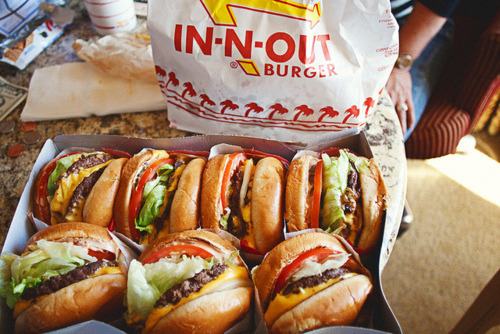
As previously described by investigative reporter Michael Moss, author of the book Salt Sugar Fat, food manufacturers go to great lengths to find the perfect blend of salt, sugar, fat, and additional flavorings to excite your brain's reward center, thereby assuring you'll be back for more. In addition to those basics, the food industry also employs other strategies to increase their products' addictive nature. This includes:
- Dynamic contrast. This is when a combination of contrasting sensations produces pleasurable sensations, such as biting through a crunchy chocolate shell, followed by a soft, creamy center filling

- Salivation response, which boosts taste and feelings of pleasure. Examples of foods and/or ingredients that promote salivation include butter, chocolate, ice cream, and mayonnaise
- Rapid food meltdown and vanishing caloric density. As noted in the featured Lifehacker6 article, foods that quickly melt in your mouth trick your brain into thinking you're not eating as much food as you really are, despite the fact you're stuffing in plenty of calories. A prime example of a snack food that has perfected this is Cheetos
- Sensory specific response. Repetitive flavors, or flavor overload, tend to lead to decreased sensations of pleasure. In short, you "get tired" of eating the same flavor again and again. Your palate can even tire of a flavor within minutes.
Processed food manufacturers circumvent this by creating more complex flavor and sensory profiles. The greatest successes, whether beverages or foods, owe their "craveability" to formulas that pique your taste buds just enough, without overwhelming them, thereby overriding your brain's inclination to say "enough"- Calorie density. As noted in the featured article:7 "Junk foods are designed to convince your brain that it is getting nutrition, but to not fill you up." This is accomplished by combining the ideal ratio of calories to prevent satiety signals to go off

So how can you get yourself out of the trap set up by junk food manufacturers? First of all, as with any other addiction program, the less of it you eat, the less you'll crave it as your body gets "weaned" from all these addictive hooks. Boosting your nutrition is a key factor here. If your body is getting all the nutrients it needs, it will send the appropriate signals to your brain to stop eating when your body's nutritional requirements have been met.
Intermittent Fasting—One of the Best Ways to Eliminate Sugar Cravings
One of the most effective ways I know of to eliminate sugar cravings and shed unwanted weight is intermittent fasting, as this will help reset your body to burning fat instead of sugar as its primary fuel. When sugar is not needed for your primary fuel and when your sugar stores run low, your body will crave it less.There are many different variations of intermittent fasting. If you are like 85 percent of the population and have insulin resistance, my personal recommendation is to fast every day by simply scheduling my eating into a narrower window of approximately six to eight hours every day. I find this method to be easier than fasting for a full 24 hours or more, twice a week.
Once you are at your ideal body weight, and do not have diabetes, high blood pressure, or abnormal cholesterol levels, you can be less rigid with your fasting. However, it is probably best to resume some type of scheduled eating regimen once in a while, to make sure you don't slip back into old habits.

To understand how you can fast daily while still eating every day, you need to understand some basic facts about your metabolism. It takes most people eight to 12 hours for their body to burn the sugar stored in your body as glycogen found primarily in your liver and your muscles. Most people never deplete their glycogen stores because they eat three or more meals throughout the day and are in constant "feast" mode. This teaches your body to burn sugar as your primary fuel and effectively shuts off your ability to use fat as a fuel.Therefore, in order to work, the length of your fast must be at least eight hours. For example, you could restrict your eating to the hours of 11am and 7pm. Essentially, you're just skipping breakfast and making lunch your first meal of the day instead. This equates to a daily fasting of 16 hours—twice the minimum required to deplete your glycogen stores and start shifting into fat burning mode.Keep in mind that while most people will successfully switch over to burning fat after several weeks of intermittent fasting, you may need several months to teach your body to turn on the fat-burning enzymes that allow your body to effectively use fat as its primary fuel. So don't give up!
Again, once you've become fat adapted and are of a normal weight, without high blood pressure, diabetes, or high cholesterol, you only need to do scheduled eating occasionally. As long as you maintain your ideal body weight, you can go back to eating three meals a day if you want to. I restricted my eating to a six- to seven-hour window each day until I got fat adapted and lost about 10 pounds. Now, I still rarely ever eat breakfast, but several days a week I will have two meals instead of just one.
Switch from Processed Foods to Unprocessed, Whole Foods
Replacing processed foods with homemade meals made from scratch using whole ingredients is an ideal and important way to ensure optimal nutrition. This will automatically cut out the vast majority of refined sugars, processed fructose, preservatives, dyes, other nasty chemicals, and many addictive ingredients from your diet. This will allow your body to depend less on sugar and more on fat as its primary fuel—provided you eat enough healthy fat, that is. As a result, you will no longer crave sugar to keep you going.

Please keep in mind that proper nutrition becomes even more important when you're fasting and/or cutting calories, so you really want to address your food choices before you try any form of fasting. The key elements for a healthy diet that can help kick your junk food cravings to the curb are the following. For a comprehensive guide, please see my free optimized nutrition plan:
- Avoiding refined sugar, processed fructose, grains, and processed foods
- Eating a healthful diet of whole foods, ideally organic, and replacing the carbs you eliminate with:
- As much high-quality healthful fat as you want (saturated and monounsaturated). Many would benefit from getting as much as 50-85 percent of their daily calories from healthy fats. While this may sound like a lot, consider that, in terms of volume, the largest portion of your plate would be vegetables, since they contain so few calories. Fat, on the other hand, tends to be very high in calories. For example, just one tablespoon of coconut oil is about 130 calories—all of it from healthful fat. Good sources include coconut and coconut oil, avocados, butter, nuts, and animal fats. Also take a high-quality source of animal-based omega-3 fat, such as krill oil

- Large amounts of high-quality organic locally grown vegetables and ideally sprouts grown at your home
- Low-to-moderate amount of high-quality protein (think organically raised, pastured animals or eggs)
Address the Emotional Component of Your Food Cravings
If you're drawn to sweets or grains because of an emotional challenge, I highly recommend using a psychological acupressure technique called the Emotional Freedom Technique. EFT is simple and effective, and can rapidly help you control your emotional food cravings. Many people don't understand that emotional well-being is essential to their physical health. In fact, in terms of dieting for weight loss, not addressing emotional issues -- whether small or serious traumas from the past -- is the primary reason that most people who lose weight often fail at keeping the weight off.If you maintain negative thoughts and feelings about yourself while trying to take physical steps to improve your body, you're unlikely to succeed. Fine-tuning your brain to "positive" mode is absolutely imperative to achieve optimal physical health. Unfortunately, many people shun this notion, not because it doesn't make sense, but because the medical establishment has conned them into believing that it means they'll be shelling out many thousands of dollars for traditional psychological care. While traditional psychological approaches may sometimes work, EFT has shown to be a far better, not to mention inexpensive, solution. EFT can help you:
- Relieve most emotional traumas
- Abolish phobias and post-traumatic stress
- Shatter food cravings that sabotage your health
- Eliminate or significantly reduce most physical pain and discomfort
If you feel that your emotions, or your own self-image, may be your own worst enemy when it comes to altering your relationship with food, I highly recommend you read my free EFT manual and consider trying EFT on your own. A version of EFT specifically geared toward combating sugar cravings is called Turbo Tapping. For further instructions, please see the article, "Turbo Tapping: How to Get Rid of Your Soda Addiction."
Eating Real Food Is the Answer
The concerted effort by the processed food industry to make their products as addictive as possible has the unfortunate side effect of stimulating your metabolism to burn carbs as its primary fuel. As long as you are in primary carb-burning mode, you will strongly crave these types of foods. The solution is to decrease the amount of processed foods you eat, and replace them with high-quality whole foods. Remember, carbs need to be replaced with healthy fats in order to successfully achieve this metabolic switch over.

Again, intermittent fasting is one of the most effective ways to end junk food cravings, especially cravings for sugar and grains. No matter how cleverly enhanced these junk foods are, your cravings for them will dramatically diminish, if not vanish altogether, once your body starts burning fat instead of sugar as its primary fuel.To protect your health, I recommend spending 90 percent of your food budget on whole foods, and only 10 percent or less on processed foods. Unfortunately, most Americans currently do the opposite, which is in large part why so many struggle with junk food cravings. Remember, virtually ALL processed foods are to some degree designed to have a high "craveability" factor, and it's really difficult to find products that do not contain high amounts of addictive sugar and carbs. If you're on a budget, switching to a whole food diet may seem like a challenge. It can be done, however. Here are three strategies you may find helpful:
- Become resourceful: This is an area where your grandmother, if still alive, can be a wealth of information as how to use up every morsel of food and stretch out a good meal was common knowledge to generations past. What I mean is getting back to the basics of cooking -- using the bones from a roast chicken to make stock for a pot of soup; extending a Sunday roast to use for weekday dinners; learning how to make hearty stews from inexpensive cuts of meat; using up leftovers, and so on.
- Plan your meals: If you fail to plan, by default you are planning to fail. Ideally, planning your meals will involve scouting out your local farmer's markets for in-season produce that is priced to sell, and planning your meals accordingly, but you can also use this same premise with supermarket sales. You can generally plan a week of meals at a time, make sure you have all ingredients necessary on hand, and then do any prep work you can ahead of time so that dinner is easy to prepare if you're short on time in the evenings.
- Avoid food waste: According to a study published in the journal PloS One,8 Americans waste an estimated 1,400 calories of food per person, each and every day. The two steps above will help you to mitigate food waste in your home. My previous article, "14 Ways to Save Money on Groceries," also offers valuable tips and tricks for keeping your groceries fresher, longer.
Source
http://articles.mercola.com/sites/articles/archive/2014/05/26/eliminate-junk-food-cravings.aspx
[-] Sources and References