Showing posts with label lifestyle. Show all posts

Tuesday, 18 August 2015

Lose 8 Pounds in 2 Weeks

You really can have it all


Wouldn’t it be a dream if you could enjoy the best foods summer has to offer—and lose weight? You’re in luck: Our indulgent mix-and-match meal plan features healthied-up versions of all your warm-weather faves (even burgers and lobster rolls!). 

Couple this 1,350-calories-a-day diet with our workout plan, and you can shed up to 8 pounds (about one bathing suit size) in just two weeks. Get ready to eat, drink, and shrink. 

• Breakfast
• Lunch & Dinner
• Snacks


Breakfast

About 400 calories (choose one daily) 

Open-Faced Caprese Omlet
Bulk up your omelet with veggies and cut back on the eggs and cheese to net an almost 200-calorie save.

Whisk together 2 large eggs; gently cook on medium-low heat in1 teaspoon extra-virgin olive oilto make an open-faced omelet. Top evenly with 1/2 cup shredded part-skim mozzarella cheeseduring cooking. Slide omelet onto a plate, and top with 1 sliced medium vine-ripened tomato. Drizzle with 1 teaspoon balsamic vinegar, sprinkle with sea salt to taste, and garnish with 8 fresh basil leaves.


omlete-cheese-tomatoes


Nut Butter and Nectarine Open Sandwich

By trading a bakery-size bagel for an English muffin, you’ll slash 210 calories from your morning meal.

Spread 1 tablespoon roasted almond butter onto each of 2 toasted whole-grain English muffin halves. Very thinly slice 1 nectarine and arrange on top; sprinkle with a pinch of ground ginger or cardamom.


Granola Yogurt Parfait

Use plain yogurt instead of a sugary one—and save up to 70 calories.

Layer 6 ounces plain fat-free Greek yogurt with 2/3 cup granola mixed with 1/2 cup puffed wheat cereal, and 1 sliced peach.


Grab-and-Go Egg Sandwich

Need to eat on the fly? Swing by a restaurant drive-through and order 1 take-out egg sandwich(around 400 calories), such as Wendy’s Artisan Egg Sandwich with Applewood Smoked Bacon.

By choosing bacon instead of sausage, you’re cutting more than 100 calories from your breakfast. Enjoy with 12 ounces unsweetened iced tea with 1 teaspoon sugar.


Lunch and dinner

About 400 calories (choose two daily)

Turkey Cheeseburger With Guacamole
This stacked burger is piled high with veggies and is half the calories of a regular one.

Grill or pan-grill 1 small (3-ounce, about 93% lean) ground turkey patty; sprinkle with salt and black pepper to taste. Serve on 1 grilled whole-grain bunsmeared with 1 1/2 table-spoons guacamole and topped with a3/4-ounce slice of sharp cheddar cheese2 large red onion slices, 3 large heirloom or beefsteak tomato slices, and 2/3 cup packed baby salad greens. Serve burger with an additional cup packed extra baby greens, splashed with champagne vinegar.


Peppery Linguine With Pesto

Mixing pasta with veggies and pesto saves about 400 calories, versus digging into a heavy Alfredo entree.

Toss 1 1/3 cups cooked (2 ounces dry) whole-wheat or spinach linguine with 2 tablespoons each of the pasta cooking liquid and basil pestoThen mix with 1 cup thinly sliced red, orange, and yellow bell peppers; half of a small, very thinly sliced (crosswise) Serrano pepper; and sea salt to taste.


Sushi and Salad

To choose rolls wisely, steer clear of words like "tempura" and "spicy"—these cooking preparations can easily double your calorie count.

Have 1 tuna roll and 1 avocado roll, served with 1 tablespoon soy sauce. Enjoy with 1 side seaweed salad.


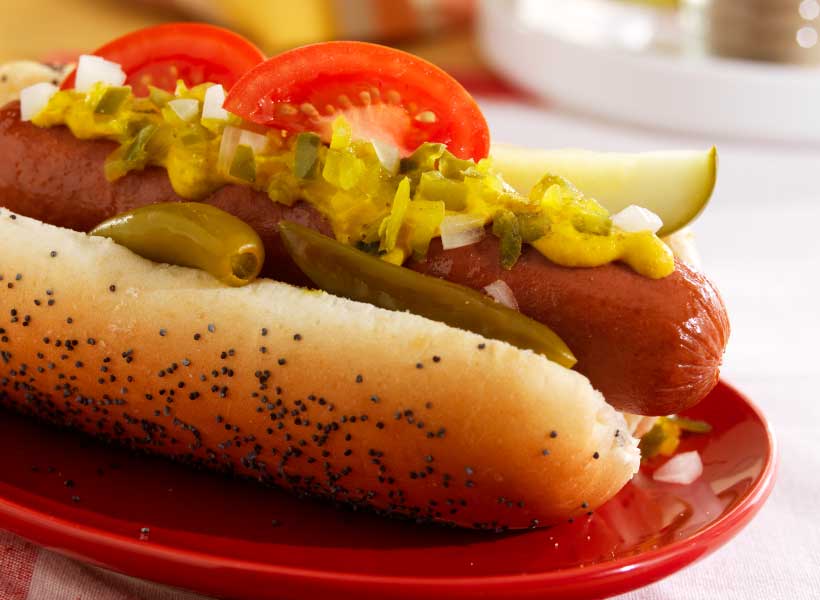
Chicago-Style Chicken Hot Dog

Sink your teeth into this leaner poultry frank—it has 150 fewer calories than the typical dressed-up dog.

Spread 2 teaspoons mustard on1 whole-wheat hot dog bun; top with 2 tablespoons drained sweet pickle relish and 1 grilled or boiled organic uncured chicken or meatless hot dog. Add 2 sliced cherry tomatoes2 tablespoons minced sweet onion1 tablespoon minced green bell pepper or bok choy, and a dash of celery salt. Serve with 1/2 cup store-bought potato salad.


Lobster Wrap

Made with a tortilla instead of a buttered bun and with a lightened-up mayo mixture, our version of the typical lobster roll is 300-plus calories lighter.

Top 1 (8-inch) whole-wheat tortilla with fresh lobster salad:2/3 cup cooked, chilled lobster meat1 tablespoon each mayo and fat-free plain Greek yogurt,1 teaspoon finely chopped fresh tarragon1/8 teaspoon each hot-pepper sauce and grated lemon zest, and a pinch each of sea salt and freshly ground black pepper. Top with 3/4 cup sliced Boston lettuce or other leafy greens, and roll up. Eat with 1 cup red bell pepper strips or zucchini slices, raw or grilled.


Grecian Cobb Salad With Lemony Hummus Dressing

The ultimate girlfriends’ summer lunch out—have a skinny version (430 calories less than usual) together outside.

Top 3 cups packed mesclun with2/3 cup each sliced unpeeled English cucumber and grape tomatoes3 ounces grilled seasoned chicken breast strips;3 tablespoons each thin strips sundried tomatoes (rehydrated) and crumbled feta cheese; and 1 tablespoon pan-toasted pine nuts. For dressing: Whisk together 3 tablespoons hummus1 tablespoon water, and 1 1/2 teaspoons fresh lemon juice. Sprinkle with freshly ground black pepper to taste.


Pizza Gone Glam

Instead of picking deep-dish, order up 2 medium slices of regular cheese pizza (or heat a 400-calorie portion of your favorite frozen one like Amy’s Kitchen Cheese Pizza)—and save 150 calories.

Then fab up the pizza with your favorite seasonal veggies, such as1/2 cup each sliced baby bella mushrooms and fresh baby spinach or arugula; sprinkle withItalian seasoning or truffle sea salt to taste.


Snacks

About 150 calories (choose one daily)

Endive Boats With Baba Ganoush
Swap potato chips and French onion dip for this refreshing and low-cal snack.

Fill spears from 1 head Belgian endive with 2 tablespoons store-bought all-natural baba ganoush. Garnish with fresh parsley

Free anytime snack
2 cups raw (or 1 cup cooked) veggies; season with ground black pepper and sea salt to taste.


Grilled Apple A La Yogurt

Snack on this instead of apple pie—and save 250 calories.

Core and halve 1 medium apple; cut each half into 6 wedges, and grill over direct medium heat until rich grill marks form (about 6 minutes per side). Microwave on high until fully softened (about 1 minute). 

Top with 3 tablespoons fat-free or low-fat vanilla yogurt, and sprinkle with 1 tablespoon graham cracker crumbs and apinch of ground cinnamon or pumpkin pie spice.


Shrimp Cocktail and Prosecco

Indulge in this skinny app plus drink pairing.

Enjoy 10 large shrimp and 1 1/2 tablespoons cocktail sauce while sipping 3 ounces prosecco. 

light-shrimp-cocktail


Red Grape and Aged Goat Cheese Skewers

Nosh on this instead of crackers and Brie for a 150-calorie save.

Start with 15 red seedless grapes and 1 ounce aged goat cheese. Slide 5 grapes onto each of 3 bamboo skewers; top each with a 1/3-ounce piece of cheese.


Snack mix and mangopolitan

It’s summer happy hour made light! 

Toss together 1 cup air-popped popcorn with 12 pistachios; season with sea salt and freshly ground black pepper to taste. Then mix up this cocktail: 2 tablespoons chilled 80-proof mango or lemon vodka3 tablespoons mango nectar, and6 tablespoons sparkling lemon or lime water


Triple-Chocolate Ice Cream Sundae

Trim 500 calories from the typical sundae with this petite version.

Top 4 mini scoops (2 tablespoons each, or 1/2 cup total) 98% fat-free chocolate ice cream or low-fat frozen yogurt with 2 teaspoons finely chopped semisweet chocolate or mini chocolate chips. Dust with 1/4 teaspoon cocoa powder, and top with 1 tablespoon whipped cream. Garnish with 3 or 4 small fresh mint sprigs.


Source
http://www.health.com/health/gallery/0,,20488303,00.html

Monday, 6 April 2015

Lifestyle Changes for Obesity and Weight Loss

Introduction to lifestyle changes for obesity and weightloss

Obesity is a chronic health problem which now affects many Australians. Some say the rates are so high that we have reached an obesity epidemic. Overweight and obesity are dangerous conditions as they can contribute to a number of different health problems (eg, heart disease and diabetes). It is therefore extremely important that obesity is treated aggressively. Lifestyle changes remain the mainstay of treatment and are important for the long term maintenance of weight loss.
The increased rates of overweight and obesity in Australia is part of a worldwide trend. Today, over 50% of women, up to 75% of males and approximately 25% of children and adolescents are classified as overweight or obese. The reasons for this increase are complex, but environment and changing lifestyles certainly play significant roles. High energy foods have become readily available, and it is no longer essential to engage in physical activity. As a result, obesity and its health problems have become all too common in Australian individuals.
Unfortunately obesity is a chronic condition and there is no ‘quick fix’ solution or treatment that is effective for all overweight or obese individuals. Furthermore, after following weight loss programs, relapses of weight gain are extremely common. This emphasises the importance of a lifetime commitment to healthy eating and exercise practices. A range of different treatment options are available for obesity. Lifestyle modification (with a reduction of energy intake and an increase in physical activity) is essential in all treatment strategies. There are currently no long-term treatment programs that do not require at least some lifestyle changes. Positive changes in your eating and exercise behaviour are essential for sustained reductions in weight. However, if you are extremely overweight it may be recommended that you also take weight loss medications or undergo bariatric surgery.


Weight loss aims and benefits

As you may be aware, obesity is associated with a range of health consequences including metabolic diseases (like diabetes), heart disease, some cancers and arthritis. Lifestyle modifications aim to reduce the burden of obesity and reduce the associated conditions. In general, the greater the degree of weight loss achieved, the greater the health benefits. However, even a small amount of weight loss (5-10% of body weight) can lead to significant benefits. Some people consider this small amount of weight loss unsatisfactory, but the health benefits are much more important than physical appearance. You should discuss with your doctor what weight loss aims are suitable for you.
The overall success of a weight loss program really depends on whether the weight loss is sustained in the long term. For this to be achieved you must be well educated about obesity and be extremely dedicated to your lifestyle changes. It may be useful to elicit the help of your friends and family to keep you motivated. Lifestyle changes for the whole family are extremely important to achieve healthy weight in children.

http://www.huffingtonpost.ca/kathleen-trotter/quit-running_b_5470781.html

Overview of lifestyle treatments for weight loss

Lifestyle treatments for weight loss focus on reducing energy intake and increasing physical activity through diet, exercise and behavioural measures. You should try to alter your bad eating and activity habits. (Please refer to eating habits of women and eating habits of men for more information). In general, a combination of treatments is the most effective way to achieve weight loss.
A program is now available online that helps you to determine which of your lifestyle behaviours are unhealthy. This is called the Diet, Activity and Behaviour Questionnaire (DAB-Q). It consists of a series of simple questions about your eating and activity behaviours and helps you grade how easy it would be for you to make appropriate changes. At the end of the questionnaire you will be given a graded score of the most important factors contributing to your excess weight, which you can hopefully address in the future.
[vidsmall 35]
You can complete this program at home and bring it to your next doctor’s appointment. This will provide your doctor with extremely valuable information which can be used to devise weight loss targets specifically for you. This is very important as it is often difficult for your doctor to get a good understanding of the lifestyle factors contributing to your weight. You can access this program for free by visiting http://www.professortrim.com/DAB-Q/. All questionnaire answers remain confidential.
Lifestyle treatments for obesity and weight loss can be challenging and time consuming. To re-emphasise, much of the success of your treatment will rely on your own dedication and effort.


Dietary approaches for weight loss

Dietary control has probably been the main treatment used for weight loss in the past. Diets are based on the principles of metabolism and work by reducing the intake of calories (energy) to create a negative energy balance (i.e. more energy is used than is consumed). There are countless commercial diets available and you should try to choose one that is suitable for you. The crash or fad diets published in magazines should generally be avoided, as they can be dangerous to your health and tend not to produce good long term results. You should try to choose diets that are medically proven or diets developed by dedicated weight loss services such as Weight Watchers or Jenny Craig. Your doctor can help you choose a diet which is safe, effective and suited to your needs. Below are some of the different mechanisms used in diets for weight loss:
  • Reducing fat, carbohydrate (especially those with a high glycaemic index), protein or alcohol intake. Reducing alcohol intake is a very good way to lose weight, as each gram of alcohol contains a large amount of energy on top of your normal daily intake.
  • Smaller portion sizes. You can try using a smaller plate size at each meal.
  • Food restrictions at various times of the day. It can be helpful to have a big breakfast and reduce the intake of energy rich foods later in the day. This can help your metabolism and ensure that most of the energy that you consume is burnt throughout the day.
  • Combining different foods to reduce total energy intake. Some diets have set food regimes for weight loss.
  • Diets centered on a single low-energy food.
Most diets produce some weight loss and are successful in the short-term. However, less than 10% of patients will maintain the weight loss in the long term. Once again it must be emphasised that permanent changes to eating habits are required. You must be careful whilst dieting to ensure that you still receive all the essential proteins, vitamins and trace elements. The best way to achieve this is by eating a well balanced diet with a wide variety of nutritious foods. A successful weight loss program may include cutting fats and sugars from your diet while ensuring you eat lots of healthy foods such as wholegrain, fruits and vegetables. Some diet programs may also require you to take vitamin or mineral supplements.
Be careful when shopping for low fat foods or brands labeled as ‘diet’ in the supermarket. Many low fat foods can be high in sugar and still contribute a lot to your daily energy or caloric intake. You should learn how to read food labels carefully and aim to consume foods that are low in saturated fat, sugars and, if appropriate, glycaemic index.
Diets that teach you how to select and prepare healthy foods may be more successful in the long term than restrictive diets with strict daily eating regimes or pre-prepared meals.

Reduced energy diets encourage you to choose healthy meal options, aiming to reduce your energy intake by a small amount every day. They teach you healthy eating behaviours which you can maintain in the long term.

Low energy diets are more restrictive and limit your energy intake to a greater degree. Set meal programs need to be followed. This type of diet can lead to a weight loss between 7-13 kilograms and may be used if you have significant health problems related to obesity.

Very low energy diets cut daily energy intake significantly and tend to be reserved for people who have failed other treatments or who have significant co-morbidities. These types of diets are generally followed for 8-16 weeks and often consist of liquid meal replacements (discussed below) from pharmacies. Unfortunately much of the weight lost is regained after the diet is stopped, but behavioural or drug therapies following treatment can help maintain some of the weight loss.

Meal Replacement Programs

Recently weight loss programs have been developed that replace normal meals with prepared meal plans or meal supplements (such as vitamin-rich shakes, soups and bars). These supplements act as complete meals, as they contain all the required vitamins and minerals. Meal Replacement Programs operate on the principles of a low calorie diet and induce a mild state of ketosis. The diets limit your intake of carbohydrates so that the body starts to break down fat stores for energy. The meal replacement programs are specially formulated so that they contain adequate energy and do not cause malnutrition.


Physical activity for weight loss

In addition to reducing your energy intake, increased physical activity is essential for the maintenance of weight loss and should form part of any weight loss program. However, to achieve significant weight loss from exercise alone, a very high level of activity is required, which can be challenging.
You should gradually build up your exercise as your personal fitness allows. You can start with simple measures such as walking to nearby places rather than driving, or climbing the stairs rather than using an elevator or escalator. Thirty minutes of walking 3-5 times per week is a good starting point.
If you are very overweight, some exercises (especially those that require weight bearing) can be physically difficult. In this case you could try activities such as swimming, walking in water or cycling. Once your fitness levels improve you could change to other exercises in the long term.
You should try to choose activities that you enjoy, as you will be more likely to continue them in the long term. Participating in team sports or exercising with a friend or family member can help you to remain motivated. It may be useful to see a physiotherapist or exercise physiologist to help you develop an appropriate exercise program. Try to focus on overall lifestyle measures as they tend to produce greater long term adherence.
Exercise has benefits beyond modest reductions in weight. Increasing your physical activity can improve your cardio-respiratory fitness, metabolic health, quality of life and general wellbeing. However, strenuous exercise can be risky in some patients such as those with cardiovascular problems. You should consult your doctor to discuss what level of physical activity will be safe for you.

 https://runningscience.com.au/

Behavioural therapy for weight loss

Behavioural techniques may be useful in conjunction with diet and exercise programs to improve long-term weight loss. Behavioural treatment is usually performed by a psychologist who analyses your eating, physical activity and thinking habits. Cognitive behavioural therapy (CBT) is a classic example which encourages you to change these behaviours and take responsibility for your lifestyle changes. Other strategies may include stress management, relapse prevention, counselling, and techniques such as hypnosis and psychotherapy. However, some of these behavioural techniques can be very time consuming and expensive.
Some basic steps may include:
  • Self monitoring: Identifying and recording any adverse patterns of behaviour.
  • Stimulus control: This involves removing factors that encourage you to eat badly. For example, you should shop carefully and remove trouble foods (such as chocolates and chips) from the house so you cannot be tempted.
  • Problem solving: Identifying and addressing problems associated with eating and physical activity. You should consider which factors have led to your excess weight and address them appropriately.
  • Reward systems: You could reward yourself for positive behaviours such as exercise by treating yourself to new clothes.
  • Social support: Strong social support from your friends and family can improve weight loss. It may be beneficial for you to enrol in a commercial program which offers a social support network.


Other

Beyond the specific measures highlighted above, it is also important that you maintain an overall balanced and healthy lifestyle. You should avoid stress, depression, boredom and frustration as these can be triggers to unhealthy eating behaviours. Keeping yourself occupied with enjoyable activities such as sports or socializing with friends and family can help you achieve a healthy lifestyle. If you eat excessively due to stress you could consider enrolling in relaxation programs.


Source
References
1. Kumar P, Clark M (eds). Clinical Medicine (5th edition). Edinburgh: WB Saunders Company; 2002. [Book]
2. Clinical practice guidelines for the management of overweight and obesity in adults [online]. Canberra, ACT: Australian Government Department of Health and Ageing; 18 September 2003 [cited 9 August 2007]. Available from: URL link
3. Proietto J, Baur L. Management of obesity. Med J Aust. 2004;180(9):474-80. [Abstract | Full text]
4. Summary report – Acting on Australia’s weight: a strategic plan for the prevention of overweight and obesity [online]. Canberra, ACT: Australian Government National Health and Medical Research Council (NHMRC); 2007 [cited 9 August 2007].  Available from: URL link http://www.myvmc.com/treatments/lifestyle-changes-for-obesity-and-weight-loss/