Showing posts with label Mediterranean diet. Show all posts

Tuesday, 5 April 2016

Paleo Diet Fattening?

For today’s edition of Dear Mark, I’m answering one question. It’s a burning one, though, judging from the deluge of emails I’ve received in the past few days. A new study has just come out purporting to show the deleterious effects of a “paleo diet” on weight gain, fat gain, and glucose tolerance in type 2 diabetics. It sounds alarming, so today I’m going to explore just how relevant this study is for you guys following a Primal eating plan. Should you be concerned with the results? Is it time to start radically restructuring the way you eat? I’ll evaluate the study, and its larger implications, to let you know.

Let’s go:
Mark,
The media is abuzz with reports of a new study claiming to show that the paleo diet leads to rapid weight gain. Care to respond? It’s getting hard to ignore my skeptical friends’ chorus of “I told you so”s.
Oh, man. The lead author of the study, one Associate Professor Sof Andrikopoulos, makes some of the most amazing quotes I’ve ever read. I can’t single out any single quote, so let’s examine them all one by one.
He claims that a low-carb, high-fat diet is especially risky in people with diabetes or pre-diabetes. “There is no evidence they work.”
LCHF diets are risky for diabetes or pre-diabetes, meaning they put your diabetes at risk of disappearing outright or never showing up at all. But for diabetics or pre-diabetics, it’s risky not to try a low-carb diet. Here’s one recent study of Japanese men with pre-diabetes in whom a low-carb diet normalized blood glucose and prevented the progression into full-blown type 2 diabetes. Those were human men, by the way, not mouse men.
More quotes:
“We are told to eat zero carbs and lots of fat on the Paleo diet.”
No, we aren’t. I don’t know anyone saying that.
“Our model tried to mimic that, but we didn’t see any improvements in weight or symptoms.”
They didn’t try hard enough, because they managed to slip 6% of calories as pure white sugar into the diet. Funny how that stuff just has a mind of its own. Nope, totally impossible not to add that sugar in. Completely out of their hands.
“The bottom line is it’s not good to eat too much fat.”
Well, okay. It’s not good to eat too much of anything. It’s not good to eat so much that you gain weight and body fat. It’s not good to eat too much fat in the context of a refined diet of isolated ingredients, pure table sugar, and a genetic propensity to get severely obese on such a diet. Don’t believe me?
Just look at the diet composition for the low-carb group.
Cocoa butter—Cocoa butter is a legit fat, particularly combined with cocoa fiber and polyphenols. In other words, chocolate.
Casein—Hmm. An isolated dairy protein wouldn’t be my first choice when constructing a wholesome paleo diet, but I’m not the scientist!
Sucrose—Table sugar, eh? I’ll allow it. You need to make this refined slop palatable enough to get the mice to eat it.
Canola oil—Hold on a minute. Canola oil doesn’t belong in my idea of a paleo diet.
Ghee—Interesting choice. I love me some ghee.
Cellulose—Okay, stop right there. You’re basically feeding these mice paper. What’s going on here? I’m sure there’s a more prebiotic type of fiber coming next. Right?
Calcium carbonate—You do realize you could have simply omitted the isolated, refined casein, ghee, and calcium in favor of some actual whole food dairy.
AIN-93G vitamin mix—You could give them vitamin pellets, or you could give them actual food. That’s just me, though. I’m weird.
Potassium dihydrogen phosphate—If you wanted the mice to get potassium and phosphate, you could have given them a little meat and banana.
DL methionine—An essential amino acid that appears frequently in animal foods. It’s important for health but must be balanced with adequate glycine to reduce inflammation. No glycine appears in the study diet, though.
Sodium chloride, potassium citrate, potassium sulfate—More minerals.
Choline chloride—At least they added choline in there. It’s very important for maintaining liver health, particularly in the context of high fat diets.
AIN-93G trace mineral mix—In the absence of food, you need to add these back in.
Delicious, right? I’m salivating just typing this.
So the experimental diet was made up entirely of refined, isolated “ingredients.” Not even foods, but ingredients. Its sole carb source was white sugar. Meanwhile, the control group got an actual real-food diet consisting of wheat, wheat germ, fish meal, soybean meal, beef fat, vegetable oil, molasses, milk powder, yeast, and added trace vitamins and minerals. Not the “best diet,” but way better than the experimental diet. The two are not comparable. We already know that the refinement of a rodent’s diet determines in part how that diet will affect its health and cognitive abilities, irrespective of that diet’s macronutrient ratios.
In reference to the Mediterranean diet: “It’s backed by evidence and is a low-refined sugar diet with healthy oils and fats from fish and extra virgin olive oil, legumes and protein.”
Reduce/drop the legumes, and what diet is he really talking about? Sounds pretty familiar to me.
Other niggles: These weren’t humans. These weren’t even normal “wild-type” mice, who are already bad proxies for studying the effects of high-fat diets in humans. They were New Zealand Obese (NZO) mice, a type of mouse genetically-engineered to get quickly and severely obese on high-fat diets. That makes them useful for studying obesity.
The good doctor has made questionable recommendations in other venues, like if you’re going to eat fast food, make sure you have a sugary soda with it.
But perhaps the most egregious and pernicious aspect of the doctor is his penchant for Hellenic nationalism. There’s his last name. There’s the fact that he concocts imbalanced study designs to promote the Mediterranean diet. What next, Sof? Will you stop at nothing until Greek war chariots pound the streets of every city across the globe and boys and girls have bowls of kalamata olives (pit-in) with red wine instead of cereal for breakfast?
I jest, of course…
But next time, design a study that actually mirrors a Paleo diet. Then we’ll talk.
So if you’re eating Primally and you’re not getting fat (or you’re actively losing fat), the results of this study do not apply to you. The study displays the negative health effects of getting really fat really quickly. That the diet used to get the mice fat was a bastardized version of a high-fat, low-carb diet has little bearing on how we eat around here.

Thanks for reading, everyone. Take care!


Source

Monday, 2 November 2015

How to Lose Weight on the Mediterranean Diet

Weight loss is an important issue for many people (and perhaps you) in the world today. You may be looking for a way to lose some weight and think that the Mediterranean diet is the way to go. Choosing a Mediterranean diet isn’t going to be a traditional “diet” or a quick fix.

Rather, it’s a series of healthy lifestyle choices that can get you to your weight loss goal while you eat delicious, flavorful foods and get out and enjoy life. Sounds much better than counting calories and depriving yourself, right?
With that description in mind, you need to focus on a few must-haves with the Mediterranean lifestyle in order to lose weight successfully. You have to pay attention to lifestyle changes, manage your calorie intake through balancing food choices and controlling portions, and increase your physical activity.

Focus on lifestyle changes

The focus of the Mediterranean diet is on your entire lifestyle. Paying attention to lifestyle changes, such as changing your portion sizes and exercising regularly, is the only way to see long-term results. Weight-loss diets come and go, and most can help you lose the weight, but they aren’t something you can live with long term.

The Mediterranean diet helps you pay attention to your individual lifestyle, including the types of foods you eat, the portion sizes you consume, your physical activities, and your overall way of life. You can incorporate these changes into your daily life and create long-term habits that bring you not only weight loss but also sustained weight loss.
  • Set realistic, practical, and measurable goals.
  • Quit diets once and for all.
  • Make time in a fast-paced lifestyle.
    When incorporating the Mediterranean diet into your lifestyle, your first goal is to try to slow down. Look at all you have on your (figurative) plate and see whether you can start to say “no” to some things so you can free up time for yourself.
  • Create small changes that stick.
    Look at small goals you can integrate into your daily life and do it.

Consider calories without counting them

Calories are one of the most important concepts of weight loss. Basically,calories are the amount of energy in the foods you eat and the amount of energy your body uses for daily activities. Your body constantly needs energy or fuel not only for daily activities such as cooking, cleaning, and exercising but also for basic biological functions (like, you know, breathing).
Everyone has a different metabolic rate that determines how quickly he or she burns calories and depends on factors such as age, genetics, gender, and physical fitness level.
At the end of the day, you can’t lose weight if you eat more calories than you burn through daily activity and exercise. To lose weight, you have to create a calorie deficit, but you can do so without actually knowing how many calories you burn. All you have to do is make small changes to your lifestyle, such as reducing portion sizes and exercising more, to reduce your calorie intake.
  • Eat more to lose weight.
    Unlike many weight-loss diets, a Mediterranean style of eating lets you have more food on your plate while still taking in fewer calories. Eat far more low-calorie vegetables and fewer high-calorie meats and grains. As an added bonus, these lower-calorie foods also help you feel more satisfied with your meal instead of feeling deprived.
  • Take portion size into account.
    Paying attention to portion sizes is a far better way to decrease your calorie intake than counting calories. Portion sizes in the Mediterranean are different than they are in the United States, which is one reason folks in the Mediterranean region tend to manage their weights more effectively.
  • Watch your fat calories.
    The Mediterranean diet also allows you to keep track of the calories you get from fat. Although people on the Mediterranean coast eat slightly more fat than is recommended in the United States (35 percent of their calories come from fat, versus the U.S. recommendation of 30 percent), they consume different types of fat, such as the healthy fats from olive oil.


  • Increase the activity you love.
    Exercise is an important component to weight loss and health, especially with the Mediterranean diet. You have to use up some of your calorie intake as energy, or those calories will store as fat. Exercise allows you to not only burn calories but also strengthen your heart, manage stress, and increase your energy level.

Suppress your appetite

Eating a Mediterranean style diet is not only great for your health but can also work as a natural appetite suppressant to help manage your weight. When you eat the right balance of plant-based foods and healthy fats, your body works in a natural way to feel satisfied. Because you’re full, you’re not tempted (at least, not by your stomach) to snack on high-calorie junk food a short while after your last meal.
  • Load up on fiber.
  • Turn on your fullness hormones.
    The Mediterranean diet is naturally high in low-glycemic foods, those carbohydrate-containing foods that illicit a lower blood sugar spike. Low-glycemic foods may just help kick on your fullness response. Appetite is controlled by an intricate dance of hormones that trigger the feelings of hunger and fullness.

Control food cravings

Food cravings occur for many reasons, whether they’re physiological, psychological, or a combination of both. For instance, having a stressful day at work may lead to food cravings. Unfortunately, no one-size-fits-all-answer exists to deal with food cravings, but you can do a few things to manage them more effectively.
  • Avoid blood sugar spikes.
    • Make sure you don’t skip meals or wait longer than 5 hours to eat. Eat a meal or snack every 3 to 5 hours. Eat when you are hungry instead of waiting until you have extreme hunger.
    • Eat protein-rich foods and a bit of fat. Include foods such as fish, beans, nuts, or eggs with a fat with each meal to help slow down your digestion
    • Eat high-fiber, fruits, vegetables, grains, and legumes with each meal and snack. You don’t have to eat these foods all at once, but including some combination of them at meals and incorporating a fruit, veggie, or whole grain with your snacks is a good idea.
  • Manage your stress hormones.
    You can accomplish this by exercising, getting enough sleep, drinking water, practicing deep breathing, meditating, and relaxing. For example, if you are getting ready for a stressful meeting, take a few moments to do some deep breathing. Simply take a deep breath, hold it for a few seconds, and let the air out. Keep repeating for as long as you can. Even a few minutes can help.

Do you incorporate or follow the Mediterranean diet into your lifestyle? Comment below if you found it helpful. Let me know if you find the Mediterranean diet helpful to lose weight :)


Source

Sunday, 1 November 2015

How to follow the Mediterranean diet

If you want to lose weight and generally be fitter and healthier, eat like the Greeks, Italians or the population of any other Mediterranean country. 

The traditional Greek diet, which is rich in plant foods, healthy fats and seafood, has long been known as “the wonder diet” by nutrition experts, and numerous studies agree it can be the recipe to a longer and healthier life.


Dietitian Dr Catherine Itsiopoulos has studied the Mediterranean diet extensively and explains that not only can it help you lose weight, it can also reduce your risk of heart disease, type 2 diabetes and brain diseases such as Alzheimer’s and Parkinson’s. “It can be adapted to suit any culture,” she says. “It focuses on fresh, readily accessible foods with healthy fats and antioxidants from plant foods.”

In her new book The Mediterranean Diet (Pan Macmillan), Itsiopoulos shares her top 10 tips on how to apply simple Greek-style principles to your everyday diet, so you can enjoy the taste and health benefits.


Eat fish twice a week

Fish and shellfish are staple components of a Mediterranean diet, especially oily varieties such as sardines, as well as mussels, clams and octopus. The naturally high omega-3 fat content makes seafood particularly beneficial for the cardiovascular system, brain function, nervous system and general growth and development.


Enjoy yoghurt and cheese in moderation

Itsiopoulos says it’s best to limit saturated fats but she encourages people to consume yoghurt and fetta cheese in small amounts. The added probiotic benefit of live bacteria such as lactobacillus and bifidobacterium found in fermented dairy products helps to strengthen gut immunity.


Have two legume-based meals a week

Legumes (chickpeas, kidney beans, lentils, split peas) are a great source of plant-based protein and dietary fibre without the saturated fats. Combining legumes with wholegrains will give your body a boost of amino acids, the building blocks it uses to make proteins.  


Consume red meat but less of it

Animal-based proteins are a great source of amino acids but they contain saturated fats. Itsiopoulos suggests eating small portions, less often. And choose lean cuts – according to Meat & Livestock Australia almost two-thirds of the fat in lean beef is unsaturated. Avoid processed meats such as salami.


Add wholegrain breads and cereals

Wholegrains and cereals are a great source of dietary fibre, which is essential for healthy digestion. Fibre lowers LDL or “bad” cholesterol levels and can reduce the likelihood of diseases such as bowel cancer.


Enjoy wine (without going overboard)

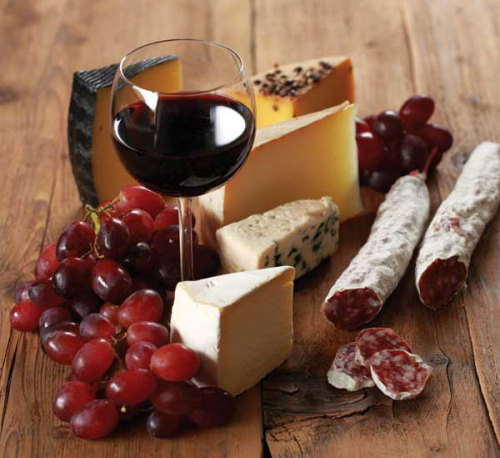
Wine consumption is very much a part of the Mediterranean diet. Red wine, in particular, is better for you than white varieties as it’s rich in resveratrol, an important antioxidant that’s been shown to reduce blood clots, arterial plaque formation and the risk of stroke.


Eat fresh fruit daily

Citrus fruits such as oranges and lemons are known to boost immunity and assist in the absorption of iron from green, leafy vegetables. Similarly, there’s evidence that a diet that’s high in blue and purple-colour fruit such as blueberries reduces the risk of heart disease thanks to the powerhouse antioxidant anthocyanin.


Sweets are OK

Itsiopoulos says a sweet treat is fine now and then, as part of a balanced diet. “The Mediterranean diet isn’t about [unrealistic or punitive] restrictions,” she says. A study by researchers at Swinburne University of Technology in Victoria recently revealed that the polyphenols in dark chocolate increase feelings of calm and contentment. 


Add veg and herbs to each meal

Always serve a mixture of vegetables and herbs with each meal in order to benefit from antioxidants such as polyphenols and carotenoids, commonly found in most green, leafy veg. Similarly, lycopene, which is found in tomatoes, is effective in fighting free-radical damage.


Use olive oil

Using monounsaturated fat such as olive oil in your cooking helps lower unhealthy cholesterol levels and reduces the risk of heart disease. Olive oil is the first choice in the Mediterranean way of eating but can be substituted with other monounsaturated oils such as canola.


Source

Thursday, 3 September 2015

Go with your gut: the secret to weight loss lies in our stomach's bacteria

It’s the variety of food you eat that dictates your health, writes Rosie King.

Go with your gut: the secret to weight loss lies in our stomach's bacteria

One decade, we’re told to cut fat from our diets to lose weight. The next, we’re told to count calories. Then it’s all about ditching carbs. But could it be that we’ve had it wrong all along and the secret is actually already within us? More specifically, within our gut?
Tim Spector, a professor of genetic epidemiology and author of The Diet Myth [Hachette], says yes. “The more diverse your gut microbes, the more likely you are to be healthy and lean, and the more sparse your microbes, the more likely you are to be overweight,” Spector says. “This is knowledge that didn’t exist five years ago.” 

Welcome to your microbiome

Each person has up to 2kg of microbes in their stomach and together these microbes make up their unique gut microbiome. The microbes, which include trillions of bacteria, fungi and viruses, help the body produce vitamins and amino acids. They also play an important role in the digestive and immune systems, blood pressure and mental health.
Scientists first discovered that an unbalanced microbiome could lead to obesity in animals. In 2006, researchers from Washington University in the US looked at genetically engineered obese mice and identified that a class of gut microbes called firmicutes were consistently over-represented. These particular microbes were found to be too efficient at extracting energy from food and breaking down fibre, and also increased the absorption of fat. 
To put their findings to the test, the team plucked firmicutes from the obese mice and tube-fed them to bacteria-free mice. The latter put on a significant amount of weight over two weeks, even though they ate less. Now there are numerous studies showing that not only are the microbiomes of obese humans lacking in diversity, they are swarming with firmicutes.
A recent study has taken it a step further with “faecal transfers” from humans to mice, which are both gross and fascinating. The study published in the journal Science in 2013 revealed that healthy mice could be made obese by transferring faecal matter, teeming with gut microbes, from obese humans. The research team also found that transferring faecal matter from lean humans prevented mice from putting on weight.
There’s only one report of a human-to-human faecal transfer that resulted in weight gain. A 32-year-old woman in the UK underwent a poo transplant in 2011 after recurrent clostridium difficile, an infection that causes inflammation of the colon. The donor microbes came from her 16-year-old daughter, who was overweight, and the mother weighed 62kg with a BMI of 26 at the time of the transfer. Just over a year later, the woman weighed 76kg and had a BMI of 33. She’s still obese today, despite an exercise program and supervised diet.

What are we doing wrong?

A seemingly timeless weight-loss mantra is that in order to shed unwanted kilograms we need to burn more calories than we eat. Spector, however, argues that this approach fails to take into account one crucial fact: “Each person’s microbiome is unique, which means each of us responds differently to carbohydrates and fats and sugar.” It isn’t just calorie-controlled diets that he claims are bogus. He says that any diet plan that excludes whole food groups damages your microbiome and increases your likelihood of putting on weight.
“Exclusion diets may help you lose weight for the first few weeks because you’re eating less and selecting carefully what you do eat,” he says. “But long-term, they’ll decimate your microbes by reducing their diversity and can end up making you fatter.”
Naturopath Savannah Daisley has been helping Sydneysiders lose weight by targeting their gut flora for 15 years, and she agrees with Spector. “An imbalance of gut flora stops our digestive system from working properly so our use of calories isn’t as efficient and our energy levels drop,” Daisley says. “The increased fatigue means the fat-storing stress hormone cortisol kicks in, leading to heightened blood sugar and insulin levels. Basically, weight gain is inevitable when there’s an imbalance of good and bad bacteria in our guts.”

Your gut craves variety

Spector wants us to forget thinking of our body as a temple and instead think of it as a microbe garden that requires a diverse diet of fibre-rich nutritious foods. “A garden with rich soil, plenty of species and change is always going to be fuller and healthier than a scant garden with weeds, few plants and packed with toxins,” he says.
Our much-slimmer ancestors 15,000 years ago enjoyed about 150 ingredients each week and no doubt had flourishing microbe gardens. Most people today have just 20 different foods in their weekly diet. Most worryingly, many are artificially refined and wreak havoc on the biodiversity of our microbiome.

What can we do?

For anyone looking to lose weight and restore gut health, Daisley says ditching sugar and alcohol is non-negotiable. “I’d usually put them on a strict 14-day detox to overhaul their microbiota, which can see them lose up to 5kg. For people who don’t want something so drastic, I’d encourage them to cut out sugar and alcohol for two weeks – they’re toxins that stop good bacteria from growing and feed bad bacteria, so getting rid of them will do a world of good for your gut, weight and energy levels,” she says.
Although fruit contains fructose, which is a type of sugar, it isn’t the enemy. Daisley says berries, in particular, are great for combating cravings, while Spector says whole fruit with the pulp is good for you and your microbes.
“For high-fibre fruits, the fibre and polyphenols can balance out the effects of the fructose,” he says. “Strawberries are good as they contain a relatively high amount of fibre and more than 95 polyphenols, which the microbes feed off and which act as antioxidants.”
Spector agrees that while everyone can benefit from better gut health, overweight people may need a kick-start, such as a detox or intermittent fast, as their microbiome may be over-run by toxic bacteria. However, he generally takes a more balanced approach.
“No-one can go wrong if they enjoy a diet with as much diversity as possible and cut out processed foods,” he says. While he’s not a fan of diets, he adds: “The Mediterranean diet meets most of the criteria for a balanced, gut-friendly diet. It has variety – olive oil, yoghurt, dairy, nuts, seeds, veg, fruit, grains, legumes, fish and meat occasionally.”
But he says the most important shift we need to make is how we define a good diet: “We need to change our concept from thinking that fat is bad and sugar is bad and carbohydrates are bad – diversity is key.”

The 5 golden food rules

1. Eat as many different wholefoods as possible. The average person only has 20 different foods a week, which is way too low, considering our ancient ancestors would have eaten about 150, Spector says. 
2. Eat fermented foods daily. Foods such as kimchi, kefir, sauerkraut and yoghurt have large amounts of good bacteria that our gut craves.  
3. Cut sugar and alcohol to reset your gut. Daisley says these are the two biggest culprits in preventing the growth of good bacteria in your gut. Avoiding these for two weeks will make a huge difference to your gut’s performance, and desired weight loss.
4. Eat fibre-rich food after a junk meal. Plenty of vegetables, fruit and wholegrains will help replenish the good bacteria that the junk food has wiped out. 
5. Spector says the Mediterranean diet is the best option for gut health – it  meets the most criteria for a gut-friendly diet as it has the most variety, and includes a lot of olive oil, yoghurt, onions and red wine – all top gut foods. 

Top gut friendly foods

These foods act like fertilisers for our microbe gardens by helping the growth of good bacteria and increasing the biodiversity of our microbiome, Spector says. Try to add fermented foods to your diet daily and make sure you incorporate the other foods on at least a weekly basis.
• Fermented foods, including sauerkraut, kimchi, kefir and yoghurt
• Leeks
• Artichokes
• Chicory root
• Onion
• Garlic
• Capsicum
• Extra virgin olive oil
• Coffee
• Green tea
• Dark chocolate
• Natural cheese
• Red wine

Comment below what you thought. I do believe that stomach bacteria has a HUGE impact on health and ultimately weight loss. What do you think? Do you agree/disagree? Please let me know, I love hearing what you lovelies have to say! 


Source
http://www.bodyandsoul.com.au/nutrition/nutrition+tips/go+with+your+gut+the+secret+to+weight+loss+lies+in+our+stomachs+bacteria,38401