Showing posts with label swimming. Show all posts

Saturday, 24 October 2015

Swimming to lose weight

Swimming helps lose weight, burn calories and puts little stress on your body. Swimming works all the major muscles, and will tone you up and slim you down!
You can train to swim at a competitive level or you can enjoy a few healthy lengths at your local pool; you decide how much you want to achieve in swimming and set your own pace.
Whatever level you choose, swimming is good for you and it's never too late to learn or improve your swimming skills. A relaxing form of exercise means weight lost by swimming is fun too!
Many public pools now offer swimming combined with aerobics , (aqua-aerobics), to help lose weight. This is high impact aerobics without the high impact. Aqua-aerobics (or swim-nastics) will help to shed those pounds, and tone you!


What are the benefits of swimming to aid weight loss?

Swimming burns calories, so helps you lose weight and swimming for weight loss has been regularly praised for its cardiovascular health benefits, especially for older people. 
As swimming uses so many muscles in your body, your heart and lungs must work hard to supply them all with oxygen. This means that swimming will give your cardiovascular system an excellent workout.
Any exercise that makes you breathe a little heavier is good because it means your body is working hard!  As your heart and lungs get stronger you will be able to go for longer before you get tired, your resting heart rate will decrease and blood pressure will lower.
Regular swimming when losing weight will improve your health and may reduce the risk of chronic illnesses, such as heart disease, type 2 diabetes and stroke. The NHS choices website offers more information.


Can swimming improve your figure and muscle tone?

Swimming is known to be one of the best all round aerobic exercises because it works all the major muscle groups so targets every area of your body.
There are 4 main strokes to choose from:
  • Freestyle
  • Breaststroke
  • Backstroke
  • Butterfly
and you can tailor your swimming sessions to exercise specific areas of your body.


Will swimming improve strength?

Swimming provides constant resistance exercise as you are battling against the water to propel your body forward. This makes it excellent for increasing strength especially in the upper body.
As your swimming progresses you will build muscle which in turn burns fat. So calories will be burned as you swim, plus you will burn more calories as your swimming improves. 
You will also burn an increased amount of calories even after the exercise is finished as your body uses energy to recover and rebuild muscle tissue.


Will swimming improve flexibility?

Due to the nature of the movement when performing swimming strokes it can aid in improving the flexibility of the muscles and joints.


What are the other benefits of swimming?

  • Top athletes use swimming to aid recovery from injury as it is low impact but still builds excellent muscular and cardiovascular endurance. So if you have had an accident and want to get back into exercising, taking up swimming is an ideal way to do that.

  • It’s fun. You don’t have to just do length after length in the pool. Things like treading water burns calories too. So if you have kids take them down to the pool and enjoy it. It will be excellent for their health too.
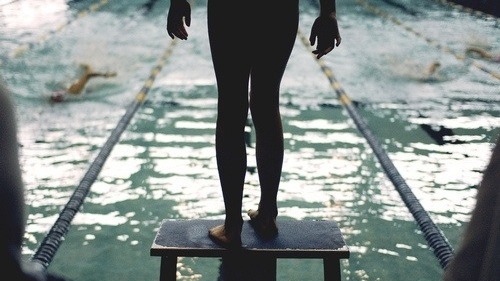
  • Swimming can be relaxing and give you a little ‘me’ time away from it all. Burning calories might be the last thing on your mind but what an excellent bonus.

  • You could also join a water aerobics class if lane swimming isn’t your thing. These are held in most pools so check in and ask at your local centre to find out more. Or alternatively maybe you fancy giving water polo a try.


How many Calories will Swimming Burn?

Depending on your weight and exertion level you'll burn between 90-550 extra calories in a half-hour session.


Getting Started with Swimming

If you are unsure of how to start, then our handy tips will get you on your way…
  • Check out your local pool; most public pools have separate times for different groups - adults only / men only / women only / mother and toddlers
  • Try to set aside time at least once a week when you will go swimming.
  • Remember to warm up and stretch before you swim off as the large range of rotation around the joints from swimming means you need your muscles to be long and flexible.
  • Don’t forget your legs, which are often overlooked when swimming.  Stretching them will reduce drag in the water by improving your form and also help prevent cramp.

  • Start off by swimming a few lengths of the pool and build up the distance each week.
  • Change your strokes to add interest and exert yourself in different ways.
  • To begin with have breaks every few lengths to get your breath back. Each session decrease the duration of this break until you can cut them out entirely and swim nonstop.
  • Look out at your local pool for news of swimming clubs which normally cater for all age groups.


Swimming Kit Bag

  • Costume/Trunks - There are hundreds available, you decide which you feel most comfortable in.
  • Goggles - Improve vision and prevent chlorine irritating the eyes.
  • Ear plugs- useful if you don’t like to get water in your ears, or if you're susceptible to ear infections.
  • Water Bottle – Remember you are exercising so need to keep your body hydrated.  Keep this at the end of your lane so that you can drink in your breaks.


Safety when Swimming

Even in a pool with lifeguards, there are dangers and more so if you a learner or not a strong swimmer:
  • Do not get out of your depth.
  • Have respect for other swimmers and give them enough space to go by if they are faster.
  • Take extra care when swimming in the sea or lakes / open water.


And Finally, if you can’t swim…

Do not worry as many pools offer adult-only beginner lessons so have a look at your local leisure centre to see what is available; pensioner’s  and children’s rates  will often be heavily discounted.


Swimming for Weight Loss?

See how swimming and other exercise can help you to lose weight with Weight Loss Resources' tools. You can keep online exercise and food diaries, see how many calories you burn and how many you consume.

Comment below what you think :) Love hearing your opinions and thoughts x


Source
http://www.weightlossresources.co.uk/logout/sport/swimming.htm

Saturday, 29 August 2015

High-Intensity Workouts to Burn Calories

Don't plan on reading a magazine while you do these workouts. You're entering a no-slacking zone.

Looking to blast calories? Get ready -- it's going to be a very sweaty session.
"It’s got to be high intensity, whatever the workout is, if you’re going to torch calories -- not just burn them,” says Bret Emery, a nutritional consultant and fitness coach at Emery Fit in Alpharetta, GA. “Heart rate is key. That’s the speedometer of the body. If we speed the body up, it will burn more calories, just as a car will burn more fuel if it speeds up.”
Also, you need to mix up your workouts so they stay challenging. That will help keep your heart rate up and force your body to burn more calories, Emery says.
The following workouts will zap calories, but they’ll also push your body way past your comfort zone. So check with your doctor before taking on the challenge. Don't just tell your doctor you want to work out -- let him or her know exactly what you're planning to do. That way, your doctor can make sure you're ready.
Speeding up the body burns more calories, "just as a car will burn more fuel if it speeds up." -- Bret Emery


Interval Workout

Interval training is all about challenge and recovery -- over and over -- for a cardio blast.
This particular workout -- which comes from Michael Banks, personal trainer and owner of Body by Banks in Salt Lake City -- uses a treadmill. You can add dumbbells for an extra challenge.
1. Warm Up: On the treadmill, with the incline set at a challenging angle, power walk at a speed of 3-3.5 for 7 minutes. Keep your elbows up above your heart. Stop, get off the treadmill, and stretch.
2. Sprint: Drop the incline to 0, increase the treadmill speed, and sprint hard for 30 seconds. Aim for 90% of your maximum heart rate. To recover, bring your speed down to 3 and walk for one minute.
3. Squats: Get off the treadmill and squat, with your bottom out to the rear and your legs slightly apart. Then jump from the squatting position into the air, landing in the same squat position as before. Do this for one set of 15 or 20, working your quadriceps. If you’re already in good shape, hold dumbbells by your sides.


4. Overhead Presses: Do 15 or 20 overhead presses with the weights, pushing them straight up and directly over your shoulders.
5. Sprint: Get back on the treadmill and sprint for 30 seconds (no incline). The goal is to be at 80% of your maximum heart rate. To recover, decrease your speed to 3.0 and walk for one minute.
6. Tricep Extensions: Using dumbbells, do one set of 15 or 20 overhead tricep extensions. Your elbows should point toward the ceiling, with the weights behind your head. Lift the weights directly above your head and back down again.
7. Pushups: Do one set of 15 pushups, with your elbows at a 90-degree angle from the body. Modification: Do the pushups with your knees on the ground, but do 25 instead of 15.
8. Sprint: Back to the treadmill. Sprint for 1 minute, aiming for 70% of your maximum heart rate. To recover, jog for 90 seconds.
9. Jumping Jacks: Do one set of 15 or 20 jumping jacks. If you're strong enough, add two 10- or 15-pound dumbbells. Lift up the weights when you jump out, in an overhead press position, pulling them back down to shoulder height as your legs go back together.
10. Finale: Incline your treadmill to an angle that really challenges you -- but don't hang onto the treadmill's rails. Walk at a 2.0-3.5 speed for 30 seconds, aiming for 60% of your maximum heart rate. To recover, bring the treadmill down to a 1.0 incline and drop your speed to 1.9 or 2.0 for a 1-minute walk. Finish by stretching.

Quick CrossFit Series

CrossFit workouts are about getting maximum effort in minimum time.
The following exercises come from Doug Katona, co-founder and owner of CrossFit Endurance in Newport Beach, CA. They can be done on their own, all together, or in any combination.
30-90s
  1. Warm up for 10-12 minutes, finishing the warm-up at 75% of your maximum heart rate or at 7.5 on the perceived exertion scale, in which 0 is no effort and 10 is your max.
  2. Choose any type of cardio. Do it at your maximum effort for 30 seconds.
  3. Stop and recover for 2 minutes, or for 90 seconds if you're already in good condition. Do not shortchange the rest period.
  4. Do this up to three times.
As fast as you can, do 10 squats, 10 pushups, and 10 full sit-ups. Then do nine reps of each. Then eight, seven, six, and so forth, until you reach one rep of each exercise. Rest as little as possible between sets. Record your time, and try to improve each week.
100 Burpees
If you only have a little time, try to do 100 burpees. If that's too much, start with 25, then move to 50, then to 75, until you can do 100.
Begin in a squat position with your hands on the floor, in front.
  • Kick back your feet to a pushup position.
  • Return your feet to the squat position.
  • Jump from the squat position into the air, straight above you.
  • Repeat, moving as fast as possible.

Rowing or Indoor Cycling

You may be sitting down, but you'll be sweating when you try this workout from Scott Nohejl, head coach and program director of The Chatham Area Rowing Association in Savannah, GA.
  1. Row or bike for a minute.
  2. Sprawl with pushup. Run in place, with your feet just coming off the ground, for a count of five. Lower yourself onto your hands, and jump your legs backward to a pushup position. Do one pushup, then bring the legs back, tucking them in. Stand and repeat for 1 minute.
  3. Squats. With hands on top of your head, squat so your knees are at 90 degrees -- make sure they do not go past your toes -- and then stand up. Repeat for 1 minute.
  4. Side jumps. With feet together, toes pointed forward, jump from side to side for 1 minute.
  5. Rest for 5 minutes.
  6. Row or bike for 1 minute.
  7. Scissor jumps. With one leg in front and the other in back, jump and "scissor" your legs before landing. Do this for 1 minute.
  8. Sumo jumps. Squat down, then jump, bringing your feet slightly off the ground. Do this for 1 minute.
  9. Jumping jacks. Do these for 1 minute.
Repeat the full set four times, nonstop, for a 16-minute workout. Cool down, and then stretch.

Swimming


Craig Keller, Ealing Masters swimming coach in London, offers several workouts for swimmers, including two that will work well for people with injuries.
If you like distance, begin with two 500-yard (or meter) freestyle swims on intervals of 6.5 minutes. The quicker you finish, the more time you’ll have to rest. Then swim at an easy pace for 2 minutes.
Follow that with two 400-yard freestyle swims on a 5.5-minute interval, and another easy, 2-minute swim. Finish with two 300-yard swims on 4.5-minute intervals.
Sprinters may prefer this workout:
  1. Do 20 freestyle lengths (25 yards) with 5 seconds of rest in between lengths. Recover with a 100-yard swim of your choice, at an easy pace.
  2. Do 16 25-yard swims of your choice with 10 seconds of rest, followed by another slow-paced 100-yard swim of your choice.
  3. Next, do 12 25-yard freestyle lengths with 15 seconds of rest between each. Recover with a 100-yard swim.
  4. End with eight 25-yard freestyle lengths, resting for 20 seconds between lengths.
Got a leg or hip injury? Just grab a buoy and do a “pull swim” instead.
This workout consists of three rounds of four 200-yard freestyle swims. For the first, put the buoy between your ankles and pull the four 200-yard swims on 3-minute intervals. For the second round, remove the buoy and swim, dragging your legs. Do these 200-yard swims on 2.75-minute intervals. For the final round, place the buoy between your legs and pull on 2.5-minute intervals.
If your arms or shoulders are hurting -- or you simply want to work your legs -- use a kickboard and do two sets of four 100-yard swims, with 20 seconds of rest between each.
For the first 100 yards, kick hard for the first 25 yards, then go easy for the remaining 75 yards. For the second 100 yards, kick hard for 50 and easy for 50. Kick hard for 75 yards, then easy for 25 on the third one. And for the last one, go all out. Repeat the set.

Source
http://www.webmd.com/fitness-exercise/high-intensity-workouts-to-burn-calories
SOURCES:
Bret Emery, PsyD, behavioral medicine; owner, Emery Fit, Alpharetta, GA.
Doug Katona, personal trainer, founder/co-owner, CrossFit Endurance, Newport Beach, CA.
Michael Banks, personal trainer; founder/CEO, Body By Banks, Salt Lake City.
Scott Nohejl, head coach, program director, Chatham Area Rowing Association, Savannah, GA.
Craig Keller, swimming coach, Ealing Masters, Ealing Swimming Club, London; former chairman, U.S. Masters Swimming Coaches Committee.
Mayo Clinic: "Exercise for Weight Loss: Calories Burned in 1 Hour."