Showing posts with label dietary fibre. Show all posts

Friday, 20 November 2015

How much fibre should we eat in a day?

The importance of fibre in a balanced diet

Fibre is a very important part of the diet and one that many people do not understand. Fibre is important for the bowels, but can also be beneficial for heart health and has the added bonus of filling you up.  This means you are likely to eat less, which may help if you are trying to lose weight.
It is important when increasing your fibre intake that you do so gradually. Sudden increases in fibre consumption can lead to bloating, wind and stomach cramps.  It is also important to drink plenty of water when you raise your fibre intake, as this prevents constipation.

Types of fibre

There are two main types of fibre in foods, soluble and insoluble. Soluble fibre is digested in the body, whilst insoluble fibre is not thus helping other foods to move through the intestines more efficiently.  It is important to include both types of fibre in your diet, so try to choose a wide variety of fibre containing foods daily.

Health benefits of soluble fibre

Soluble fibre is thought to contribute to reducing the amount of cholesterol in the blood. Soluble fibre is also thought to slow down the absorption of sugars into the blood. This is important for people with diabetes, but also for weight management.  When sugar is released more slowly into the blood, we stay fuller for longer and prevent big peaks and dips in blood sugar levels that can cause hunger cravings.  Foods which are high in soluble fibre are known as low GI (glycemic index).   Good sources of this type of fibre include beans, oats, nuts and seeds, most fruits, dried beans and lentils.
Health benefits of insoluble fibre

This type of fibre is essential for healthy bowels. It helps prevent constipation, keep bowel movements regular and minimizes other digestive problems. Good sources include wholemeal bread, wholegrain rice and cereals, barley, couscous, wheat bran, seeds, fruit and vegetables.

How much fibre do we need?

The recommended daily intake of fibre in the US is 14 grams per 1000 calories consumed.  For example if your calorie requirement is 1500 calories per day, you should be aiming for about 21grams of fibre.  For women this usually equates to about 21 to 25 grams of fibre per day, and for men about 35 to 38 grams. Try to include a range of high fibre foods, so that you are getting both types of fibre daily.

Fibre foods

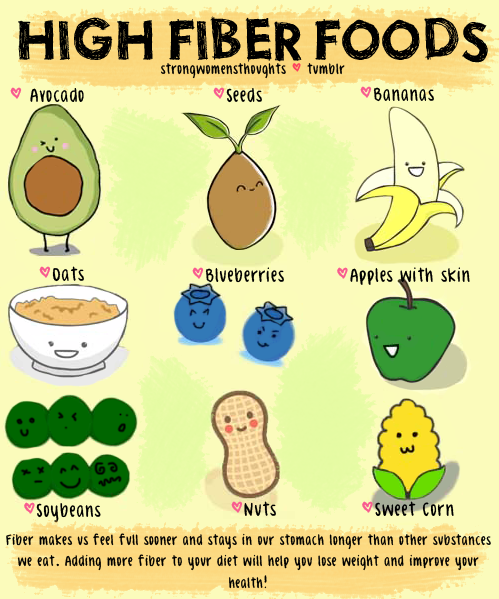
To give an idea of what types of foods to include to reach your fibre requirements, here are the fibre contents of some common foods:

FoodServe SizeFibre
content (g)
Banana1 medium3.1
Apple (with skin)1 medium4.4
Raspberries1 cup8
Wholewheat spaghetti1 cup (cooked)6.2
Bran flakes¾ cup6
Oatmeal1 cup (cooked)4
Popcorn3 cups3.5
Brown rice1 cup (cooked)3.5
Wholewheat/multigrain bread1 slice1.9
Split peas1 cup (cooked)16.3
Lentils1 cup (cooked)15.6
Almonds1 ounce3.5
Artichoke1 (cooked)10.3
Peas1 cup (cooked)8.8
Potato (with skin)1 medium2.9
Carrot (raw)1 medium1.7
Broccoli1 cup (cooked)5.1

How to increase your fibre intake

  • Choose wholegrain varieties of foods. Wholegrains may be listed under of a variety of names including, buckwheat, bulgur, millet, wild rice, quinoa, triticale, whole wheat or rye, so read labels to look for sources of these ingredients.  Many products will use high fibre or wholegrain as a selling point, so it’s often easy to find these products.  Try to make at least half your carbohydrates from wholegrain sources.
  • Choose fresh fruit over fruit juice, as this has more fibre and less calories.  Leave the skin on fruit where possible as this contains a lot of fibre.
  • Include at least two vegetables at lunch and dinner.
  • Eat vegetables as a snack.  Dip carrots, celery or cucumbers in a hummus dip for a fibre filled quick bite.
  • Cook with legumes more often. Add cooked beans or lentils to meat dishes such as lasagnes or pies to increase the fibre and lower the fat and calories. Cooked chickpeas also make a great addition to a salad or made into a dip.
  • Choose wholegrain, high fibre breakfast cereal options.  Add fruit for even more fibre.
  • Look for fibre enriched products. If you don’t like wholegrain bread, it is now possible to buy white bread that is enriched with added fibre. You won’t get all the nutrients in the whole grains, but the fibre will still be high. This is a good choice for fussy children too.
  • Add seeds, grains and nuts to home cooking. Throw some walnuts and bran into banana muffins or some sesame seeds into a stir-fry to bump up the fibre.
  • Aim for five serves of fruit and vegetables per day.
  • Cook potatoes in their skins as most of the fibre is in this part.
  • When eating out, choose vegetable or legume based dishes. Cuisines such as Mexican, Indian and Middle Eastern often have great choices of these types of foods.


Source

Saturday, 12 September 2015

Fiber Can Help You Lose Weight, But Only A Specific Type

Fiber is a well known nutrient, but not well understood.
Put simply, fiber refers to carbohydrates that cannot be digested by humans.
They are classified as either soluble or insoluble, depending on whether they dissolve in liquids.
Insoluble fibers function mostly as “bulking” agents and are not very interesting.
However… soluble fiber can have powerful effects on health and metabolism (1).
Several studies show that soluble fiber can help you lose fat… but this fiber must have certain properties.
Let me explain…

Fiber Feeds The Friendly Bacteria in The Gut

It is estimated that around 100 trillion bacteria live in the human gut, primarily in the large intestine (2).
These bacteria are known as the gut flora.
Having bacteria in the gut may sound undesirable, but this is actually a good thing.
Different types (species) of bacteria play important roles in various aspects of health, including weight management, blood sugar control, immunity and even brain function (3, 4, 5, 6, 7).
Just like other organisms, bacteria need to eat well to stay healthy.
This is where fiber (mostly soluble) steps in… it passes through the digestive system mostly unchanged, eventually reaching the friendly bacteria in the intestine who end up digesting the fiber and turning it into usable energy.
Nourishing the friendly bacteria in the intestine is known as a prebiotic effect, and is believed to be very beneficial for health and body weight (8, 9).
Another type of fiber called resistant starch behaves in a similar manner.
Bottom Line: Fiber does not get digested and tends to reach the large intestine relatively unchanged. There, certain soluble fibers can help feed the friendly bacteria that are absolutely essential for good health.

The Good Bacteria Help Fight Inflammation, a Key Driver of Obesity and Disease


Gut bacteria have long been known to have an effect on inflammatory pathways (10).
They produce nutrients for the body, including short-chain fatty acids that feed the cells in the colon.
This leads to reduced gut inflammation and improvements in related inflammatory disorders (11, 12, 13).
Just to clarify, acute (short-term) inflammation is beneficial as it helps the body fight foreign invaders and repair damaged cells.
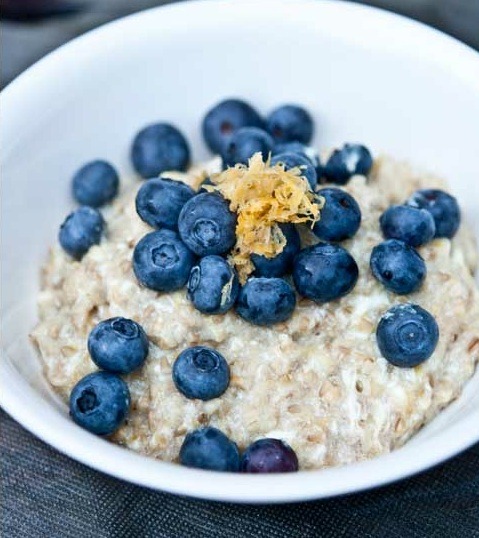
High fibre bran cereal with ground flaxseed, sliced banana, red grapes, strawberries, blueberries, blackberries, sunflower seeds, pumpkin seeds and almond milk.
However, chronic (long-term) inflammation becomes a major problem when it is inappropriately deployed against the body’s own tissues.
We now know that chronic, low-level inflammation plays a major role in almost everychronic Western disease, including heart disease, Alzheimer’s and metabolic syndrome, to name a few (14, 15, 16).
There is also mounting evidence that inflammation is a strong driver of weight gain and obesity, possibly mediated via its effects on the hormone leptin (17, 18, 10).
Several observational studies have shown that a high fiber intake is linked to lower levels of inflammatory markers in the bloodstream (19, 20).
Bottom Line: Inflammation is a strong driver of disease, including obesity. Fiber consumption has been linked to reduced inflammation..

Viscous Fiber May Reduce Your Appetite, Helping You Eat Less Without Trying

While I don’t believe that counting calories is necessary, it is a simple fact that we need to be in calorie deficit to lose weight.
That is, more calories (energy) need to be leaving the body than entering it.
Anything that reduces our appetite can make us take in fewer calories without having to think about it.
Fiber is often believed to have this effect… that is, making us feel more satiated so that we eat less.
However, according to the evidence, only a specific type of fiber does this.
A recent review of 44 studies found that while 39% of fiber treatments increased satiety, only 22% actually reduced food intake (21).
If we break it down further, it seems that the more viscous a fiber is, the better it is at reducing appetite and food intake.
Put simply, the viscosity of a substance refers to its resistance to stress – as in, the “thickness” of a liquid. For example, honey is much more viscous than water.
Viscous soluble fibers such as pectins, β-glucans, psyllium, glucomannan and guar gum all thicken in water, forming a gel-like substance that “sits” in the gut (22).
This gel slows down the emptying of the stomach and increases the time it takes to digest and absorb nutrients. The end result is a prolonged feeling of fullness and a significantly reduced appetite (23, 24).
There is some evidence that the weight loss effects of fiber target the belly fatspecifically, which is the harmful fat in the abdominal cavity that is strongly associated with metabolic disease (25).
Bottom Line: Fibers with a high viscosity have been shown to increase satiety, reduce appetite and cause automatic weight loss. Fibers with low viscosity appear to have no influence.

Are Fiber Supplements Effective for Weight Loss?


Fiber supplements are typically made by isolating the fiber from plants.
While these isolated fibers may have some health benefits, the evidence for weight control is mixed and pretty unconvincing.
A very large review study found that psyllium and guar gum (both soluble, viscous fibers) are ineffective as weight loss supplements (26).
One notable exception is glucomannan, a fiber extracted from the konjac root.
This is one of the most viscous dietary fibers known, and has been shown to cause modest weight loss when used as a supplement (27, 28, 29).
But in the real world, it’s the synergy of all the nutrients in foods that provides the most benefits, consuming isolated nutrients will never have the same effects.
For this reason, getting your fiber from whole plant foods is best.
Bottom Line: Fiber supplements are mostly ineffective for weight loss, with the exception of a powerful type of fiber called glucomannan. Getting your fiber from whole plant foods is the best and healthiest approach.

Rich Sources of Viscous Fiber


Viscous fibers are found exclusively in plant foods.
Rich sources include beans (legumes), flax seeds, asparagus, brussels sprouts and oats, to name a few.
If you’re planning to switch to a high-fiber diet, remember to do it gradually to give your body time to adjust.
Abdominal discomfort, cramps and even diarrhea are common side effects if you ramp up your fiber intake too quickly.

Take Home Message

Adding more foods rich in fiber (especially viscous fiber) can be an effective way to lose weight.
But, same as with any other weight loss method, it won’t lead to long term results unless it comes with a lasting lifestyle change.
Also, let’s not forget that health is about way more than just weight. Eating plenty of fiber from real foods can have numerous other health benefits.


Source
http://authoritynutrition.com/fiber-can-help-you-lose-weight/

High Fibre Diets under the Spotlight

With the recent popularity of low-carb plans like Atkins and the South Beach diet, it’s hard to remember a time when filling up on fibre was trendy. But back in the early 80’s, wholemeal bread, bran cereals and jacket spuds were almost as popular as Spandau Ballet, Rubik’s cubes and puffball skirts. Following huge amounts of scientific research, health professionals suddenly revealed that if you wanted to stay healthy and lose weight, you should eat more dietary fibre.
Enter Audrey Eyton’s world-famous F-plan diet! In May 1982, copies of The F-Plan Diet went on sale, and even today it remains popular. Ultimately, it promoted a high-fibre, low-fat, calorie-controlled eating plan – in fact, pretty much what nutrition experts still recommend today if you want to lose weight.

What is dietary fibre?

Previously called ‘roughage’, dietary fibre is the term that describes the carbohydrates that human’s can’t digest. Dietary fibre is found in plant foods such as cereals, pulses, fruits and vegetables and occurs mainly in the plant cell wall where it provides structural support for the plant.

What’s the link with weight loss?

Most high-fibre plans for weight loss still come with a reduction in calories. The F-Plan diet, for example, recommended a calorie restriction of between 850-1,500 calories a day – and of course, it’s this calorie restriction that helps you lose weight. However, there are many reasons why including more fibre in your diet can help boost weight loss and make slimming less painful.
To start with, unlike other carbohydrates, most dietary fibre doesn’t provide anycalories. This means fibre-rich foods are often lower in energy than foods containing no fibre or only small amounts, making them ideal for people who are trying to lose weight.
Secondly, high fibre foods generally take longer to chew. As well as helping you to feel more satisfied when you eat, this automatically slows down the speed at which you eat, giving your brain time to register feelings of fullness so that you’re less like to overeat. But that’s not the only way fibre-rich foods help to control appetite. Fibre acts like a sponge and absorbs and holds on to water as its chewed in the mouth and passes into the stomach. This means fibre-rich foods swell up in your stomach and this can help to fill you up. Better still, fibre stays in the stomach for longer as it’s harder to digest and this helps to keep you feeling fuller for longer, so you’re less likely to want to snack in between meals.

So how much fibre should I eat a day to lose weight and how much can I expect to lose?

Regardless of whether you want to lose weight or maintain your weight, the Department of Health recommends adults eat an average of 18g of fibre a day with a range of 12-24g. If you want to lose weight, you’ll still need to restrict your calorie intake as recommended by Weight Loss Resources and the amount you can expect to lose will depend entirely on the degree of this restriction. Weight Loss Resources recommends you aim to lose no more than 2lb a week, although you might lose slightly more in the first few weeks when your body loses water as well as fat. This follows the guidelines recommended by nutrition experts.

Has a high-fibre diet got any other health benefits?

Definitely. Having spent a long time in the stomach, fibre moves through the large intestine relatively quickly and health experts believe this helps to keep the digestive system healthy, preventing bowel problems such as constipation, diverticular disease and haemorrhoids (piles), as well as reducing the risk of bowel cancer. Interestingly, all these conditions tend to be uncommon in undeveloped countries where intakes of fibre are high, compared to Western societies where these medical problems are widespread and fibre intakes are low.
Furthermore, most fibre-rich foods are also low in fat and packed with vitamins and minerals – and when it comes to preventing disease, it seems that it’s this whole package of nutrients that’s important. For example, wholegrains like wheat, barley, oats, rye and rice contain not just fibre, but a number of nutrients that may reduce the risk of heart disease, stroke, certain cancers and diabetes by as much as 30 per cent. These include antioxidant nutrients vitamin E, zinc and selenium and a range of plant compounds called phytochemicals.

I’d heard that a high-fibre intake was good for my heart. What’s the link?

Several large studies in America, Finland and Norway have found that people who eat relatively large amounts of wholegrain cereals have significantly lower rates of heart disease and stroke. It’s thought that a particular type of fibre called soluble fibre may be partly responsible as it helps to lower blood cholesterol levels.

Tell me more about soluble fibre?

Dietary fibre can be divided into two main types – soluble and insoluble fibre. Soluble fibre is thought to bind with cholesterol and prevent it from being reabsorbed into the bloodstream. This lowers the amount of cholesterol in the blood, therefore reducing the risk of heart disease. But that’s not all. Soluble fibre also forms a gel in the intestine, which is thought to slow down the digestion and absorption of carbohydrates, especially glucose. This means it can help to keep blood sugar levels steady, preventing feelings of hunger that leave you reaching for the biscuit tin. Foods rich in soluble fibre include fruits,vegetables, oats, barley, and pulses such as beans, lentils and peas.
In contrast, insoluble fibre helps to keep the digestive system in good working order by increasing the bulk and softness of the stools, which in turn assists the smooth passage of food through the body. It’s this type of fibre that helps to prevent bowel complaints like constipation and cancer. Foods rich in insoluble fibre include wholemeal flour and bread, wholegrain breakfast cereals, bran, brown rice, wholemeal pasta, grains and some fruits and vegetables.
Eating a range of fibre-rich foods, rather than just one or two sources, is the best way to ensure you get a mixture of both soluble and insoluble fibre – and make the most of the health benefits offered by both.

So is a high-fibre diet suitable for people with diabetes?

Yes, health experts recommend that people with diabetes have a good intake of fibre in the same way as the rest of the population. But it’s always wise to speak to your doctor or dietitian before making any changes to your diet, especially if you are on medication such as tablets or insulin.

What about high-fibre intakes for children?

Although older children and teenagers will benefit from eating plenty of fibre-rich foods, very young children shouldn’t be given large amounts. This is because they have small tummies and generally consume much smaller quantities of food than older children and adults. Because fibre-rich foods tend to be filling but reasonably low in energy, young children may not be able to satisfy their energy requirements and this may mean they don’t grow as well as they should.

Is it still possible to get enough fibre if I follow a wheat-free diet?

Yes, providing you include plenty of fruit, veg, pulses and brown rice. See the chart here to see how you can make up 18g of fibre a day using non-wheat foods.

Is there a link with fibre and the glycaemic index of a food?

Yes. Generally speaking, the more fibre a food contains the lower its glycaemic index will be. This is because fibre acts as a physical barrier and slows down the absorption of carbohydrates into the blood.

Are there any cons to high fibre diets?

Wind is the main problem! Some fibre is fermented in the large intestine by bacteria that live there and this results in the production of gases like methane, hydrogen and carbon dioxide. The amount of gas produced depends on the type of fibre eaten and the gut bacteria present. But it explains why some slimmers find that excessive wind, discomfort and bloating occur if they suddenly boost their fibre intake to help them lose weight.
Fortunately, this is usually a short-lived problem as the large intestine and gut bacteria gradually adapt to an increased intake of fibre. That’s why it’s important to introduce fibre-rich foods into the diet gradually – and to persevere with them.
Constipation can also be a side effect of a high-fibre diet if fluid intake isn’t also increased. This is because fibre acts like a sponge and absorbs water. The easiest way to avoid this, is to boost fluid intakes together with fibre intakes.

Juliette’s verdict

Like most nutritionists and dietitians, I’m a big fan of high-fibre diets, not just because they can help to reduce the risk of health problems ranging from constipation and piles to heart disease and cancer, but also because they help to fill us up. This is crucial if we want to lose weight, but it’s also important in helping us to keep our weight steady, so that we avoid becoming overweight or obese in the future. I suggest people who worry that eating more fibre will give them wind, at least give it a go and continue to persevere. This really is a small price to pay for such major health and weight loss benefits and is only a temporary problem anyway. Once you see the pounds starting to drop off, you’ll automatically reach for all things brown and ditch the white stuff from your daily diet.


Source
http://www.weightlossresources.co.uk/diet/high_fibre.htm