Showing posts with label carbs. Show all posts

Monday, 13 June 2016

All about nutrient timing

Does when you eat really matter?

You’ve learned about what to eat to meet your health and body composition goals. But what about when you eat it? 

What is nutrient timing?

Nutrient timing is a planned alteration of macronutrient intake in order to promote health, workout performance, and get/stay lean.
Nutrient timing strategies are based on how the body handles different types of food at different times. One of the most important nutrient timing principles is that it’s best to eat most non-fruit and veggie carbohydrates during and after exercise.
Many factors influence energy balance, with the laws of thermodynamics being the most important determinants of weight gain and weight loss. Yes, this means how much we eat is priority #1 when changing body composition.
But the key here is “body composition.” If we’re losing equal amounts of fat and muscle when losing weight or gaining equal amounts of fat and muscle when gaining weight, we’re not taking advantage of nutrient timing.
Nutrient timing has several important goals:
  • Nutrient partitioning (where the nutrients go when you ingest them)
  • Improved health
  • Improved body composition
  • Improved athletic performance
  • Enhanced workout recovery

Why is nutrient timing so important?

When you exercise regularly, the body is primed for fat gain or fat loss just as it’s primed for muscle gain or muscle loss during specific times of the day.  The wrong foods at the wrong times sabotage your efforts in the gym. The right foods at the right times enhance those efforts.
Once we account for energy balance, timing nutrient intake can up-regulate metabolism, shift hormonal profile, and alter body composition.
Manipulating nutrient intake can also help someone take advantage of certain anabolic hormones, namely insulin.

Insulin

Insulin regulates nutrient entry into muscle cells. If insulin is seldom elevated, the muscle growth related benefits won’t occur. If you plan a higher carbohydrate intake at times when your body is better equipped to handle it, insulin will be under your control, and the body will function better.

Carbohydrate use

The body handles various types of carbohydrates differently. Generally, carbohydrates that are digested and absorbed slowly can help to control insulin response. These are carbohydrates that are higher in fibre and lower in simple sugars, such as beans/legumes and vegetables.
In contrast, a diet consisting of added sugars and refined carbohydrates (which enter the body rapidly), can elevate blood triglyceride levels and bad cholesterol, and lead to insulin resistance.
The raw materials we give our body through the consumption of food/supplements create the metabolic environment we desire.

What you should know

Regardless of goals and activity, protein and fat intake stay fairly constant. Make sure, as per PN habits, that you consume an appropriately sized portion of lean protein and good fats with every meal. The macronutrient we manipulate most commonly in nutrient timing is carbohydrate.

Carbohydrate tolerance and timing

The body can better handle carbohydrates during and after physical activity, as well as when levels of fitness are high and body fat levels are lower (15% or less for men and 20% or less for women).
Therefore, higher-carb situations include some combination of:
  • relatively intense physical activity (such as heavy resistance training or sprinting)
  • relatively frequent physical activity (daily workouts, physically active job, lots of daily-life activity such as walking)
  • a high level of physical fitness
  • a lower level of body fat
Conversely, lower-carb situations include some combination of:
  • sedentary or nonactive periods
  • lower levels of physical fitness
  • higher levels of body fat
Regardless of your body fat and fitness, consuming carbohydrate during this important postworkout period enables us to replace muscle glycogen and improve recovery. Like a sponge, we draw in all that tasty glycogen much more readily immediately after training.

When to consume carbs

After exercise, keep the recovery process moving by controlling carb intake and consuming plenty of protein rich foods.
Dense carb foods are best consumed during and after exercise, for up to about 3 hours. And remember, carbohydrates have a protein sparing effect, so we require less dietary protein when carb intake is higher.

Before you break out your sun watch and start meticulously timing carb gram intake, the window here depends on many factors, including:
  • Intensity of exercise
  • Previously fasted/fed
  • Body composition
  • Medications
  • Underlying health conditions
  • Sleep schedule
  • Length of exercise
  • Type of exercise
  • Food selection
  • Time of day
With so many factors, it’s hard to say exactly how long carb tolerance stays high after exercise.  For most folks, though, assume that carb tolerance is best for approximately 3 hours after exercise.  If you sleep 8 hours per night, then factor in this 3 hour post-workout window, you’re left with about 13 hours of “non sponge-like carb tolerance” living, or 2 to 4 meals.
During the “non sponge-like” period, it’s important to adapt your food intake to what you tolerate.  If you are lean and maintaining your current body composition, you’ll likely do fine with some dense carb foods mixed in (25% of your meal or so). If you have fat to lose, focus more on proteins and fats (with dense carb foods making up less than 25% of your meal).

Types of carbs

To put this in perspective, consider the three main types of carb foods:

1. Fiber-rich carbs

This includes vegetables, fruits and legumes. These foods are absorbed slowly because of their high fiber content and will thus help control blood sugar and hunger. These foods are loaded with nutrients, promote health and are “calorie-dilute”.
Having these foods at the base of your “food pyramid” is a great idea. Eat them anytime.

2. Starchy carbs

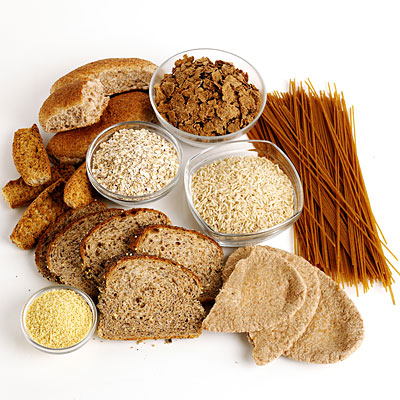
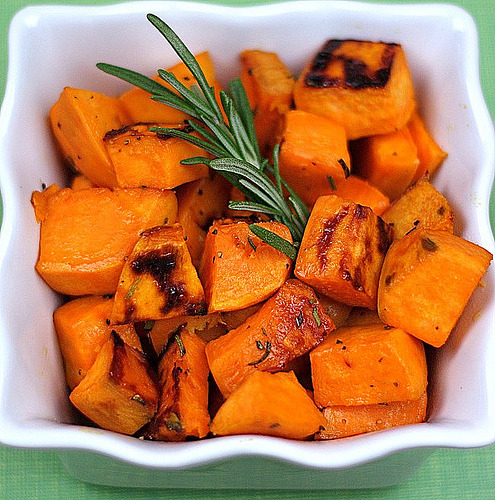
Quinoa, amaranth, sprouted grain breads, potatoes, yams, acorn squash, oats, sprouted grain pasta, cereals, and similar foods are very dense sources of carbs. They are a bit lower in nutrients than the fiber-rich carb foods.
These types of starchy carbs are best consumed after exercise. During this time, your muscles are like a big sponge and will use the carbs efficiently. Consume these starchy carbs during the 3 hours or so after exercise.
Remember, energy balance is still important: Keep portion size moderate. Generally a serving is about the size of your fist. That’s a good place to start.
Note: Outside of the 3 hour post-workout window, having a 1/4 cup of sweet potato or wild rice for dinner isn’t going to be a huge carb load for the body to deal with.  If you can meet your compliance goals and keep good eating habits with small amounts of starchy carbs, then go ahead.

But be aware: the slope can get slippery. 1/4 cup can turn into a big bowl with added butter, which might mean overeating and no fat loss 3 weeks later. Use a strategy that works for you.

3. Refined sugary carbs

If you want to know what foods fall under this category, just follow around most American youth. The majority of these foods are empty calories and don’t do much for health.
Still, eating them during and immediately after exercise may give your body a quick energy boost and accelerate recovery.
Even then, consider the big picture: what is the food going to do for your health? What other substances are in it?
You could take advantage of refined sugary carb foods by using nutrient dense sources like dates, raisins, figs and nutrition bars.  Don’t assume that because you exercised, you can eat as many refined sugary foods as you want.
Eat sugary carbs rarely, and only after exercise.


Source

Wednesday, 6 April 2016

Is There A Magical Macronutrient Ratio For Fat Loss?

Q:


"I'm trying to lose some fat, but everywhere I go to look for helpful information, I get conflicting views on the proper macronutrients ratio. Is there a right answer?"
Great question! In reality, when you're trying to lose weight, there's no ironclad macronutrient law for mapping out your diet plan. No macro mix can save you if you eat way too many calories or way too few.
Yet your macro mix is an important consideration. Your body type, metabolism and weekly physical activity level all have some bearing on your ideal percentages for that moment in time. But that doesn't mean it will be the macronutrient ratio you'll use forever. It may change if and when your body weight or body fat fluctuates, or if you run into any plateaus.
Then there's the fact that you have to continuously manipulate your ratios throughout any fat-loss plan. The macronutrient ratio I typically play with for maintenance purposes is 50% protein, 35% carbs and 15% fats. But that's for me. I need to stay lean all year round. That ratio won't necessarily work for you because you have a different body type, fitness goal and activity level.
macronutrient ration
My body type is an ecto-mesomorph, which means it has a higher tolerance for carbs than most people. Even if I increase my carbs to 40-to-50 percent, I won't suffer. Not everybody is like that. Individuals who are carb-sensitive have to monitor their carbs closely and make adjustments in their ratios.

MACRO-MORPHING

Each body type or combination of body types will have a different reaction to various macronutrient ratios. If you're not sure which type you are—or how to even begin thinking about your macros—here are the ISSA recommendations:
Ectomorph: If you're an ectomorph, you're naturally thin with skinny limbs and a high tolerance for carbohydrates. Usually, your metabolic rate is fast. A good starting macronutrient ratio for you would be something like 25% protein, 55% carbs and 20% fat.
Mesomorph: Mesomorphs are naturally muscular and athletic. They have a moderate carbohydrate tolerance and a moderate metabolic rate. Mesomorphs can usually start at a 30% protein, 40% carb, 30% fat macronutrient ratio.
Endomorph: If you're naturally broad and thick, you're probably an endomorph. Endomorphs have a low carbohydrate tolerance and a slow metabolic rate. If you're an endomorph, try a ratio of 35% protein, 25% carbs and 40% fat.

Don't let your body type be an excuse for not reaching your goals. If you're an endomorph and have a difficult time leaning out, or are an ectomorph and can't seem to gain weight, don't give up. You can beat your biology; you just need to put some serious work into doing it. You need to want it bad enough.
Bottom Line: These ratios are a starting range for most body-types, but don't be afraid to experiment for better results. Sometimes, decreasing your carbs and increasing your good fats can show remarkable fat-loss results. Get to know your body!


Comment below and let me know if you use macronutrients to lose weight? How has it worked for you? Do you have any tips you'd like to share?


Source

Monday, 4 April 2016

Fat Loss Through Nutrition

Cleaning up your diet will increase the effects of fat loss and give you more vitality. Learn how to eat smart with fiber, carbs and protein in your diet.
source
I think that most people who want to lose weight claim that eating healthier is the largest barrier standing in the way of their goal. I do not believe that this is due to pure laziness. The lack of knowledge concerning nutrition prevents the majority of people from starting or sticking with a diet. Companies have made, and continue to make millions off of this fact. Take your average fitness magazine; every month there is at least one new diet for readers to try out. Dr. Atkins (who just recently had a heart attack) has made a fortune off of his famous high protein and fat, low-carbohydrate diet. So, what should you eat, how much, and how many times per day? That depends on you!

Being Too Strict
The biggest mistake I have seen with dieters is that they go into a diet with the intention of being overly strict on what they allow themselves to eat. The problem is that when they slip up and cheat, they see it as absolute failure and quit the entire idea. The result is a retiring back to old, bad habits. This is called the Abstinence-Violation Effect and needs to be avoided at all cost. You need to approach dieting with a flexible mindset, allowing yourself to have food, here and there, that doesn't go along with the program. Otherwise, you will drive yourself nuts and end up worse off than when you started.
Dieting can be simple, if you allow it to be. Fat gaining is achieved when you consume more energy, in the form of calories, than you expend throughout the day. Fat cells are simply cells that store excess energy. The only way to get rid of that excess energy is through burning off more calories than you take in, plain and simple. In addition to exercising more, cleaning up your diet will increase the effects of fat loss and give you more vitality.

Dieting can be very simple, if you allow it to be.
"DIETING CAN BE 
SIMPLE, IF YOU
ALLOW IT TO BE." 

Are Carbs Really The Enemy?
For some reason, Americans have this idea that eating carbohydrates is actually what makes you fat. This is true if you eat large amounts of high glycemic index (GI) carbohydrates. The GI is a ranking of carbohydrates that refers to the amount of blood glucose that appears after ingesting a form of carbohydrates. High GI carbohydrates result in higher amounts of blood glucose, leading to higher levels of insulin following ingestion. Low GI carbohydrates result in lower amounts of blood glucose and insulin. The increase in insulin has been related to increased fatness in individuals tested. This is because insulin is the body's main anabolic hormone, increasing glycogen stores, protein stores, and fat stores. This occurs through activation of enzymes that cause cells to store these nutrients and inactivation of enzymes that cause a release of these nutrients from cells. Studies conducted have demonstrated that animals fed low GI diets were leaner and had lower blood glucose than animals fed high GI diets.


High GI Carbs
Sources of high GI carbohydrates are those that are high in refined sugar and refined starch, "starchy carbs." Examples of high GI carbohydrates are most cereals (cereals high in bran have a lower GI), white bread, potatoes, rice, popcorn, and carrots. Now, be reasonable, although carrots are high on the GI, a person would have to consume a large amount of carrots, daily, in order to get the full effect as you would from a normal serving of something like white bread. Sources of low GI carbohydrates are those that are high in fiber. Examples include virtually all vegetables (excluding carrots) and fruit. While fruit is high in sugar, fructose is low in glucose, which is why it is a low-GI carbohydrate. Another reason why vegetables and fruits are low on the GI is because they both contain relatively larger amounts of fiber. Fiber cannot be digested and absorbed for energy by the small intestine. However, fiber can be broken down in the large intestine by bacterial flora. This process results in fermentation in the colon to produce carbon dioxide, alcohol, and/or an organic acid.
XXX

Fibre
There are two types of fiber, water soluble and water insoluble. Soluble fiber is rapidly broken down and fermented while insoluble fiber is not. Soluble fiber slows the appearance of glucose in the blood due to its viscous property. The viscosity of soluble fiber slows down the transit time of foodstuffs in the upper digestive tract, and lowering nutrient absorption rates. This, in turn, lowers the blood concentrations of ingested macronutrients, leading to lower amounts of absorbed energy. Other great sources of fiber come from melons, oat bran, psyllium, wheat, and whole-grain breads.

Eat Fat!
XXX
Fat should not be avoided. While fats are the most energy dense of all the macronutrients, they are a vital part of a diet. Diets high in saturated fats, such as lard, should be avoided. Saturated fats keep lipolytic enzymes (enzymes that break down fat for energy) dormant, thus promoting increased fat stores, not to mention the health risks that are involved in diets with high amounts of saturated fatty acids. Trans-fats are made through hydrogenation that solidifies oils (unsaturated fats). Sources include margarine, cookies, crackers, and most snack foods. Unsaturated fats, both mono and polyunsaturated fats are oils and are both healthy sources of fat, if taken in moderation/low amounts. This is because many unsaturated fats are essential; our body does not make them. Without these fats, our bodies would not function properly, and you need proper functioning if you want to lose fat. Great sources of these types of fats are olive oil, flaxseed oil, corn oil, soybean oil, salmon, tuna, cod, walnuts, peanuts, sunflower oil, and safflower oil.

AHHHH Yes, Protein
Protein is the only macronutrient that has an RDA, Recommended Daily Allowance, and it is .8 g of protein/kg of body weight. A lot of the new literature is stating that athletes may benefit from increasing protein intake to 1.2-1.6 g of protein/kg of body weight. However, the typical American diet usually exceeds these amounts in a given day. Excessive protein is stored as fat just as excessive fat and carbohydrate intakes. If you do decide to increase protein intake, you might want to consider increasing water intake also in order to keep your kidneys healthy. Quality protein is important. There are nine essential amino acids that we must get from food. Eating a variety of protein sources will ensure that you are getting all nine of these amino acids. Quality sources are usually in the form of animal tissue such as beef, fish, chicken, and eggs. However, you can get all nine amino acids from mixing beans and corn. Also, tofu and enriched soy can also yield quality protein.

Looking for ways to boost your protein without all the added carbs, fats and artificial ingredients? Click here to check out this amazing low-carb/high-protein shake made by Primal Blueprint and contains only natural, high quality ingredients. 

Primal Fuel


Tips To Chew On

I've listed many food choices that you can choose from when you get ready to start your diet. Don't forget to allow yourself room to cheat. Personally, I have a cheat meal once every 3-5 days. Here are some things to keep in mind!
  1. Stay away from fried foods.
  2. High fat foods make a person fatter if overconsumed.
  3. Foods high in refined sugar and refined starches make a person fatter.
  4. High GI foods make people fatter even when low GI foods have identical calorie content.
  5. Eat in variety and moderation.
  6. Avoid the Abstinance-Violation Effect.
  7. Eat more fresh vegetables and fruits.
  8. Eat between 3-5 meals per day.
  9. Don't starve yourself.
  10. Be positive.
Also, here are a couple of figures to keep in mind when designing your diet
  • 40% of calories should come from carbohydrate.
  • 20% of calories should come from fat.
  • 40% of calories should come from proteins.


Source

Thursday, 17 March 2016

Fat Loss Through Nutrition!

Cleaning up your diet will increase the effects of fat loss and give you more vitality. Learn how to eat smart with fiber, carbs and protein in your diet.
source
I think that most people who want to lose weight claim that eating healthier is the largest barrier standing in the way of their goal. I do not believe that this is due to pure laziness. The lack of knowledge concerning nutrition prevents the majority of people from starting or sticking with a diet. Companies have made, and continue to make millions off of this fact. Take your average fitness magazine; every month there is at least one new diet for readers to try out. Dr. Atkins (who just recently had a heart attack) has made a fortune off of his famous high protein and fat, low-carbohydrate diet. So, what should you eat, how much, and how many times per day? That depends on you!


Being Too Strict

The biggest mistake I have seen with dieters is that they go into a diet with the intention of being overly strict on what they allow themselves to eat. The problem is that when they slip up and cheat, they see it as absolute failure and quit the entire idea. The result is a retiring back to old, bad habits. This is called the Abstinence-Violation Effect and needs to be avoided at all cost. You need to approach dieting with a flexible mindset, allowing yourself to have food, here and there, that doesn't go along with the program. Otherwise, you will drive yourself nuts and end up worse off than when you started.
Dieting can be simple, if you allow it to be. Fat gaining is achieved when you consume more energy, in the form of calories, than you expend throughout the day. Fat cells are simply cells that store excess energy. The only way to get rid of that excess energy is through burning off more calories than you take in, plain and simple. In addition to exercising more, cleaning up your diet will increase the effects of fat loss and give you more vitality.


Are Carbs Really The Enemy?

For some reason, Americans have this idea that eating carbohydrates is actually what makes you fat. This is true if you eat large amounts of high glycemic index (GI) carbohydrates. The GI is a ranking of carbohydrates that refers to the amount of blood glucose that appears after ingesting a form of carbohydrates. High GI carbohydrates result in higher amounts of blood glucose, leading to higher levels of insulin following ingestion. Low GI carbohydrates result in lower amounts of blood glucose and insulin. The increase in insulin has been related to increased fatness in individuals tested. This is because insulin is the body's main anabolic hormone, increasing glycogen stores, protein stores, and fat stores. This occurs through activation of enzymes that cause cells to store these nutrients and inactivation of enzymes that cause a release of these nutrients from cells. Studies conducted have demonstrated that animals fed low GI diets were leaner and had lower blood glucose than animals fed high GI diets.

High GI Carbs

Sources of high GI carbohydrates are those that are high in refined sugar and refined starch, "starchy carbs." Examples of high GI carbohydrates are most cereals (cereals high in bran have a lower GI), white bread, potatoes, rice, popcorn, and carrots. Now, be reasonable, although carrots are high on the GI, a person would have to consume a large amount of carrots, daily, in order to get the full effect as you would from a normal serving of something like white bread. Sources of low GI carbohydrates are those that are high in fiber. Examples include virtually all vegetables (excluding carrots) and fruit. While fruit is high in sugar, fructose is low in glucose, which is why it is a low-GI carbohydrate. Another reason why vegetables and fruits are low on the GI is because they both contain relatively larger amounts of fiber. Fiber cannot be digested and absorbed for energy by the small intestine. However, fiber can be broken down in the large intestine by bacterial flora. This process results in fermentation in the colon to produce carbon dioxide, alcohol, and/or an organic acid.

Fiber

There are two types of fiber, water soluble and water insoluble. Soluble fiber is rapidly broken down and fermented while insoluble fiber is not. Soluble fiber slows the appearance of glucose in the blood due to its viscous property. The viscosity of soluble fiber slows down the transit time of foodstuffs in the upper digestive tract, and lowering nutrient absorption rates. This, in turn, lowers the blood concentrations of ingested macronutrients, leading to lower amounts of absorbed energy. Other great sources of fiber come from melons, oat bran, psyllium, wheat, and whole-grain breads.


Eat Fat!


Fat should not be avoided. While fats are the most energy dense of all the macronutrients, they are a vital part of a diet. Diets high in saturated fats, such as lard, should be avoided. Saturated fats keep lipolytic enzymes (enzymes that break down fat for energy) dormant, thus promoting increased fat stores, not to mention the health risks that are involved in diets with high amounts of saturated fatty acids. Trans-fats are made through hydrogenation that solidifies oils (unsaturated fats). Sources include margarine, cookies, crackers, and most snack foods. Unsaturated fats, both mono and polyunsaturated fats are oils and are both healthy sources of fat, if taken in moderation/low amounts. This is because many unsaturated fats are essential; our body does not make them. Without these fats, our bodies would not function properly, and you need proper functioning if you want to lose fat. Great sources of these types of fats are olive oil, flaxseed oil, corn oil, soybean oil, salmon, tuna, cod, walnuts, peanuts, sunflower oil, and safflower oil.


Ahhh Yes, Protein

Protein is the only macronutrient that has an RDA, Recommended Daily Allowance, and it is .8 g of protein/kg of body weight. A lot of the new literature is stating that athletes may benefit from increasing protein intake to 1.2-1.6 g of protein/kg of body weight. However, the typical American diet usually exceeds these amounts in a given day. Excessive protein is stored as fat just as excessive fat and carbohydrate intakes. If you do decide to increase protein intake, you might want to consider increasing water intake also in order to keep your kidneys healthy. Quality protein is important. There are nine essential amino acids that we must get from food. Eating a variety of protein sources will ensure that you are getting all nine of these amino acids. Quality sources are usually in the form of animal tissue such as beef, fish, chicken, and eggs. However, you can get all nine amino acids from mixing beans and corn. Also, tofu and enriched soy can also yield quality protein.


Tips To Chew On

I've listed many food choices that you can choose from when you get ready to start your diet. Don't forget to allow yourself room to cheat. Personally, I have a cheat meal once every 3-5 days. Here are some things to keep in mind!
  1. Stay away from fried foods.
  2. High fat foods make a person fatter if overconsumed.
  3. Foods high in refined sugar and refined starches make a person fatter.
  4. High GI foods make people fatter even when low GI foods have identical calorie content.
  5. Eat in variety and moderation.
  6. Avoid the Abstinance-Violation Effect.
  7. Eat more fresh vegetables and fruits.
  8. Eat between 3-5 meals per day.
  9. Don't starve yourself.
  10. Be positive.


Also, here are a couple of figures to keep in mind when designing your diet
  • 40% of calories should come from carbohydrate.
  • 20% of calories should come from fat.
  • 40% of calories should come from proteins.


Source

Thursday, 26 November 2015

Can you lose weight faster with carb cycling?

It seems like we just can’t learn to leave carbs alone.  There is a constant flood of diets plastering the media, many of which seem intent on advising us just how to eliminate, reduce or choose the carbohydrates in our diets.  Carb cycling, as the name suggests is no exception, being a diet that bases its weight loss principles on the amount of carbohydrates you eat and when you eat them.  Unlike some other carb controlling diets however, carb cycling does advocate a number of general healthy eating principles as well as moderating carbohydrate intake.


What is Carb Cycling?

Carb Cycling diets, also known as carb rotation diets, were made popular by books such as Jay Robb’s The Fat Burning Diet and The Carb Rotation Diet by Jayson Hunter.  However, carb cycling is nothing new, having been used in the body building world as a method for burning fat and building muscle for some time.
Essentially carb cycling involves a cycle (as the name suggests), of low or no carb days with days when you are allowed to eat carbs.  The idea is you get some of the benefits of a low carb diet, but avoid the flat lethargic feelings or carb cravings that can occur if the body is deprived of carbs for too long.
There are many different approaches to carb cycling, with the length of the cycle being the main variant.  Some choose to follow a low carb eating plan for five days a week and then have two high carb days (this plans fits in nicely with the weekend!), although the high carb days do not need to be consecutive.  Others follow a shorter rotation, with two low/ no carb days followed by one high carb.  Carb intake on the no/low carb days varies, but in his Carb Rotation Diet, registered dietician Jayson Hunter recommends using a low carb approach rather than eliminating all carbs in order to make the diet easier to stick to.
In general on high carb days you should obtain about 50% or less of your daily calories from carbs, whilst on lower carb days this should be reduced to zero to 50 grams per day.  Overall calorie intake on low calorie days should also be lower.  When starting the diet, you need to calculate your required daily calorie intake and work out how much carbohydrate you should be eating.  If you are aiming for a healthy weight loss of one to two pounds per week, make sure that your calorie intake on low carb days is low enough to achieve this.
Aside from varying carb intake, most carb cycling or rotation diets also promote a diet of healthy foods such as fruit, vegetables, low GI, high fibre carbohydrates, low saturated fats and a moderate intake of healthy unsaturated fats.  Many also recommend avoiding any form of sugar (with the exception of that in fruit) and refined carbohydrates.

Carb Cycling claims

The theory behind carb cycling diets rests on the idea that we can ‘trick’ our body into maintaining muscle mass and dropping fat when we vary the amount of carbs we eat day to day.  Promoters of these diets have suggested that methods designed originally for heavy lifters can also be beneficial for the rest of us, who far from wanting to look like pumped up gorillas would just like to lose a little flab from our hips.  In The Fat Burning Diet, Jay Robb says that when we eat carbs this stimulates the release of insulin, a hormone required to help cells utilize blood sugars for energy.  This is a sound principle, acknowledged by scientists around the world.   If we don’t burn this energy, it is stored as fat.  Robb goes on to suggest that if we keep our body guessing, by mixing up carb intake, this will stop it from storing the extra energy as fat.
This theory is based on controlling glycogen levels.  Glycogen is the form in which we store broken down carbohydrates in our muscles and liver for energy.  These stores are used up as we exercise, or simply go about our normal day to day lives, and need to be replenished.  By only eating carbs every few days, the idea is that the stores of glycogen are replenished when needed, but not saturated.  If you consume more carbohydrate than can be stored as glycogen, it will be stored as fat.  In theory this means we are only refuelling those stores when we need to, in order to maintain energy levels.

What are the benefits of Carb Cycling?

Weight Loss

Many followers report significant weight loss on this type of diet, and a lot of low carb dieters claim to have used it successfully to break through weight loss plateaus.  Carb cycling is likely to lower your calorie intake to a level that promotes weight loss

Healthy Diet

Many carb cycling diets offer meal plans which promote healthy diets rich in vitamins, minerals, fibre and unsaturated fats, which aside from contributing to weight loss will make you feel better and may offer some protection from lifestyle diseases.  Make sure you choose a diet that promotes a healthy balanced diet, or run it past a dietician to check you will be meeting nutrient requirements. The Carb Rotation Diet was created by a registered dietician, and the recommended meal plans reflect this.

It’s easier than low carb!

As this diet is essentially a more relaxed version of a low carb diet, it should be easier to follow.  The diet is less restrictive as you are allowed to eat carb based foods every few days, meaning you are less likely to fall of the band wagon.

What are the drawbacks?

Limited scientific evidence

Whilst the theory behind the diet is based on the known biochemistry of the body, there is little actual evidence to suggest that it will promote weight loss.  There is a definite lack of scientific controlled studies done in this area to support the theory and draw attention to possible side effects.

Carb cravings

There is also a possibility that as you are eating carbs every few days, this may make it harder for your body to function without them on the low carb days.  Some followers report increased cravings for carbs with a cycling diet than with a traditional low carb, when the body is more accustomed to the lack of carbohydrate.

Carb Binging

Whilst carbs are allowed on given days, it is essential that you don’t go overboard.  Having carb free days may make you crave them which in turn may lead to a binge on high carb days.  It is still important to control your calories and stick to recommended carb amounts on these days or you will undo all the hard work from the previous low carb days.

It’s complicated

Maybe body builders dedicating their lives to finding the exact combination of nutrients that will build muscle and eliminate fat, with professional help, can afford to spend time calculating the exact requirements for calories and carbs on low and high carb days.  For most of us this is a lot of hassle and may be enough to make us give up on the diet all together.  Calorie and carb intake also needs to be adjusted for exercise and a good knowledge of the carb content of just about everything you intend to eat is needed.  Unless you have professional support, this can be a daunting task and may require a significant number of extra hours shopping, researching and calculating each week.

The Verdict – Does Carb Cycling work?

Carb cycling is definitely not the worst diet out there.  It is likely to be easier to stick to than traditional low carb diets and in general promotes healthy eating.  The speed of weight loss will be dependent on your calorie intake, and also your exercise levels, so it may not be any faster than other methods and ideally will fall in the healthy recommended range.
But does weight loss really need to be so complicated?  It is completely possible to lose weight with carbs in your diet.  As long as your calorie intake is less than your output (i.e. the calories you burn), you will lose weight.  Therefore, if carbs are a big part of your life, this is probably not the diet for you, and there is no need to follow such as complicated method for weight loss.  By choosing the right types of carbohydrates and other foods, in combination with reducing portion sizes and exercising you are likely to lose just as much weight.
No diet is suitable for everyone, so if carb cycling seems like a good fit for you, the only way to find out is to try it.  As with any diet, it is advisable to consult with a health professional before undertaking the diet to ensure nutrient requirements are met, and your calorie intake is optimum for weight loss.  In a carb cycling diet it is also important to consider your exercise regime and factor this into your carb requirements.

Comment below if you found it helpful, let me know if carb cycling has helped you lose weight, or if it hasn't. Love hearing your weight loss stories and tips x


Source