Friday, 3 July 2015

Why Bread Makes You Fat and High Fat Foods Can Help You Lose Weight

For a long time, we’ve been told to eat a diet low in fat and high in carbohydrate rich grains to be healthy. The food pyramid, found on school classroom walls and doctors offices, has breads, grains and other starches and its base. The message is eat more wheat, corn and other grains and we’ve been listening. 
Wheat production alone has tripled in the last 50 years to try and keep up with our insatiable demand for ‘healthy’ grains. But is it working?
Just look around you any time you’re out walking on the street if you really wondered the answer to that question. During that same 50 year time period clinical obesity levels in American adults have risen from just under 10% in 1960 to over 35% in 2010. Children’s obesity rates are going up even faster. It’s estimated that by 2030, over half the US population will be obese.
To be defined as clinically obese isn’t just overweight, it’s life threatening. We are getting fat real fast. But how can this be when saturated animal fat consumption has actually fallen significantly over the same time period? Surely eating less saturated fat should have made things better, shouldn’t it? Actually, it’s made things much worse.


How Protein, Fat and Carbohydrates Affect Your Body

One of the hardest things for some people to get their head around is that it’s usually not eating fat that makes us fat. Yes fatty acids contain more calories than carbohydrates or protein. But the way our bodies process and use protein, carbohydrates and fats are very different.
Good protein sources like free range eggs, seeds and nuts, wild salmon or grass fed meat help to build and maintain your body and its muscles, organs and blood. Eating protein also provides a good level of satiety (that satisfied feeling of fullness you should get after eating a meal) and you would find it very difficult to get fat on a diet of natural protein foods combined with a variety of vegetables.
Healthy fats like those found in coconut, avocado, butter from grass fed cows, nuts and seeds and free range meats provide an even higher level of satiety than protein. These types of high-fat foods really fill you up and tell your body to stop eating. They level out your blood sugar and tend to stop our hunger dead in its tracks for many hours.
Certain fatty acids, like the saturated capric acid found in coconuts or the monounsaturated oleic fatty acid predominant in avocados, have also been shown to help reduce body fat and significantly aid in weight loss.
Weight gain really is a much more complex subject than simply calories in calories out. The evidence has been staring mainstream food regulators in the face for many decades. But they are either very slow, or have a very big grain industry to protect.
This brings us to carbohydrates and grains. Bread, pasta and cereals are dealt with by your body much differently than protein or fat.
First of all, they’re digested much quicker. Even the so-called complex carbohydrates are rapidly converted into glucose and hit your bloodstream very fast. Whole wheat bread for instance completes its digestion only marginally slower than white bread. And as for those bleached burger buns or bright white slices of bread, they might as well be made of table sugar for all your body knows. The effect they have and the lack of nutrition they provide really isn’t very different.
Carbohydrates are sold to us as a quick source of energy. Sounds good but this is precisely the reason why they make us fat. Here’s why.


How Bread Makes You Fat?

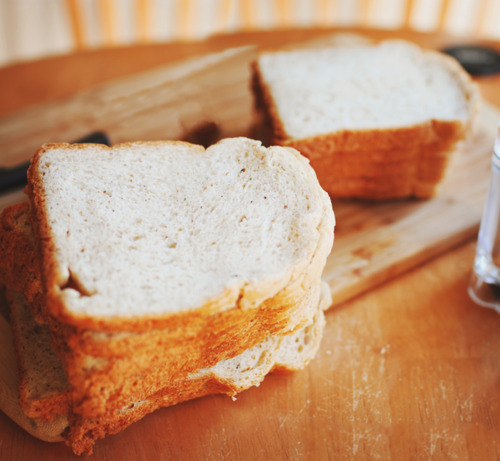
Insulin is a powerful hormone that is responsible for storing fat. When a farmer wants to fatten up his cattle or a sumo wrestler wants to put on weight quickly, they don’t eat fats. That would fill them up and not have the desired effect. Instead they eat grain – wheat for the cattle, rice for the sumo wrestler.
They do this for the grains ability to spike insulin. It’s insulin that is needed to swell the body’s adipose fat cells and deposit even more fat. Without a spike in insulin you’d actually have a very hard time gaining weight.
Eating a diet high in carbohydrates will prevent stored body fat being used as fuel. There is never a chance for your body to switch to using it as an energy source. Even if you were to cut out fat completely (which is extremely unhealthy as fatty acids are involved in many vital bodily processes), you would still be unlikely to lose weight as long as you continue to eat grains. In fact, you’d probably get fatter even faster.
Your body isn’t actually very good at dealing with large amounts of carbohydrates. Any meal high in carbs converts quickly to significant amounts of glucose and is actually seen as a threat. Your blood sugar levels must be maintained in a fairly narrow range. As soon as they get too high your body releases insulin to deal with the danger.
A small amount of glucose can be stored in the liver and muscles as glycogen (and this would be helpful if you intend to run a marathon the next day). But the rest is shuttled away into the adipose tissue designed to store fat, at first around the waist and hips and once that starts to get full, pretty much anywhere it can.
This is a protective mechanism we’ve developed over many thousands of years and would have been useful in the past when food was scarce. But that’s no longer the case and now it’s our relentless consumption of fattening grains that is making so many of us obese and leading to a huge rise in diseases like diabetes and cardiovascular disease that are killing us.


Low-Fat Versus Low-Carb

Low-fat diets haven’t worked. They make us hungrier and much fatter as a result. We need healthy fats. They are a vital part of both good health and weight loss.
There’s one important exception, sometimes still marketed as good for you or ‘heart healthy’ but definitely not so. The processed vegetable oils like corn, soy, cottonseed, sunflower and canola oil that are added to a high percentage of processed supermarket foods and hydrogenated into toxic margarine.
These heated and altered polyunsaturated fats are highly inflammatory and linked to heart disease and many other health problems. Avoid them at all costs.
Avocado oil or coconut oil are far healthier cooking choices in your kitchen. Olive oil is a source of good fats too as long as you don’t heat it as it breaks down easily.
Ideally, carbohydrates in your diet should come from vegetables like pumpkin, sweet potatoes, broccoli, cauliflower, peas, carrots, peppers, leafy greens and many others and lesser amounts of fruit. These contain the fiber to slow down carbohydrate digestion as well as high levels of nutrients and enzymes for better health.
There’s a growing movement of people who have given up grains completely and many have been amazed at the changes in their health and energy. If you really need to lose some weight, cutting out grains for a while will be likely to have a far greater effect on your body weight than the old counting calories. Starving yourself just doesn’t work. You actually teach your body to get better at storing fat as food is suddenly restricted.
Once you reach your ideal body weight, you may be able to tolerate some grain foods without provoking too much of a spike in insulin. Even then, nutritional experts who’ve actually looked deeply into the effect foods like wheat and corn have on our physiology (rather than just chanting the old ‘carbohydrates for quick energy’ mantra) generally believe grain based food should not be more than 20% of your daily intake.
They also consistently say healthy fats have an important place in your meals if you want to lose weight and be fit and healthy.


Conclusion

Have you been trying to lose weight with the old cutting calories, low fat, more grains prescription? Has it been working? Why not try a different way?
While it may be hard to believe, you probably need more, not less, of the right kind of fats. Couple that with a reduction in insulin spiking grains and you’ll be well on your way to weight loss, better heath and more energy.


Source
http://www.healthambition.com/why-bread-makes-you-fat/


Thursday, 2 July 2015

ALL ABOUT ACTIVATED CHARCOAL

It doesn’t really sound like something you’d think to eat. Charcoal? Why would anyone put that in their mouth?
As a matter of fact, though, you’re already using charcoal as a purifier: it’s in most air and water filters. Even ordinary charcoal mops up impurities at an astonishing rate, and activated charcoal is like regular charcoal turned up to 11. It starts out as regular charcoal. Then it’s processed with oxygen to make it very porous (full of tiny holes) and give it a huge surface area. The large surface area means that even a very small amount of activated charcoal can pick up a whole lot of other stuff on its surface. Basically, it works kind of like a sponge for all kinds of things – that’s why it’s so useful in air and water filters.
But the question remains: will it do the same thing inside your body? After all, you can also filter water by running it through sand, but nobody would suggest eating sand as a way to detox! Just because something works outside the body does not necessarily mean it will workinside the body. So take a look at the evidence we have about activated charcoal and whether or not it will really do you any good.

Does Activated Charcoal Work?

Claims about the health benefits of taking it as a medicine generally focus on three benefits:
  • All-purpose “detoxification” (typically from unnamed “toxins” that cause vague and general symptoms without any mechanism ever being explained)
  • Lowering cholesterol
  • Digestive benefits (reduction of gas and bloating)

Detoxification and Anti-Poisoning

Activated charcoal has a long history of use as a poison control drug (taken directly after poisoning as a form of damage control). It works by adsorbing the drug in the digestive tract. ADsorption (no, that wasn’t a typo!) is not quite the same thing as ABsorption, but it’s a similar process. Basically, the charcoal steals all the drug for itself, so your body doesn’t get any. For nutrients, this would be very bad, but for toxins, it’s great, because you don’t want to get any of them.
There’s some truth to this, and if you ever are in the hospital with an acute case of drug overdose, you might end up getting a dose of activated charcoal to help your body clear it. For example, it’s great when people take too many painkillers. But this review of the evidence offers some very important points to bear in mind:
  • Activated charcoal only works within one hour of poisoning. This means that it doesn’t act as an all-purpose “detox” for accumulated toxins over a lifetime. It’s a therapy for acutetoxicity, the “whoops-my-toddler-swallowed-the-whole-bottle-of-Tylenol” scenario. There is no evidence to support using it in any other case.
  • Not all toxins are adsorbed to charcoal. It’s useful for some common prescription drugs, like acetaminophen (Tylenol), but it’s useless against iron, lithium, petroleum products, and alcohol.
Overall, the review was less than enthusiastic. And you should be, tooIf you have acute poisoning, go to a hospital. If you’ve ingested something that responds to activated charcoal, you can get it there. If you don’t have acute poisoning, taking activated charcoal has never been proven to do anything at all.

Lowering Cholesterol

In the 1980s and 90s, activated charcoal got a lot of press for reducing cholesterol. Unfortunately, every other study seems to contradict the one before it:
  • This study (1986) found that 8 grams of activated charcoal three times a day helped reduce total cholesterol (25%) and LDL cholesterol (41%).
  • This study (1988) found that charcoal worked just as well as cholestyramine (a cholesterol-lowering drug) at reducing cholesterol levels: 22% for the charcoal and 16% for the drug.
  • This study (1988) found no effect of activated charcoal on cholesterol levels either way.
  • In this study (1989), seven patients got various levels of activated charcoal for 3 weeks, and the researchers noticed some impressive improvements.

The lesson: there’s a little more evidence on the “pro” than the “con” side, but it’s far from conclusive and most of the trials have been very small (for example, the 1989 study used just seven subjects: that’s not enough to be anything more than preliminary.

Preventing Gas

The studies on whether activated charcoal helps with gas and bloating are almost hypnotically regular:
No, those are not cherry-picked specifically to make a pattern: it’s really that unclear.
The lesson: nobody knows! It may or may not do anything. It’s unlikely to do you any harm (none of the studies reported worse symptoms after taking the charcoal), but it’s also quite likely to do nothing at all.

What Are the Risks?

With any potential supplement, it’s important to look at the risks, not just the benefits. And while activated charcoal is generally safe for most people, it has some important downsides to consider:
  • An overdose can cause severe constipation.
  • On the flip side, some activated charcoal tablets contain sorbitol, a sugar alcohol which often has a laxative effect.
  • Activated charcoal may also prevent medicine you need from being absorbed. For example, if you’re on an antidepressant drug, taking a charcoal supplement may prevent it from working.
Most people do also get black stools after taking charcoal, but this is not dangerous, just a little strange-looking.

The Bottom Line

Ultimately 90% of the “benefits” of activated charcoal are imaginary. Specifically, it will not help you “detox” from anything but an acute poison ingestion. It will not help your body flush out any “accumulated toxins” from heavy metal exposure, pesticide residues, food preservatives, dyes and colorings, or anything else (not to mention that you don’t need anything to help you flush those out, since your liver already does it for you).
There’s also conflicting evidence for digestive benefits and for cholesterol lowering. Some studies say yea; others say nay. Unfortunately, because the studies on activated charcoal are so conflicting, it’s easy for people to cherry-pick what they want to hear, and just throw around the ones in favor, ignoring all the evidence to the contrary. But now that you have the big picture, you can see that this is not the whole story!
The bottom line: forget about it. Activated charcoal is just not worth your money. If you have acute poisoning bad enough to need it, you’ll be in the hospital anyway – and if you don’t, there’s no evidence that it does any good.


Source
http://paleoleap.com/activated-charcoal/

10 Benefits Of Drinking Lemon Water

Lemon water can be really helpful for you, meaning it can detoxify your body in a completely natural way.
One of the most important benefit lemons provide is their strong antibacterial, antiviral, and immune-boosting power. Lemons are amazingly efficient in the weight loss process, mostly because lemon juice helps digestion and cleans the liver. They contain a lot of nutrients –notably citric acid, calcium, magnesium, vitamin C, bioflavonoids, pectin, and limonene – known for their efficacy in boosting immunity and fighting infections.
We have listed some of the amazing benefits you can enjoy by drinking a single cup of warm lemon water each morning. It’s as simple as that – boil some water, let it cool for a while and add a lemon slice!
1. It helps you lose weight – Lemons are rich in pectin, fiber which decreases appetite.
2. Improves digestion – Lemon juice helps the body discharge waste materia, by stimulating the liver to secrete acids important for the digestion.
3. Cleans the skin – Vitamin C reduces the pores and any skin imperfection. Lemon water cleans the toxins from the blood that affect the health of your skin.
4. Improves the immune system – Thanks to the large amount of vitamin C, which is excellent in fighting colds. Lemons also contain potassium, which stimulates the brain, nerves and controls the blood pressure.
5. Reduces respiratory problems – Warm lemon water will help you stop coughing and breathe more easily, so it is especially beneficial for people with asthma and allergies.
6. Balances pH – This fruit is one of the most alkaline foods. Drink some lemon water, in order to reduce the acidity in your body. Lemons contain citric acid, but it does not affect the acidity in your body.
7. An excellent diuretic – Lemon accelerates the excretion of urine and thereby eliminates the toxins. The urinary tract is healthier when it is regularly cleaned.
8. Due to the large amount of vitamin C, lemon water is used in the treatment of infections, wounds, allergies and sore throat.
9. Drink it instead of coffee – Even though it contains no caffeine, lemon water is an excellent replacement for your morning coffee.
10. Freshens your breath, relieves toothache and gum inflammation, but be careful – citric acid erodes the tooth enamel.

Source
http://www.healthyfoodhouse.com/10-benefits-of-drinking-lemon-water/

Wednesday, 1 July 2015

How to Get Rid of Bloating

Abdominal bloating is a condition in which the stomach feels full and tight due to buildup of gas in the small intestine. This can make the stomach area visibly swollen. Many times, bloating is accompanied by other symptoms like cramps, belching, pain, diarrhea, shortness of breath and lower back pain.
A number of factors can cause bloating. The main reason is the buildup of intestinal gas. Other causes include constipation, peptic ulcers, anorexia, anxiety, smoking, water retention, trapped air, overeating, indigestion, premenstrual syndrome (PMS), menopause, and irritable bowel syndrome (IBS).

A good way to relieve bloating is to encourage passing gas and a bowel movement. But if you are not able to get rid of bloating, then try some simple home remedies.

Here are the top 10 ways to get rid of abdominal bloating.

1. Fennel Seeds

Fennel seeds are very effective for digestive problems like bloating due to their carminative, diuretic, pain-reducing and anti-microbial properties. Fennel seeds help relieve bloating by relaxing muscle spasms in the digestive tract.
  • Chew on a few fennel seeds after eating a big meal.
  • Add one teaspoon of fennel seeds to 1 cup of hot water. Cover and allow it to steep for 5 to 10 minutes. Strain it. Have this tea two or three times a day.

2. Peppermint

Peppermint contains menthol oil, which has an anti-spasmodic effect on the smooth muscle of the digestive tract. This helps relieve spasms in the gastrointestinal tract, bile duct and gallbladder.
It also calms flatulence and helps food pass through the stomach quickly.
  • You can chew on fresh peppermint leaves for relief from bloating.
  • Another option is to steep a peppermint tea bag in hot water for about 10 minutes and drink two to three cups of this tea a day.


3. Ginger

Ginger is a well-known herb that can be used to reduce gas and bloating. It contains several active ingredients, including the pungent compounds gingerols and shogaols that help reduce inflammation in the intestines and relax the intestinal muscles.
  • Place five to six thin slices of ginger in a cup and pour boiling water into the cup. Cover the cup and let it steep for about 10 minutes. Add a little honey and lemon juice to it and then drink it up to three times a day.
  • Another option is to eat one teaspoon of fresh grated ginger before meals. You can also grate ginger root and sprinkle it on your food.
  • Adults can opt to take 0.25 to 1 g of powdered ginger root daily.

4. Chamomile Tea

Chamomile tea is another effective option to get relief from bloating. This herbal tea has anti-inflammatory and anti-spasmodic properties that can help soothe the stomach and help with heartburn as well.
  1. Bring one cup of water to a boil. Pour it into a cup containing one chamomile tea bag. Cover and let it steep for 10 minutes.
  2. Squeeze out the tea bag and add some lemon juice or honey as desired.
  3. Sip the tea slowly. Have this tea two or three times a day between meals.


5. Caraway Seeds

Caraway has anti-spasmodic effects as well as antimicrobial and carminative properties. Two chemicals present in caraway seeds, carvol and carvene, help soothe the smooth muscle tissues of the digestive tract and promote expulsion of gas to give you instant relief from stomach bloating.
  • If you suffer from frequent bloating, chew a pinch of caraway seeds several times throughout the day.
  • If the taste of raw caraway seeds is too strong for you, try some caraway crackers.
  • Alternatively, you can brew crushed caraway seeds to make a tea.

6. Pumpkin

Eating pumpkin is an excellent way to prevent unwanted flatulence as well as bloating. Pumpkin contains a good amount of vitamin A, potassium and fiber that help in digestion.
Adding just one cup of pumpkin to your meals can help create a smooth digestive flow and reduce gas. You can steam, bake or broil it, or include it as an ingredient in your recipes.


7. Anise

Anise contains anti-spasmodic properties that can help relax your digestive tract. Also, it has carminative properties to help expel gas buildup in your digestive tract and reduce bloating. The best way to obtain the beneficial effects of this herb is by drinking anise tea.
Note: The U.S. Food & Drug Administration warns that giving infants tea made with anise can result in seizures, vomiting, restlessness and rapid eye movement. Also, pregnant women should not consume anise.

8. Activated Charcoal

Activated charcoal has porous properties, which means it has holes that allow the passing of air and water. These spaces can trap excess gas in the intestines caused by stomach bacteria.
Activated charcoal is available in tablet, capsule and powder form. Seek medical advice to learn the exact dosage that is right for you.

9. Bananas

A good source of fiber, bananas can help reduce bloating and gas associated with constipation. Also bananas contain potassium, a mineral that helps regulate fluid levels in your body and gives relief from bloating.
If you eat bananas regularly, you can eliminate bloating. You can eat them as a snack or add them to fruit salads and baked desserts.

10. Warm Lemon Water

Drinking warm water is good for health as it helps remove harmful toxins from the body as well as keeps the body hydrated. Lemons are rich in vitamins B and C, riboflavin, calcium, phosphorus, magnesium, proteins and carbohydrates that help in digestion.
Also, the acidic property of lemons stimulates the production of hydrochloric acid, which helps break down food.
When water and lemon are mixed together, it can be highly beneficial for your digestive system. Drinking warm lemon water can give you relief from bloating, gas and constipation.
Bloating can affect your daily activities, but with these remedies you can keep your stomach happy. However, if the condition is chronic, it may require medication and a change in diet and lifestyle to resolve. Consult your doctor if this is the case.


Source
http://www.top10homeremedies.com/how-to/get-rid-bloating.html
Resources:

Debunking The Milk Myth: Why Milk Is Bad For You And Your Bones

Did you know that in Medieval England parents would tie rabbits’ feet around their babies’ necks to ward off illness? Doctors would also spit on wounds because saliva was believed to have healing properties.
Indeed, history is replete with unfounded health beliefs, and to everyone’s detriment, the milk myth is among the most tenacious.
Milk is much more than just a drink; it’s a cultural phenomenon that can be traced back thousands of years. And still today, the milk myth resonates loud and clear: in 2001, the average American child consumed 104 quarts of cow’s milk.

Milk depletes the calcium from your bones

The milk myth has spread around the world based on the flawed belief that this protein and calcium-rich drink is essential to support good overall health and bone health in particular at any age. It is easy to understand that the confusion about milk’s imaginary benefits stems from the fact that it contains calcium – around 300 mg per cup.
But many scientific studies have shown an assortment of detrimental health effects directly linked to milk consumption. And the most surprising link is that not only do we barely absorb the calcium in cow’s milk (especially if pasteurized), but to make matters worse, it actually increases calcium loss from the bones. What an irony this is!
Here’s how it happens. Like all animal protein, milk acidifies the body pH which in turn triggers a biological correction. You see, calcium is an excellent acid neutralizer and the biggest storage of calcium in the body is – you guessed it… in the bones. So the very same calcium that our bones need to stay strong is utilized to neutralize the acidifying effect of milk. Once calcium is pulled out of the bones, it leaves the body via the urine, so that the surprising net result after this is an actual calcium deficit.
Knowing this, you’ll understand why statistics show that countries with the lowest consumption of dairy products also have the lowest fracture incidence in their population (there’s more on this later).
But the sad truth is that most mainstream health practitioners ignore these proven facts. I know it firsthand because when I was diagnosed with osteoporosis, my doctor recommended that I drink lots of milk in addition to taking Fosamax.
Fortunately, I did neither, because I knew that…

Cow’s milk is custom-designed for calves

Thanks to our creative ingenuity and perhaps related to our ancient survival needs, we adopted the dubious habit of drinking another species’ milk. Nobody can dispute that cow’s milk is an excellent food source for calves. Weighing around 100 pounds at birth, a calf typically gains approximately eight times its weight by the time it is weaned. But unlike humans, once calves are weaned, they never drink milk again. And the same applies to every mammalian species on this planet.
Also, each mammalian species has its own “designer” milk, and cow’s milk is no exception. For example, cow’s milk contains on average three times the amount of protein than human milk which creates metabolic disturbances in humans that have detrimental bone health consequences.
It’s important to bear in mind that mother’s milk is excellent nourishment for human babies, but its composition is very different from cow’s milk.

Scientific studies show that milk increases fracture risk

Many scientific studies contradict the conventional wisdom that milk and dairy consumption help reduce osteoporotic fractures. Surprisingly, studies demonstrating that milk and dairy products actually fail to protect bones from fractures outnumber studies that prove otherwise. Even drinking milk from a young age does not protect against future fracture risk but actually increases it. Shattering the “savings account” calcium theory, Cumming and Klineberg report their study findings as follows:
“Consumption of dairy products, particularly at age 20 years, was associated with an increased risk of hip fracture in old age. (“Case-Control Study of Risk Factors for Hip Fractures in the Elderly”. American Journal of Epidemiology. Vol. 139, No. 5, 1994).

And the 12 year long Harvard Nurses’ Health Study found that those who consumed the most calcium from dairy foods broke more bones than those who rarely drank milk. This is a broad study based on 77,761 women aged 34 through 59 years of age.
In the authors’ own words:
“These data do not support the hypothesis that higher consumption of milk or other food sources of calcium by adult women protects against hip or forearm fractures.” (Source: Feskanich D, Willett WC, Stampfer MJ, Colditz GA. Milk, dietary calcium, and bone fractures in women: a 12-year prospective study. American Journal of Public Health. 1997).

Shocking statistics ignored by mainstream medicine

In the Save Our Bones Program one of the topics I discuss is the complete disregard of scientific evidence that discredits milk and dairy products as the best source of calcium.

One exception is Amy Lanou Ph.D., nutrition director for the Physicians Committee for Responsible Medicine in Washington, D.C., who states that:
 
“The countries with the highest rates of osteoporosis are the ones where people drink the most milk and have the most calcium in their diets. The connection between calcium consumption and bone health is actually very weak, and the connection between dairy consumption and bone health is almost nonexistent.”
Surprised? You shouldn’t be, because as I mentioned earlier in this article…

Milk is an acidifying animal protein

Like any other animal derived protein-rich food, milk has a positive potential renal acid load (PRAL) which triggers a protective biological reaction to neutralize all the damaging acidic protein before it reaches the kidneys.
The body is designed for survival, so it sacrifices bone density to protect the kidneys and urinary tract because the latter are essential to survival. And the most readily available source of acid neutralizer is in the bones. So even though milk contains calcium, it ends up sapping your bones of that crucial mineral. But that’s not all because…

Today’s milk is a processed food

Until the end of the 19th century in Europe and the beginning of the 20th century in the US, milk was consumed unpasteurized or raw. Later on, homogenization became the industry’s standard. These processes further alter milk’s chemistry and actually increase its detrimental acidifying effects.
Raw milk advocates claim that if cow’s milk is left “as is” it is a healthy and wholesome drink. It is true that raw milk is less acidifying than processed milk and that pasteurization and homogenization may cause a long list of digestive and other health problems, but I still don’t recommend drinking any kind of cow’s milk.
Nowadays, milking cows are given antibiotics and most are also injected with a genetically engineered form of bovine growth hormone (rBGH). A man-made or synthetic hormone used to artificially increase milk production, rBGH also increases blood levels of the insulin-growth factor 1 (IGF-1) in those who drink it. And higher levels of IGF-1 are linked to several cancers.
This should not be ignored, especially in view of recent information by Samuel Epstein, MD, Professor of Environmental Medicine at the University of Illinois School of Public Health, and Chairman of the Cancer Prevention Coalition. In an article titled “Monsanto’s Hormonal Milk Poses Serious Risks of Breast Cancer, Besides Other Cancers” (http://www.preventcancer.com/press/releases/july8_98.htm, June 21, 1998) Dr. Epstein concludes that:
“Drinking rBGH milk would thus be expected to significantly increase IGF-1 blood levels and consequently to increase risks of developing breast cancer and promoting its invasiveness.”
Even though organic milk is from cows that are not given antibiotics or rBHG, if you truly care about your bone health and your overall health, you should…

Avoid drinking cow’s milk

As I explain in the Save Our Bones Program and contrary to mainstream recommendations, drinking milk and eating lots of dairy products are not the answer to reversing osteoporosis. And while in the Save Our Bones Program no food is completely off limits, I strongly recommend that you explore the different milk substitute options that I will list for you here.
But first, I’d like to clarify that unsweetened fermented or cultured dairy products such as yogurt, kefir, and sour cream are acid neutral. Yogurt in particular is chock-full of beneficial qualities. As is the case with milk, organic yogurt does not have rBGH, but even several of the most well-known yogurt brands have stopped using the bovine growth hormone (rBGH). You should call your favorite yogurt company to confirm. One more clarification: when I say unsweetened I mean without sugar or any artificial sweetener. However, you can add honey or stevia, a zero calorie plant-derived sweetener that is delicious and alkalizing as well. I like to carry around stevia packets in my purse so that I’m always able to sweeten food or drinks when I’m on the go.

The best milk substitutes

My favorite milk substitute is unsweetened almond milk, not only because it is alkalizing (as almonds are), but also because it’s delicious and tastes very similar to milk. I even cook with it!
If almond milk is hard to get, you can also try rice or soy milk. I strongly suggest consuming only organic soy milk to insure it’s not made with genetically modified soy. There is also some controversy about unfermented soy products, so try to use it in moderation.

What Else Haven’t They Told You?

What else have you been told about bone health by your doctor or other “experts” that is flat out wrong? What other “facts” (like drinking milk does a body good) are keeping you from optimal health?
Myths like these are a big reason I created the Save Our Bones Program. To give you the straight scoop on how to deal with osteoporosis the natural way.
I can help you take control of your future.
And remember, if you ever hear someone ask “Got milk?” smile and think to yourself “No, because I know better!”
And as always, I’d love to hear your thoughts. Share them by leaving a comment below. Talk to you soon guys.


Source
http://saveourbones.com/osteoporosis-milk-myth/